
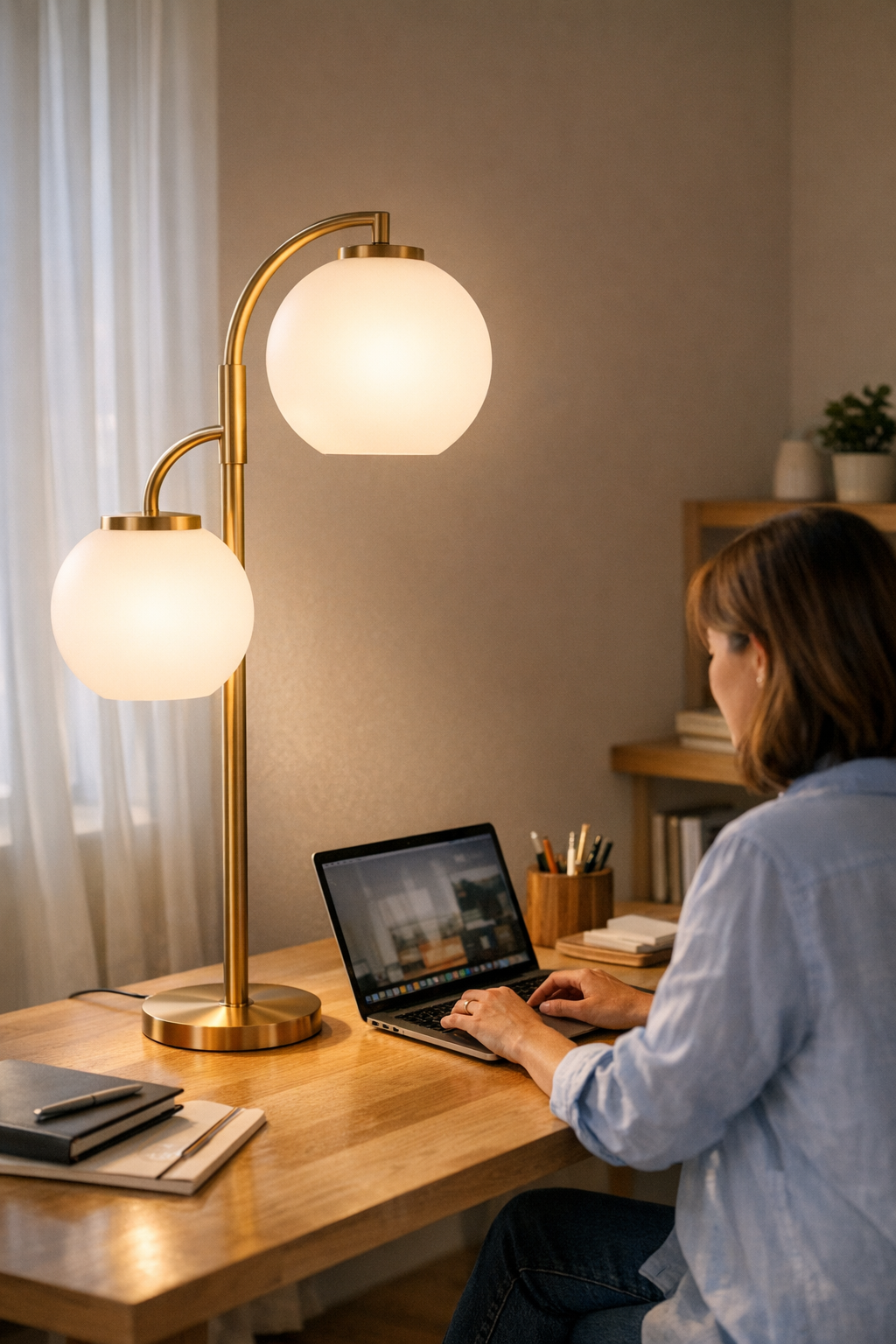
A workspace can look flawless and still undermine your focus every day—usually because the lighting or its mounting keeps getting in your way. Sharp glare hits your screen by the afternoon, a cable snakes into your arm zone no matter how many times you push it back, or the under-shelf light glows but leaves the work edge in shadow and your eyes straining. You adjust and rearrange—tilting a screen, rotating a lamp, nudging a pile of papers—until the “tidy” setup becomes a source of constant friction. Surfaces look clear until the first real task begins; function breaks down faster than appearance.
Why the Neat Look Doesn’t Last
Minimal fixtures—flush wall panels, hidden cables, slim bar lights—can sell a photo-ready calm. But most setups built for looks fall apart the moment you move, reach, or turn. Comfort isn’t captured by a still image; it’s tested over hours of use. That “finished” vibe evaporates as soon as the first reflection slices across your laptop, the lamp’s rigid stance pins your shoulder in place, or an exposed cord keeps grazing your knuckles.
Glare lines, visible cabling, and forced positioning aren’t just annoyances—they’re the daily price of setups built for presentation, not for how people actually work or reach for things. Desk, table, or shelf: the same signs show up if design has outpaced function.
Small Problems Become Daily Obstacles
You can tuck a cord or push a lamp out of frame, but live with it and certain problems reveal themselves fast. That reflection—always at the same hour. The cable—always finding its way into the one area your hand needs clear. Setup “calm” unravels into focused friction: an edge you can’t see, a lamp you keep dodging, a glowing shelf but a murky desk. After a few days, distraction feels baked in. And you notice you’re working around your lighting, not with it.
This type of friction doesn’t fade with time; it accumulates. Lost focus, hunched seating, corners left unused—all from small, repeated adjustments subconsciously made to dodge your own lighting or its support hardware. The original logic of the setup turns into a daily workaround routine you never signed up for.
How to Catch the Real Trouble Points
If you’re reaching to prop a folder against a reflection, shifting your chair to avoid a glare hit, or angling a monitor to escape a spotlight, your lighting support is out of sync with your needs. A beautiful lamp aimed wrongly becomes a daytime obstacle. The wrong mount means good light in the wrong place, every day.
There’s a gap between setups that win on looks and those that just work. For example:
- An under-shelf light washes the wall with a bright, even glow—yet each keypress bounces glare into your eyes, making the surface harder to use than before.
- A clunky but correctly aimed task lamp misses any style contest but leaves your full work area visible and your routine uninterrupted, even as daylight shifts or projects overlap.
One setup looks resolved; the other is actually liveable. The difference: You don’t notice the good one at all while you’re working.
Placement, Spread, and Support: The Deciding Details
Lighting that works for real life depends on where the fixture sits, how the beam lands, and where cables run once you start using the space. The moment you enter the third work session of the week and still find yourself fighting cord drag or dodging hotspots, tiny mounting details become critical.
These failure points keep showing up in practice:
- Wall panels casting perfect ambient light—until you sit down and your monitor catches a sharp line from above, making half the screen unreadable.
- Under-cabinet LEDs that skip the shelf lip, leaving your hands in shadow every time you write or reach.
- A cable run planned to look neat, but each time you move your mouse the cord slides forward again, intruding on valuable desk space.
- Ceiling lights with zero adjustability: whole sections of the table are washed out while corners go dim, demanding extra lamps just to get balanced coverage.
These aren’t quirks—they’re signs that aesthetics won over use, and now distraction is routine. The tell is always in how many times you have to adjust, shift, or mentally filter out your own lighting or its supports.
Scenes From Real Use: When Support Makes or Breaks a Space
The Shared Table Dilemma
Think of a broad worktable near a window, meant for several people. Built-in wall lights glow evenly and cables are hidden; everything looks deliberate. As the workday unfolds, sunlight shifts, screens tilt, and the designer glow fires straight across laptops and tablets. Soon, people start stacking folders in awkward spots to block the line of light, chairs migrate to less “featured” sides, and eventually everyone huddles near the only clamp lamp—visible cables and all—because that’s the one source they can aim. Style points drop, but the adjustable task lamp survives the workday. What looked seamless is now background noise; what worked wins in silence.
A Small Change, Big Relief
Different space, new pattern: A glass top desk beside a window, lamp base set barely forward of the right spot, and the cable runs clean through a discrete under-desk clip. After hours of glare on the work zone, a quick nudge pushes the lamp back a couple inches and tilts the head. Now the cord never strays, the glare line doesn’t return, and the space finally stays usable all day—no more sliding things around to adapt to stray beams or loose cables. The change isn’t dramatic to the eye, but noticeable in how you can actually use every inch of the surface without tense readjustment. That’s what material support does—quietly clears the way for real work, not just a staged look.
Practical Fixes Worth Trying
Improvement isn’t about a wholesale upgrade. Adjusting a fixture by inches can revive a whole setup. When overhead or wall lights throw too much glare, adjust the angle or drop in a lower, aimable task lamp outside your immediate eye line. Cable clips, tension guides, or a small wall bracket can push cords out of the performance zone completely—no more taping or tucking after the fact.
Matte finishes on task lamps crush nuisance reflections. Placing a fixture so beam edges sit just outside your common reach zone removes bright streaks without inviting clutter. The real test: Watch what you’re still adjusting at hour two, or what work area you quietly avoid. Shift the support—lamp, bracket, or guide—first, and see if routine friction finally lets up.
The Quiet Payoff: Support that Actually Fits
The best setups disappear in daily use—not because they’re invisible, but because they stop interrupting you. That’s the win a support-first mindset delivers: cables that follow natural room lines, brackets that keep fixtures steady and off your hands, and beams that stay out of your vision. No more constant contorting, guerrilla fixes, or asking “what’s wrong with the light here?”
When you stop making micro-adjustments and just get to work, you know the lighting—plus its mounting and cable runs—finally fit the way you move and focus.
Find practical lighting and mounting solutions that work for real rooms and real routines at LightSupport.