
When Calm Routines Build Up Hidden Friction
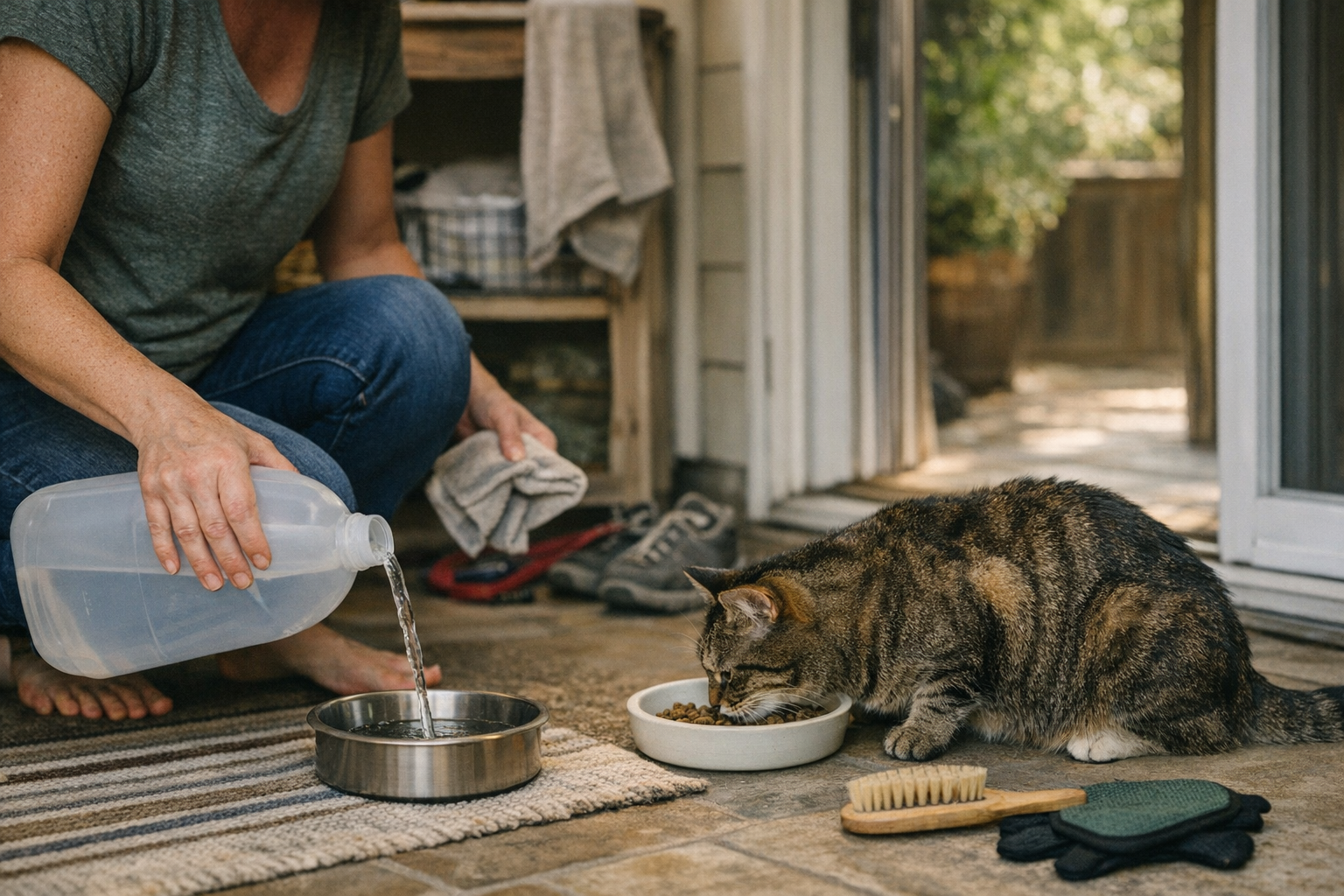
A pet care corner can look squared away—bowls pushed into their spots, waterproof mat down, wipes in a tidy stack, brush at the ready. But the real test starts after the first feeding of the day, when “organized” proves much less smooth in real motion. One bowl is still damp from last night’s wash; a brush sits inches out of reach when fur starts to shed; a water dish is full but stale. What looks like control on the surface often hides a slow-moving mess: unfinished resets, blocked grab-points, and basic items migrating just far enough to get skipped, delayed, or forgotten.
The Slippery Slope of Unfinished Steps
Mornings seem handled: breakfast poured, bedding brushed off, a quick wipe of the nearby mat. But if your dog hesitates at the bowl—sniff, pause, side-eye at a half-wiped dish—or your cat circles and hops away before you can clean a tangle, the small stall starts multiplying. The bowl stays out for “one more hour.” The water dish isn’t swapped until you’re looking for it late in the day. Towels for drying bowls dry out on a chair all afternoon, never making it back to good use.
These incomplete resets stick around. Instead of a quick meal prep, you’re facing last night’s crusted bowl after work—again. A grooming brush floats from shelf to countertop, then gets lost under yesterday’s mail. In a single week, what felt like a crisp morning setup devolves into a background of catch-up chores, one lingering step at a time.
Real-Life Bottlenecks: What Keeps Slowing Things Down?
Anyone with a dog or cat recognizes the daily loop. You reach for a refill bottle, but the cleaning spray is blocking the way. You set down a meal, only to confront the bowl you meant to clear earlier, old food now dried into place. A hair-removal glove is tossed on a table “for later,” only to disappear under other clutter. Cleanup wipes are visible but never within fast reach—so you run across the room mid-task while your pet hovers, attention slipping.
Items meant to help the routine can tangle it instead. You bury a brush in a drawer to keep counters clear, then let tangles go because it feels just out of reach. The feeding area is wiped down, but bowls end up on windowsills, becoming trip hazards or blending into kitchen clutter until night. The result: a space that passes a glance test, but a daily flow that’s still snagging on missing basics and deferred resets.
How Subtle Delays Change the Whole Routine
Even when pet areas look calm, every skipped or delayed step stacks more handling on the owner. After an early meeting, you find your cat circling the feeding spot. The water looks clear, but you’re juggling yesterday’s bowl, the half-damp cleaning towel, a while-ago-grooming mitt—all collecting near shared living space. Each reset drags another item out, inching pet supplies into high-traffic zones: a mat that shifts underfoot, towels now sharing your entryway, a brush left on the mail table. A routine that should take thirty seconds now sprawls across spaces, blocking a quick reset or a calm handoff from one care phase to the next.
Over the week, these patches turn into workarounds: moving dishes to make room for a refill, chasing down a stray brush before prepping the next meal, coaxing your pet back to a zone that no longer feels orderly. “Almost done” becomes the norm, and you watch minutes slip away, especially on jammed schedules or after guests disrupt the usual flow.
The Practical Fix: Specific, Repeatable Adjustments
The way out isn’t an overhaul, but smaller moves: anchor routines with fixed steps and avoid setups that depend on willpower to keep order. Shift the food bowl just off a main walkway—easy for your pet to find, but not sitting where it snarls foot traffic or blocks a quick tidy-up. Keep grooming tools at the actual pause-point (the back corner your dog always stops or where your cat likes to observe) but out of direct sightlines. Build in one reset—wiping the bowl right at refill with the same cloth, same moment—so that repeat work can’t slip into “later.”
Placement patterns cut future friction. For a dog, anchor the leash on a single hook: avoid the pile, stop digging. For a cat, park a favorite blanket beside, not on top of, the food mat: comfort, but less clutter. Don’t react to every stray item with a new habit—nudge routines where they fail most often and accept your pet’s patterns instead of fighting them. Let familiar resets replace the slow tide of unfinished jobs piling up around the edges.
Steady Routines Work When They’re Actively Maintained
Reliable routines don’t hinge on spotless spaces; they cut down repeated stalling where small inefficiencies take root. A quiet dog or a patient cat doesn’t mean the setup works—it just means friction has shifted somewhere harder to spot. When you catch yourself looping back for the same brush, resetting the same bowl, hunting for a supply that’s now migrated rooms, it’s time to address the pattern, not just the mess. Early fixes to repeated friction—bowl always back to its spot, wipes in arm’s reach, leash never lost—turn “one more thing” evenings into routines you can rely on, with fewer nagging chores and more real time left at the end.
For more ways to keep your setup both calm and functional, visit CalmPetSupply.