
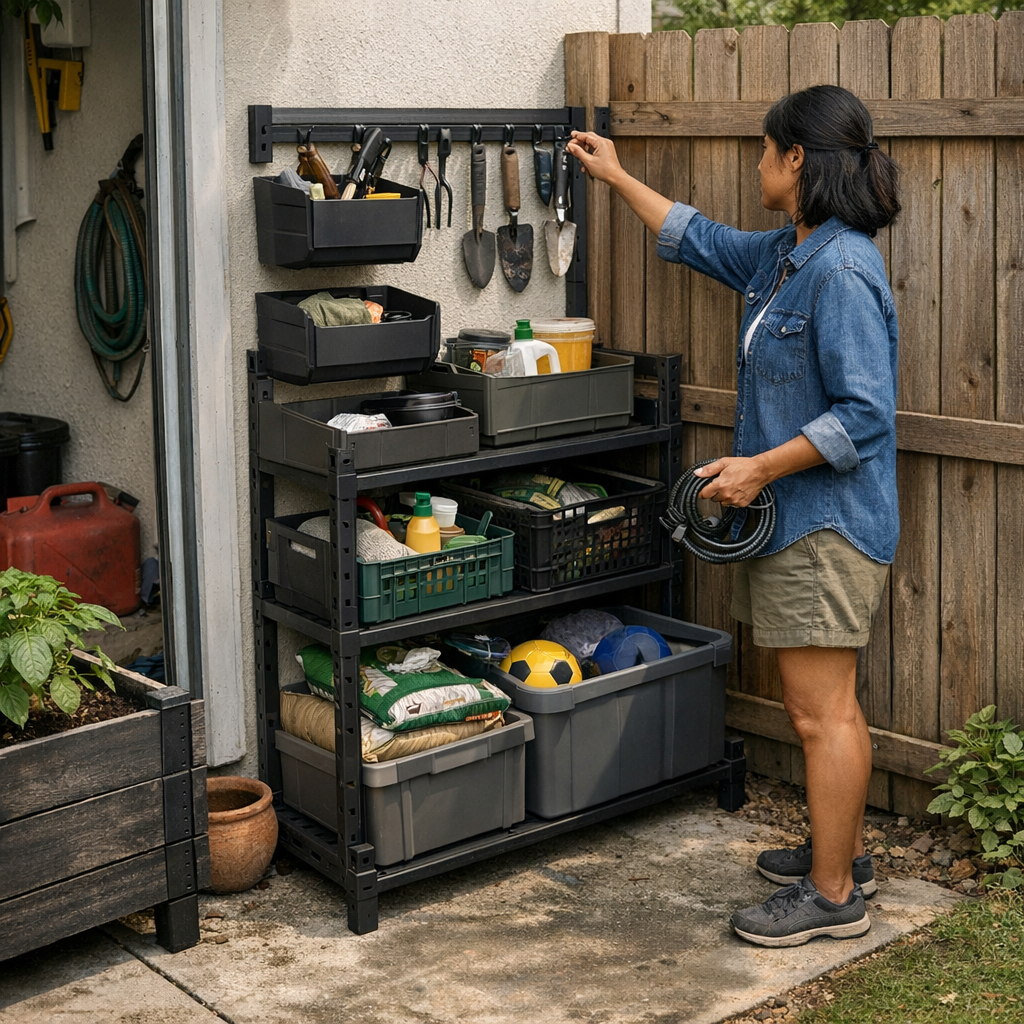
Outdoor storage zones unravel faster than any room in the house, and everyone who manages a backyard or side yard knows it. Walk out the back door, and you’ll find the bin by the fence or the shelf beside the garage still looks organized—for about a day. By midweek, garden gloves perch on top of soccer balls, pruning shears disappear under goggles, and the tools you need are suddenly buried beneath a blanket of rain-damp play gear. The sense of order you felt Sunday morning dissolves within a couple of uses, and what was meant as a quick setup now turns every trip outside into a hunt for lost gear or an obstacle course of equipment in the way.
When Zones Collide, Disorder Wins
The problem isn’t how much storage you have. It’s combining everything in the same catch-all—mixing family gear, garden tools, and outdoor essentials in one shelf or bin—guarantees friction the first time routines overlap. Put tools back in a rush and suddenly they teeter atop tennis rackets and sand buckets. Kickballs migrate into tool corners. Walkways start to fill with overflow, and every time you need something, you dig through a pile blocking the door or reshuffle armfuls just to reach the shed. It’s the same pattern in almost every yard:
- Family gear and sharp tools tangle together; you move toys to reach a rake or untangle nets from a hedge trimmer
- Corner bins collect bagged soil and chalk in the same dead spot, but neither stays accessible
- Wall hooks fill up sideways, forcing you to take three things down to get one thing back
- Overflow pools in the same awkward corner, making “resetting” a bigger job every time it rains or guests show up
Why More Bins Don’t Fix Real Chaos
The impulse—add another tub or stack a new bin—feels logical, but without zones or boundaries, extra storage only delays the mess. Those tubs quickly collapse into one layered heap of everything: trowels beneath shin guards, tangled hoses under last week’s skateboards, soccer balls halfway out the lid. You sort through the same unsorted pile again and again, and every “quick tidy” blends unrelated gear together. The space isn’t smaller—it’s just more crowded and nothing is easier to find. Sudden rain or a busy morning, and the system resets to confusion.
The Only Shortcut: Clear Physical Boundaries
Visible separation is what makes an outdoor setup work consistently. No dramatic makeover needed—just a dividing line between types of use. A simple wall rail with labeled hooks, a split bench with compartments for tools and toys, even a shelf split in two with tape or color. If the pruning shears and hand rake go in their own bin, no one’s digging under Nerf blasters or setting down muddy gloves on a soccer net in frustration. You don’t just store more—you prevent the daily pileup that ruins weekend resets in the first place.
Return Flow: The Invisible Upgrade
Boundaries work hardest not when the garage is spotless, but when life is busy. Picture coming in after trenching weeds with arms full of gear—the “Tools” zone takes everything straight away, so you’re not setting things down wherever there’s room. Five minutes later, kids dump balls into their own nearest bin by the gate, not on top of the shears. The next person opens the storage right up—no mystery pile, no slow search, no reshuffling awkward stacks. Routine returns and movement through the area actually gets easier, not harder, after each use.
The Real Reset: Disorder Contained
Midweek, before rain starts, you step out for a quick tidy. In the old “one bin” or mixed shelf world, cleaning up means untangling hoses from kites, finding hand tools beneath sopping towels, and awkwardly shifting things just to create a clear path to the rake. The job expands the longer you postpone it, and any small overflow invades the walkway. But with split setups—bin for play gear here, wall zone for garden tools there—most of the reset is just matching up items to their space. Overflow stays contained (maybe the family bin is full, or the tool side is crowded, but the mess doesn’t sprawl) and the walkways never fully clog. The difference isn’t perfect order, but order that survives actual use.
There’s always some chaos, even with the right setup, especially after a heavy-use weekend. Maybe a glove ends up next to a bike helmet or a bucket gets wedged into the tool section. But the distinction holds: family gear can be dumped in the overflow, tools return to their own zone, and cleanup means moving things a few inches rather than starting over. You’re no longer blocking your own path or staging an emergency reshuffle every time someone needs to get outside when the storm rolls in or a party’s about to start.
Details That Actually Hold Up
Little boundaries make the biggest difference: a divider in the bench, tape or color along a wall rail, or even a label to split top from bottom on a utility shelf. Blind-spot clutter drops, and the dead-air corners where messes collect finally hold their line. A two-part bench keeps muddy hand tools away from balls and frisbees, and a dual-hook system means helmets aren’t hanging under sharp pruners. The payoff is not a showroom—just a yard, side zone, or garage-edge that stays usable, even when you skip a week of resets. The structure absorbs mess, while unsegmented bins simply turn mess into layers for someone else to trip over later.
Tip: Set Up For Natural Return, Not Perfection
Put boundaries and drop zones where habits already lead you—family bins nearer the gate, tool bins further in. Don’t let every return trip mean a detour around a blocked path or triple-move just to get one item in its place. Regular, short resets—ten minutes once a week—keep overflow from swallowing the area whole, and keep your mood up when it’s time for quick outside chores.
The Lasting Difference Is How the Setup Handles Real Life
Outdoor setups always face a little spillover—weather and family use guarantee it. But split zones and physical dividers transform the space from a surface-level “organized” look to a structure that actually holds up under repeated use. Instead of guessing whether the rake is buried beneath sports gear, or stepping over a pile just to open the gate, you reset only what’s fallen out of place—not the entire system. The all-in-one bin can’t compete; only boundaries and physical splits stop the daily march toward chaos and make tight spaces work for real routines, not just for photos.
See practical outdoor storage structures and utility zone setups for real, lived-through routines at TidyYard.