
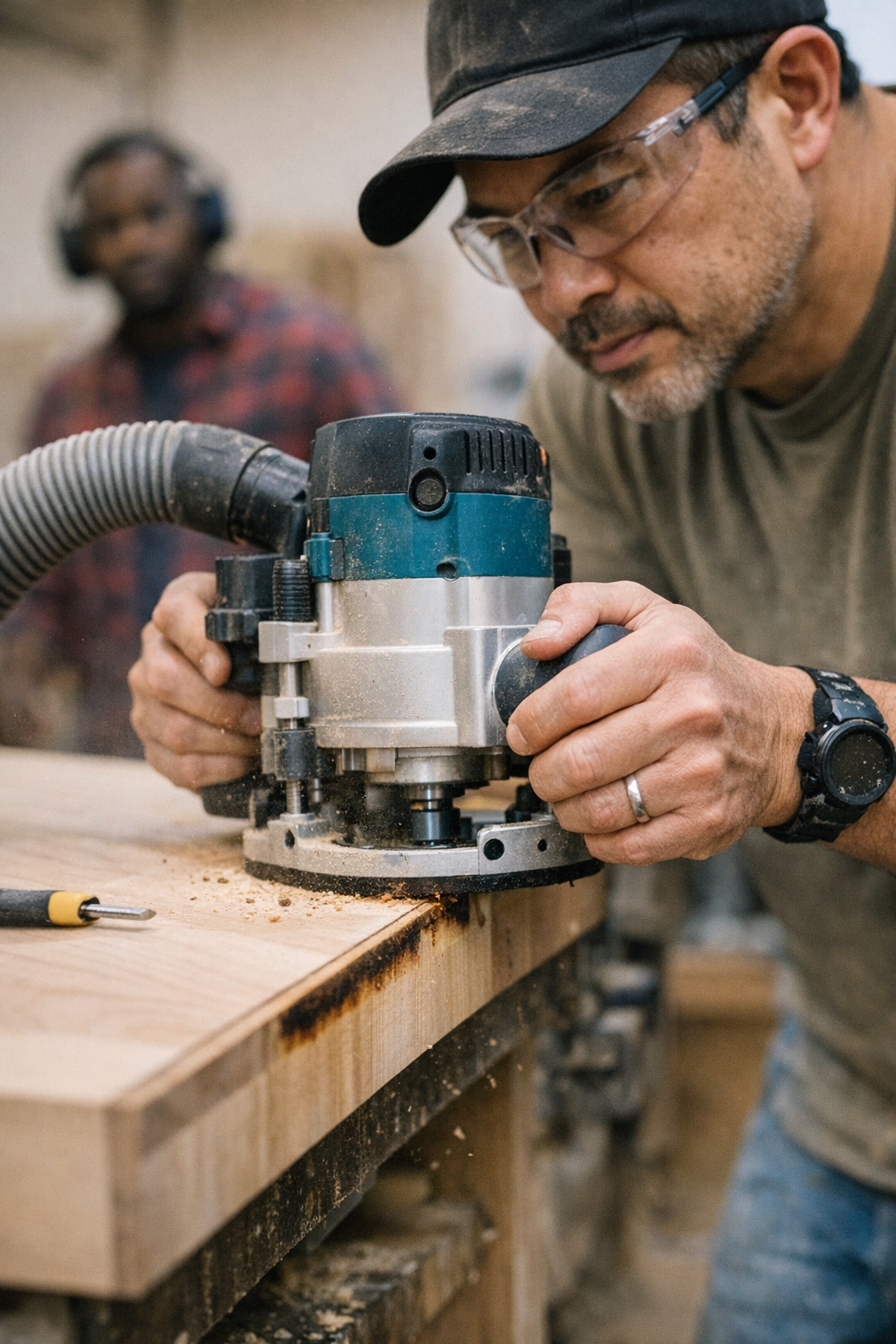
Burn marks aren’t just ugly—they signal a break in the flow of real work. If you spend time routing hardwood—be it dressing edges on custom panels or running grooves for cabinetry—you know the letdown that creeps in. Everything is dialed: sharp bit, steady grip, board clamped tight. Then halfway through, the bit starts dragging, you smell scorched wood, and brown streaks start to track your every move. Suddenly the rhythm is gone. Instead of crisp edges and clean reveals, you inherit hours of tedious hand sanding, hoping the burns haven’t sunk too deep or blurred your profiles for good. Edge detail you worked hard to keep is now on borrowed time—and it happens even to careful hands. The friction is very real: burns slow progress, threaten finish quality, and knock confidence in both your process and your tools.
When a Good Pass Starts to Go South
There’s a sweet spot to routing: smooth feed, controlled sound, a clear edge following the bit’s path. But it doesn’t always last. All it takes is a slightly dulled cutter or grit built up between passes and your glide stalls into resistance. At first, it’s subtle—a streak here, a snatch in the feed there. Maybe you ignore it and push through. Soon, each pass goes from giving clean definition to demanding aggressive sanding. Now, every correction eats into the profile you wanted to keep sharp. What looked like a minor blemish at the bench turns into a stubborn flaw when the finish goes on—deeper, darker, impossible to hide without reworking the entire piece. That’s the expensive flip-side of one overlooked sign.
The real punch? By the time you’re smoothing or fitting parts, a single burn can undo hours of fitting, measuring, or grain-matching—especially on dense woods that showcase every flaw.
Why the Burns Happen: A Closer Look at the Culprit
This isn’t a rookie mistake. Shops crowded with matched sets of routers, bits, and blades aren’t immune—results drift as sharp edges fade and dust builds up. With a new bit, the router almost floats: it cuts clean, edges pop, and feedback is precise. But catch the hint of drag or a whiff of burnt wood, and you’re suddenly working harder just to get the same result. Dullness is a slow thief, and in hardwood, mere minutes can be enough before streaks turn obvious.
The real enemy is friction. Dust, resin, and pitch collect invisibly on the cutter with every pass, piling on heat and slowing the spin until burn marks become almost inevitable. Often, your hands detect the growing resistance before you even spot the marks. Ignore that, and you pile up trouble with every next board. “Sharp enough” is rarely good enough when the debris is working against you.
Shop Floor Reality: What Trouble Feels Like
Visualize running decorative profiles on a stack of maple rails: the first three boards are smooth as silk, the fourth pushes back a little, the fifth comes with a faint sweet-bitter scent. Nothing has changed on the machine, but you’re instinctively pressing harder just to maintain flow. That’s the turning point most shops know well—but too often override. You’ll grind out the last few pieces, only to find that the brown lines baked in aren’t coming out with sandpaper. At best, you compromise edge detail. At worst, you scrap the part and the schedule slips.
Ignore that resistance and suddenly, a single burnt edge can force you to strip, fill, or entirely remake a visible piece. Time lost here is rarely recouped later.
The Fixes That Actually Hold Up Over Time
The winning formula isn’t magic—it’s discipline and routine, not silver bullets. Wipe down router bits after every few panels with solvent and a rag to dissolve pitch before it bakes on. Inspect cutters visually: any sign of buildup is your cue to clean, not just for the sake of the tool but because every fleck means extra friction. Set a routine—every 30 feet or so of hardwood, pause for a quick cleaning and check for sharpness. What’s two minutes at the bench saves half an hour of coarse sanding or profile touch-up once the work is done. That kind of maintenance pays for itself—sharper cuts, cleaner edges, fewer re-dos, and a sweatier shirt for the right reasons.
Practical upgrade: Keep an old toothbrush and solvent at your routing station. Fast, frequent brush-offs keep resin from welding onto the bit. It’s more effective than tuning the router’s speed or amping up your feed rate. Marry this with a steady hand—don’t press through resistance or let impatience override feedback. Pause, clean, resume. You’ll come to rely less on blind passes and more on responsive, precise work.
Feed Rate vs. Bit Life: Find the Real Balance
Accelerating your pass isn’t a cheat code. Move too fast and the bit can chatter, catching or tearing the wood—sometimes worse than any scorch mark. Move too slow, and heat overloads the workpiece. The trick is to listen: a sharp, even note in the cut signals good progress; a strained or howling pitch means trouble. Adjust pressure to what the wood and bit can handle, not what the clock demands.
Burning Questions from Real Benches
Why does burning happen even at low router speeds?
Because friction isn’t just about speed. Dull or dirty bits—especially on tight corners or dense wood—generate heat fast. Staying in one spot, even for a moment, can scorch a panel or rail before you know it.
If I feed faster, can I sidestep burns?
Not in practice. Too fast and you get rough surfaces or tearout. Too slow and you burn. Watch for pushback and off-smells—those are cues to stop and check rather than bully through.
Is dust collection worth the hassle?
Absolutely. Dust and chips left to build up around the bit choke off air, increase friction, and dull edges at a shocking rate. Even a shop vac at a routing table pays for itself in less bit maintenance and smoother results. Attention here means less downtime later.
Reading the Work—Staying One Step Ahead
No universal chart will spare you burns on the router table. Every shop run is a series of audible cues, hints of resistance, or sticky drag under the hands. Build habits that fit your workflow: clean and check bits, set reminders for sharpening, and never tune out the subtle signs—those are worth more than any settings guide.
In most cases, the burn begins long before it’s obvious—a faint sound, a change in the feel, a little heat in the hands. Stay proactive, and repetitive sanding and rework fade into the background. What you get instead: smoother workflow, sharper edges, a shorter sanding list, and the confidence that your tool is working with you, not against you.