
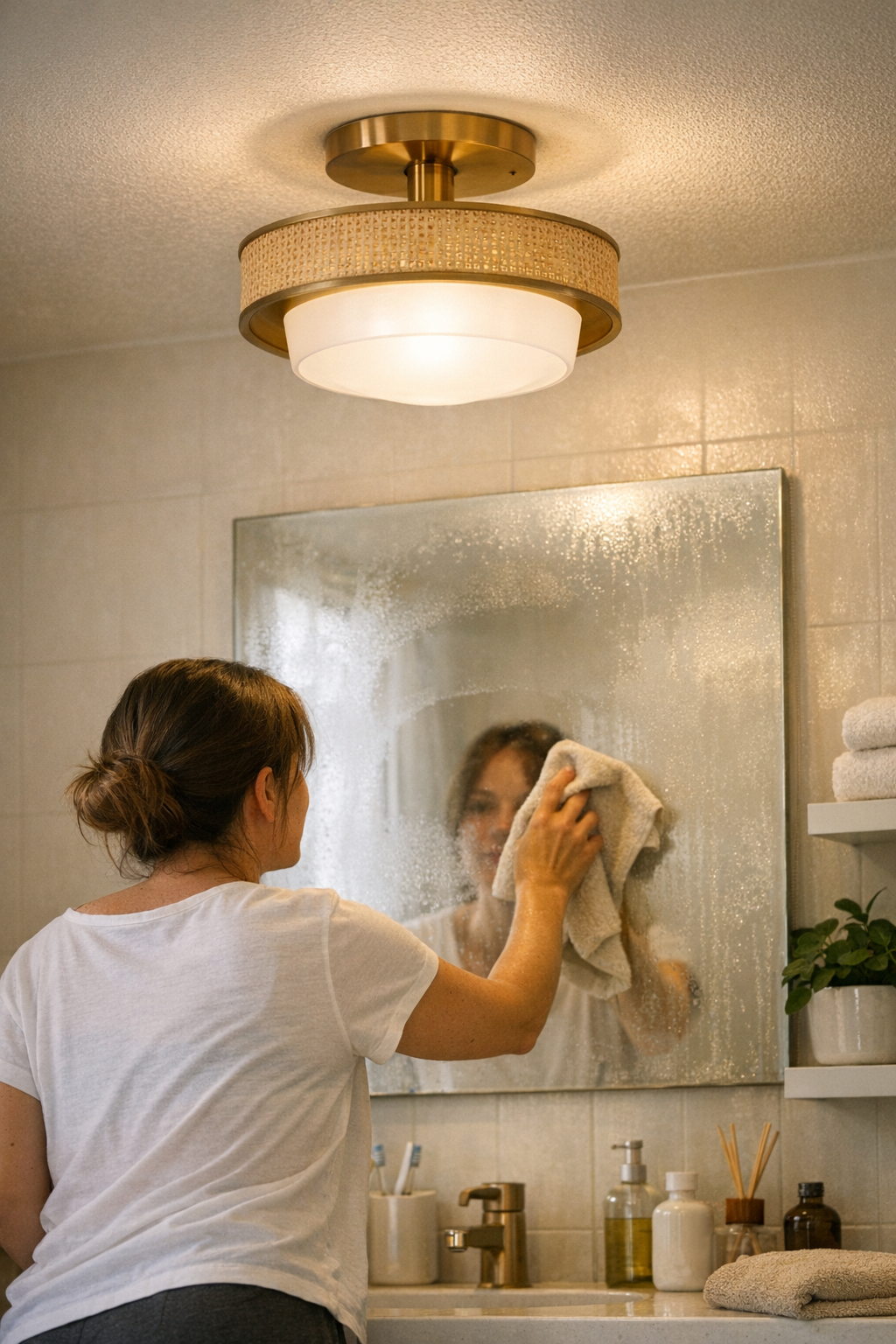
Ceiling lights in bathrooms and laundry rooms rarely get a second thought—until badly balanced light turns fast routines into a grind. If you are wiping a foggy mirror yet half your face is still lost in shadow, or tripping into the laundry area and finding the corners look muddy even when the fixture’s on, you’re not missing style: you’re running into the real limits of lighting that wasn’t built to handle steam, moisture, or repeated use. The day you notice glare hotspots above a wet countertop, or uneven spread sending half the floor into darkness, is the day the wrong light stops being invisible—and starts dragging routines to a crawl.
Where Lighting Choices Actually Matter
The gap between “fine for now” and “works every week” isn’t obvious the day a fixture is installed. Basic ceiling lights—whether labeled for damp use or not—look almost identical until the first month of real routines. Step by step, the differences stack up: fixtures that hold their clarity versus setups that let edge shadows, flicker, or smear-prone glass creep in every time the humidity spikes.
Steam after hot showers, condensation rings around fixtures, and dim corners aren’t random: they’re a warning from the room itself. The moment dampness lingers, a light’s moisture rating decides whether you’re running a safe, usable space—or putting up with patchy glare, unpredictably dark edges, and daily workaround habits that wear you down.
Moisture Changes Everything: The Real-World Ceiling Challenge
Bathrooms, laundry spaces, even the inside of the shower—these areas grind down ordinary fixtures faster than almost anywhere else at home. At first, every light throws out a “glow.” After weeks of steam and condensation cycles, tiny flaws crack open:
- The mirror’s edge picks up dark bands no matter how clean the glass is.
- Glare hovers over the ceiling but leaves sinks or counters unpredictably murky.
- Standard fixtures (lacking a true damp or moisture rating) begin to buzz, flicker, or dull out after enough back-to-back showers or a parade of laundry cycles.
This isn’t just about how a space looks—the real question is whether the lighting keeps up on heavy-use days when every shortcut gets exposed.
Mirror Zones and Vanity Routines: Where Uneven Lighting Shows Up Fast
Picture the morning rush: you lean to wipe a streaked mirror but the left side of your face is softly lit, the right thrown into glare, and the middle split by a hard shadow. Each rinse, wipe, or quick shave makes the imbalance worse if the overhead fixture can’t handle dampness—humidity exaggerates the difference, pushing the edges further into shadow while pooling glare over the rest. By the end of a month, routine tasks start demanding extra steps just to get basic clarity.
Switch to a properly rated ceiling fixture. Even after ten steamy showers, the spread holds up. The mirror clears faster, the face remains evenly lit, and tasks flow—less eyestrain, less second-guessing if you missed a spot. It’s not dramatic, but that low-level friction quickly separates lighting that plays along from lighting that works against you.
Shadow Buildup: What Routine Use Actually Looks Like
Moisture doesn’t just cause cosmetic streaks. Over the weeks, standard ceiling lights above vanities, counters, or the far end of the laundry bench show real wear:
- Shadows creep outward a little more after each humid cycle, subtly warping where your eyes expect clear light.
- Room edges lose sharpness—making it easier to miss dropped items or step into a barely-seen wet spot.
- Frustration builds: you add a clip-on lamp for a task, or fumble for a flashlight to make up for the fixture’s faded power.
These aren’t sudden breakdowns but an ordinary, creeping decline that you notice most when routines feel slower and less certain.
Laundry Zones: Patchy Light and Slowed-Down Movement
No one designs a laundry room for drama, but light that can’t handle steam makes every step less certain. After a wash, condensation beads overhead, and a generic ceiling light leaves sorting bins dim and folding tables half-lit. The dark side of a towel pile, the color of a missing sock, the bottle on the back of the shelf—routine tasks start pausing mid-move, shoulders tensed, as you re-adjust for a patch of persistent shadow that never seems to go away.
Lighting that holds steady in week twelve, not just on day one, keeps the room usable—no matter how often the cycle repeats.
Condensation: When a Ceiling Light Becomes a Weak Link
Notice regular condensation on ceiling panels, around your fixtures, or on cloudy mirrors? The wrong fixture isn’t an inconvenience—it’s a growing maintenance risk. Ordinary ceiling lights, even if well-sealed at first, will eventually:
- Show signs of internal corrosion, faint staining, or rings where moisture collects again and again.
- Develop flicker or random shut-offs when electrical contacts degrade in repeated humidity.
- Throw uneven light, so whole work surfaces drop into shadow not because of a bulb, but because the fixture has quietly lost its evenness under stress.
You know it’s happening when a room looks “on” but nothing is fully visible where and when you actually need it.
When Everyday Lighting Fails: Practical Impact
When light fails routine use, the problem isn’t just irritation—it’s lost time and new risks. A bathroom where water spots are lost in shadow, or a laundry zone where glare hides edges and leaves puddles undetected, quietly increases the chance of slips, missed steps, and small accidents. A foggy mirror that never fully clears slows morning routines, while corners made dim hide dropped items for days.
- Edges of wet floors blend in—making slips or hasty moves riskier.
- Persistent mirror fog turns small tasks into drawn-out rituals (and more wiping means more chances for an awkward reach).
- Supplies, tools, or everyday laundry items vanish into peripheral shadows—forcing repeat searches or missed details.
At best, it’s a drain. At worst, it makes a “routine” area quietly fail when pressure is on.
Consistency Beats First Impressions: Lighting That Actually Works
What a damp-rated fixture offers isn’t visible in the packaging or even the first few days: it’s the way even spread, consistent brightness, and glare control survive months in a wet, steamy room. Mirror zones stay usable, corners remain defined, and safe, comfortable movement continues—no matter how many loads, showers, or quick cleanups a week brings.
Every indoor zone comes with its own stress test. For anywhere humidity, splashes, or steam are part of the routine, an ordinary sealed fixture is already fading in the background. Step up to lighting with real moisture resistance, and the line between an active, reliable space and a zone that sabotages itself becomes clear with every use, not just in the catalog.
If standing in uneven light or working around patchy glare is slowing you down, the next fixture is less about style and more about whether your routines feel smoother, safer, and less interrupted for the long run. See what actually stays usable day after day, at Shop LightHelper: Damp-Rated Ceiling Fixtures and Practical Indoor Lighting