
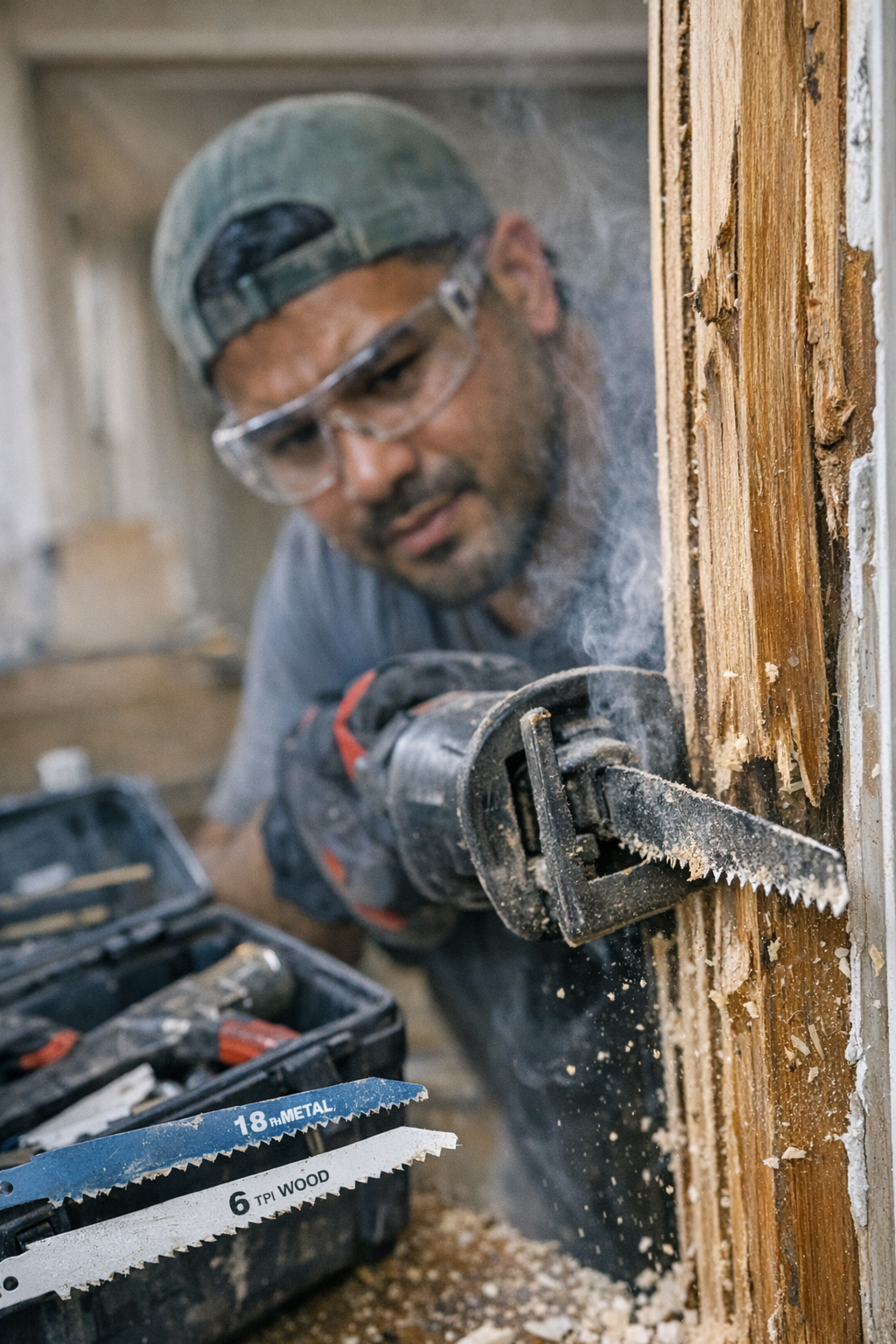
It’s a familiar workshop slog: You’re halfway through an awkward cut with your reciprocating saw—hands edging numb, sweat starting on your brow—when the tool slows, the blade jitters, and every inch of progress starts to demand double the effort. This is not the dramatic burn-out of busted teeth or snapped steel. It’s the insidious wear that creeps up fast: vibration climbs, your cut line snakes, sawdust thickens in the air, and the simple job you started has quietly become a fight. What’s changed? Usually, only the blade.
The Real Headache of Using the Wrong Blade
Most mistakes in the shop aren’t blatant. The job begins with a reach into the tool bag—a handful of random blades, some labeled “universal,” all thrown together from projects past. In the rush, you settle: “Close enough.” At first, the saw bites the wood or pipe like it should. But soon, small problems pile up. The cut stalls, edges splinter, and you feel the saw start to argue back.
This isn’t just about tooth count or marketing terms. The wrong blade quietly torpedoes your momentum. Frayed edges mean more sanding, crooked cuts demand rerouting, and alignment checks slow your rhythm. The “all-purpose” blade that was supposed to simplify things leaves you untangling each mistake, hour after hour.
What TPI Really Means in Actual Work
Teeth per inch (TPI) isn’t just an afterthought—it’s the difference between cruising and grinding. High TPI (14, 18+) slices through metal cleanly but will bog and burn in wood. Coarse teeth (6–8 TPI) make quick work of studs but chew up hardware and snap on nails. The theory is simple; the reality is you’re switching from soft studs to a rusty hinge, or from plywood to embedded screws, dozens of times in a tear-down.
Try running a fine metal blade into a softwood jamb. Three cuts in, the teeth gum up with pitch, progress drags, smoke signals trouble, and suddenly you’re muscling the saw, hoping you don’t veer off into territory that needs patching. The myth of one blade for all jobs dies fast—usually somewhere in a haze of wood dust and frustration.
The Door Frame Test: Wrong Blade, Real Drag
Pry out an old door frame—painted pine, cheap plywood, hidden nails. You start easy, cut the trim, flush out some supports. If you grab last week’s all-material blade, expect the fate that follows: first pass is okay, but the blade warms up, resistance ramps, shreds of paint and wood slough off rough. By the time you hit metal, your blade’s shrieking, the cut is jagged, and you’re mentally adding hours at the sanding bench for cleanup.
The Difference When You Change Blades (And Why It Matters)
Switch to the right TPI, and the job transforms—visibly and physically. Drop in a 6 TPI blade, and the wood gives; the saw glides instead of chattering. Edges hold crisp, dust stays down, and you find your rhythm with less push. Swapping to an 18 TPI when encountering a nail or bracket, the feel shifts—slower, but the blade tracks straight, and you’re far less likely to scorch or jam it. It’s not about magic; it’s about finishing cuts you don’t have to revisit.
The payoff is cumulative. A properly matched blade gets you triple the clean cuts before dulling. Rough seams become rare, the extra sanding becomes an exception, and—crucially—your arm doesn’t feel punished before lunch. Every swap is a trade: one minute of patience for an afternoon of smoother progress.
Reading the Signs—When It’s Time to Swap Blades
No one wants to halt a workflow for another trip to the tool chest. But the work itself lets you know. Watch for:
- The saw jumping or fighting for every inch
- Edges start coming out ragged or splintered
- Burn marks or the acrid smell of smoking wood
- A blade that’s hot or packed with debris after each pass
Heed those signals. A swift swap for the right blade is time reclaimed, not wasted. Control returns to the cut itself—and you spend less time patching mistakes created by a saw on the wrong footing.
Why Small Swaps Save Big Hassles
Muscling through with the wrong blade almost always leads to double work—backtracking, endless sanding, or even buying new material. Instead, feel for resistance and adjust on the fly. The right blade on the first cut means fewer mistakes to mask, less fatigue in the wrist, and a cleaner, faster finish every time. Swap at the first sign of drag—don’t let stubbornness undo your morning’s progress.
The Details Nobody Mentions—but Everyone Feels
Blades and bits don’t have star billing in the tool catalog. They get buried in drawers, shuffled between jobs, or left on magnets to collect dust—until, inevitably, a stubborn fit stalls things out. Yet anyone who’s rebuilt, demoed, or sanded their way through a marathon project knows: these tiny adjustments are what keep the job moving—or bog it down in undoing small disasters.
The right blade won’t make demolition glamorous. But it cuts down the quiet spiral of frustration—less waste, fewer noisy slips, less ache in your wrist after an afternoon of grind. What gets lost in the shuffle of bits and blades is found again in the pace you keep and the fatigue you skip.
Smart Prep: Stage Your Blades, Stop the Grind
Don’t ask one blade to be a hero. Keep a handful of TPI varieties staged—grouped by wood, metal, mixed-use, even color-coded if it helps. When the saw stalls or your line drifts, pause and check your blade, not just your arms. That extra minute setting up pays back every hour you would have spent fighting the tool—or fixing what it broke.
Every project leaves behind dust and a little fatigue. But with the right blade at each stage, that wear shows up on the job, not on you. It’s the quiet difference that makes each cut count—and each day in the shop less of a slog.
See more from Gumboll’s lineup of jobsite-ready blades and accessories.