
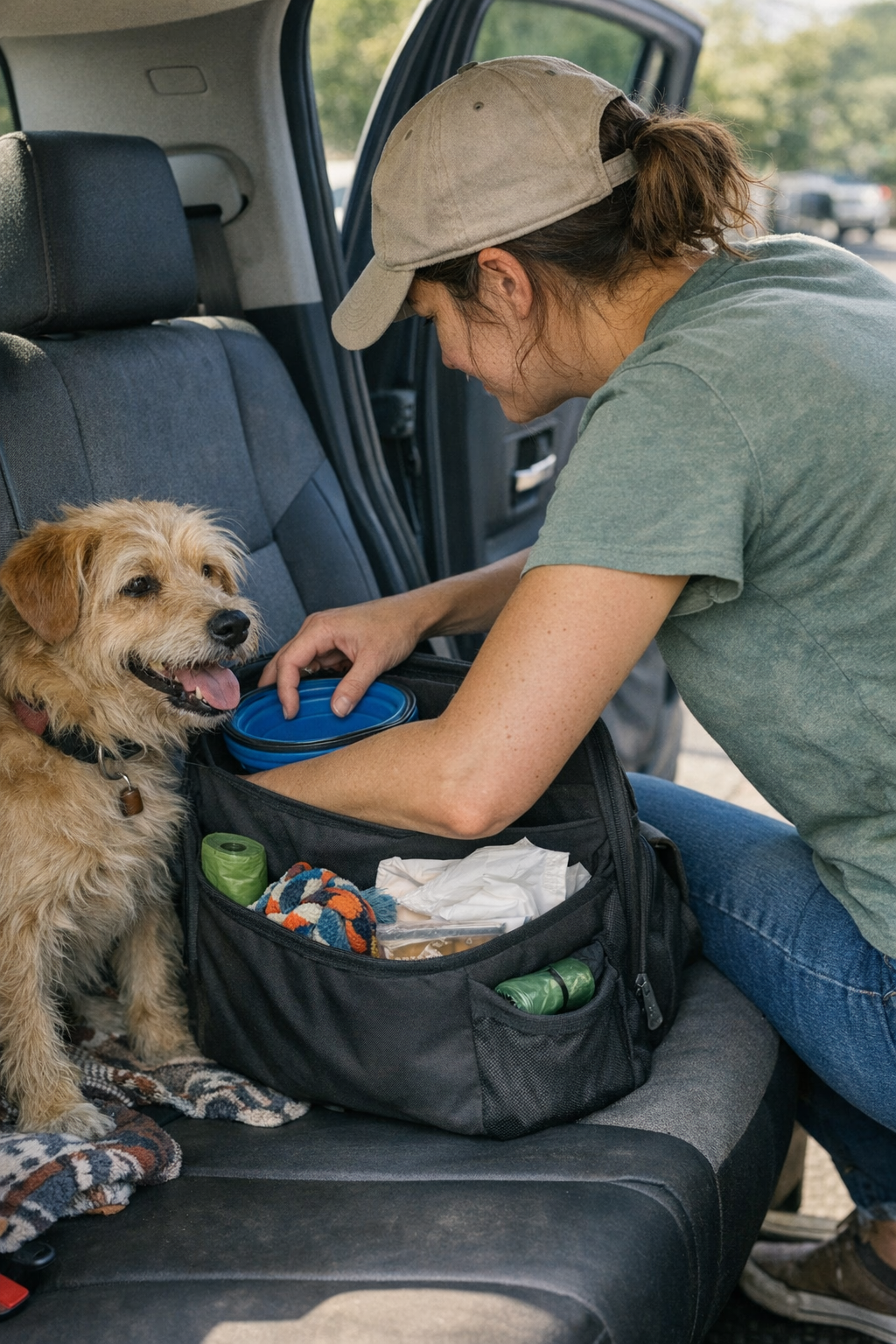
Pet travel bags rarely fail on the first outing—they start working against you after a second or third stop, right where the trip keeps getting interrupted. The bag you packed so carefully at home, with every toy and treat in its place, becomes a surprising obstacle after just a few errands. Suddenly, the leash that was easy to grab before gets snagged under a pouch; wipes drift out of sight when you need to clean up fast; your search for a snack turns into a one-handed battle as your dog pulls at the lead. What looked organized in your living room turns unworkable at curbside, exposing a pattern: every restart, every quick reach, has a cost you didn’t notice until you had to move, pause, and move again. If it feels like your “perfect setup” slows you more each outing, you’re not imagining it. This is the fault line where most travel bags show their true limits—and it’s the friction PawGoTravel was built to address.
Where Most Pet Travel Bags Fall Short (And Why You Don’t Notice Right Away)
Lining up compartments and applying “organizing logic” at home feels productive but misses the strain of repeated travel use. That organizational structure looks stable when nothing shifts. Once you’re out for three errands, four pauses, and the dog’s energy spikes at the worst moment, cracks appear: that deep pocket with wipes becomes unhelpful when it’s wedged under a leash and a collapsed water bowl; food that seemed accessible now hides behind too many dividers. You rarely notice on trip one—problems build at stop two, three, and beyond, making every retrieval slower and forcing you to break your own flow just to access what was supposed to be simple.
Real pattern: the logic makes sense until you’re under time pressure or wrangling a restless pet. Suddenly, your “intuitive” pocket forces awkward twisting, or a zipper now opens the wrong section first. With every stop, items not only drift but overlap: leash clips tangle with blankets, chews wedge themselves behind other essentials, and side pockets become so crowded you avoid opening them until you have no choice. Each friction is small, but together they drain patience and disrupt whatever smooth routine you thought you’d built.
Repeat Routine, Repeat Frustration: The Cost of Over-Organized Travel Bags
If you’ve ever put off pulling out a wipe or treat just because it meant digging, you’ve met the dark side of “hyper-organization.” The real difference between a travel bag that works and one that merely appears ordered comes down to access—in the moment, not just at packing time. You don’t feel the drag until the third stop, when you find yourself thinking, “Can I make do without, just to skip the hassle?” That’s not minor; it snowballs on any real week of travel.
Layered Compartments: More Order, But Slower Moves
Dividers, pouches, and carefully-zipped layers do make packing feel neat. But each layer also makes everyday actions slower. When getting waste bags means unpacking a snack pile, or returning a toy means reshuffling half your gear, the cost is momentum. Sunday night’s order turns into Monday morning’s mini-chaos. You end up sorting and re-packing, repeating the cycle at every stop, building more resistance each time. Organization that blocks movement is not organization that helps you travel.
The Time-Drain Equation—Small Delays, Real Impact
No stopwatch is needed: each time you pause, unclip, or reach for something that isn’t immediately there, the underlying design has failed. The real expense isn’t measured in seconds, but in hesitation—especially when errands crowd together or a pet’s impatience grows. Multiply those little interruptions by every trip, and “good enough” organization turns into the thing you dread re-opening before the last stop.
Real-World Scene: The Busy-Morning Test
Picture any Tuesday: You pile into the car, pet in tow, with five stops lined up. Run into the vet, then the park—then realize, post-walk, that wipes are now wedged behind a snack bag, under the leash, while your other hand manages a fidgeting dog. You balance the bag awkwardly, try to dig one thing free, and drop a toy onto wet pavement. The tidy rooms you built into your bag? They’re now working against you, layer by layer, as your dog gets distracted and every small retrieval turns into a brief standoff. The “organized” setup didn’t fail at home; it failed in motion.
This is never a one-off. Errand after errand, you rebuild and reshuffle, finding yourself hesitating every time you think, “Do I really want to go through that again? Or can this wait?” Each inconvenience stacks up, eroding what little patience you and your pet have left as the trip wears on.
Where Simpler Design Outperforms “Expert” Organization
The real solution is not another layer—it’s a return to directness. Practical improvement means cutting out delays, not adding compartments. Pet bags that allow open side reach, wide-mouth seat-side grabs, or one-hand pockets skip the friction entirely. Instead of digging, you move: leash, wipe, or treat is there, not buried. What looks less “organized” in catalog photos performs radically better when the engine’s off and your hands are full. The less you have to think about setup, the more your routine flows—but only if access is truly instant, not just supposedly logical.
Details That Matter: Access Without the Block
Small upgrades—like an outside pocket you can reach from the car door, or a divider that separates (but doesn’t bury) basics—quietly transform travel. It’s about access, not appearances: if your comfort items, towels, and toys live where your hand naturally lands, you stop losing time debating whether another dig is worth it. You get that time back at every stop, and the stress you shed is real: less fumbling, less tension, and no more watching your neatly packed setup collapse into a mess as soon as your pet gets excited.
Cleanup and Comfort: Only Fast Matters After Stop Three
Nowhere is organization’s weakness clearer than in cleanup. The minute wipes get hidden even one layer deeper, you start skipping small messes and promising to deal with them later. Open pockets or seat-level placement transforms cleanup from dreaded chore to simple step. Likewise, comfort gear that’s easy to return—always visible, never forced “just anywhere”—keeps your entire routine from sliding into chaos after the third or fourth stop.
The Overlap Problem: Pet and Owner Essentials Fighting for Space
Shared zones become battlefields when your water bottle rolls against the dog bowl, or your wallet ends up pinned under a leash. The “efficiency” of mixed packing quickly breaks down in living use: chargers, keys, or phones drift under pet supplies, and the barrier between your plans and your pet’s needs vanishes. The result—interruptions pile up, not just slowing you, but splitting your attention when you should be returning to movement. A bag that splits owner and pet space releases tension and makes fast re-packing possible, even on a rushed schedule.
How to Set Up for True Repeated-Use Success
- Keep essentials visible and instantly accessible. Wipes, treats, and leashes should always sit at the top or in a front pocket, never behind zippers or under other gear.
- Skip deep nesting and extra dividers. If you can’t reach an item with one move, the structure will always slow you down at the next stop.
- Optimize for one-hand, outside-car, or seat-level reach. Select or adapt bags so crucial items can be pulled without moving the entire setup onto your lap—especially when holding a pet or closing a door at the same time.
- Physically separate your items from your pet’s gear. Even a single soft barrier blocks wallet-leash tangles and stops repeated interruptions cold.
The Real Payoff: Less Pause, Smoother Movement, Happier Routine
A pet travel setup that drops the “packed perfection” ideal and adopts direct-access logic wins where it matters: after the fifth restart, during the rushed pause, in the second half of a long errand day. You feel the change when grabbing a leash doesn’t trigger groans, when wipes can be snatched and returned in seconds, and when your hands and headspace aren’t hijacked by fussy compartments. Your pet reads that calm, and your travel moves—plain and simple. Honest design for how people and pets actually move: that’s the PawGoTravel difference.
Find gear that matches the way you actually travel with your pet at PawGoTravel.