
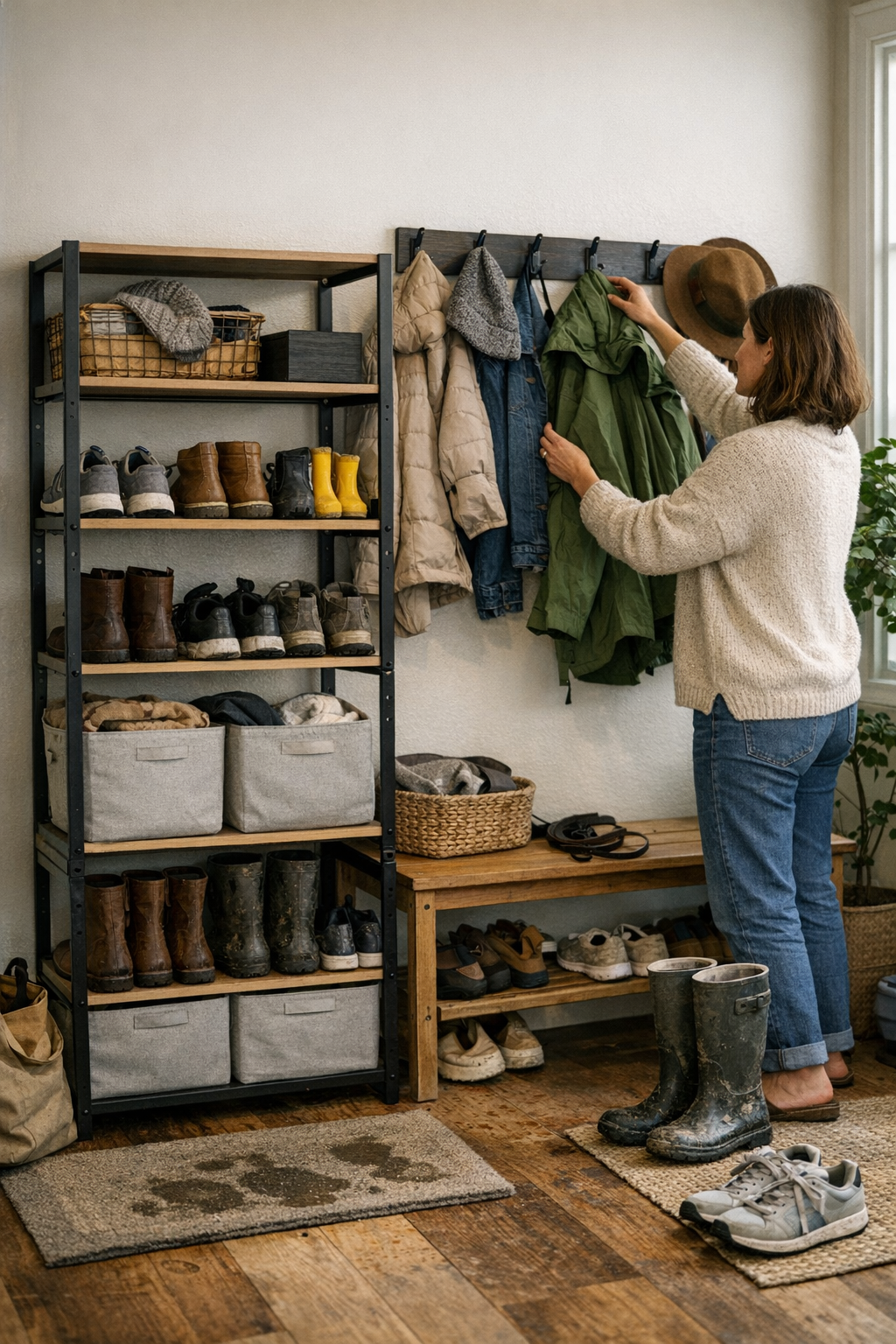
Change hits the entryway fast: What looks crisp after a reset can shift by week’s end into blocked traffic, shoe clutter, and stale air. A single rainy day, a loaded grocery run, or just overlapping routines—all it takes for closed benches and deep drawers to fill, trapping wet boots and bags out of sight, but not out of circulation. By Thursday, socks pick up dampness, shoes come out smelling worse than before, and “tidy” begins to mean losing five minutes to rummaging through a sealed, humid storage box. The entry zone slips from functional to frustrating, even when it looks clean from the threshold.
When Out of Sight Traps the Trouble Inside
The logic feels solid: close a drawer, drop gear inside, shut the lid, and the clutter vanishes. But repeated comings and goings—especially with families, roommates, or guests—reveal the flaw. Moisture from boots and jackets gets trapped under those neat lids. Air stops moving. Yesterday’s weather lingers under the surface. Instead of resetting, you’re piling new clutter on top of old dampness, and by week’s end, even clean laundry thrown on a bench edge emerges with a subtle must.
What looks organized rarely functions that way under repeated use. Each closed drawer or bench compartment hides mess, but also hides air. The apparent order starts working against you—reset gets slower, and gear gets less usable each cycle.
Why Closed Storage Backfires in Busy Entryways
No air means slow resets and stale gear. It’s easy to fill a drawer or lidded bench in a flash—especially after three people come home in the wet, or two days’ worth of routines stack up. The first time you open that bench midweek, you pick up on it: old humidity sealed in, odor left to compound, and now even “clean” sneakers feel off.
- Remove boots, toss them in the bench, close the lid. Next day, you’re greeted by trapped moisture and a musty edge—even if the surface looks clear.
- Entry clutter multiplies: umbrellas, backpacks, extra pairs of shoes all jammed together underneath. One item turns to three, and nothing dries right.
- Tighter packing means zero airflow. Damp piles get damper, and halfway-dry gear never recovers. By the next reset, fresh items pick up whatever’s lingering in the box.
Wall Storage: Airflow That Actually Outperforms Hidden “Order”
Open alternatives—racks, wall-mounted rails, or vertical bench slats—don’t hide clutter, but they clear a bigger day-to-day problem: airflow. Place shoes on a slatted rack or hang jackets with breathing space, and every item dries. Even a narrow entry handles active use. Instead of digging in a box or re-sorting a stuffed drawer, you grab what you need in seconds; nothing gets pressed out of shape, and mustiness never really takes hold.
After switching to a wall rack at home, the difference showed up in lived routine: reset, once a 10-minute dig, now takes a single sweep. Items aired, no surprise odors, no gear forgotten at the bottom of a pile. The drawer went unused—except for things you barely touch in wet weather.
The Reset Reality: Friction at the Door
Entryways break down at friction points: overstuffed drawers jammed tight, benches doubling as overflow, wall hooks ignored because they’re out of the direct line of arrival. “Neat” almost always collapses as soon as real pressure hits:
- Drop a loaded work bag on the bench, and the space purposed for sitting vanishes under stray groceries and mail. Next trip, you’re balancing boots in one hand and a backpack in the other just to find a place to sit—or giving up entirely.
- Return on a soggy evening, try wedging shoes into a full drawer, and feel the path block up. You reshuffle, items topple out, and still the dampness ends up shut in with the pile.
- Racks or rails line up shoes side by side, spreading the row but making every pair visible—and dry. Even in a cramped pass-through, grabbing the right item means one motion, not three.
How Open Storage Handles Real-World Repeats
Entry gear doesn’t come through once—it cycles multiple times a day. Two kids home from soccer, groceries dropped and retrieved, a wet umbrella returning at midnight. Closed systems slowly grind to clutter; open, ventilated storage lets the gear reset itself. Items dried by air won’t stick together, so each return trip feels less like digging out, more like a clear exit and entry.
Wall-mounted storage has no blind corner hiding a slow buildup. Mistakes stay visible—and fixable—before they spread. Reset becomes habitual; blocked traffic and unplanned cleaning sprints almost disappear.
Entryway Reset Tactics That Actually Work
- Skip the sealed compartment for daily gear. Wet shoes or jackets left even half a day in a closed box start building odor. Use wall racks or open shelves: every item ventilates, every item is visible, nothing festers out of sight.
- Lidded benches are for off-season or bone-dry gear— never the daily, never the damp. Store your winter boots up high once they’re dry; keep current rotations open and clear so resets happen in under a minute.
- Shortcuts like dryer packets don’t fix the air problem. Dampness always wins if airflow and structure work against you. If there’s no way for wetness to exit, gadgets only buy you an afternoon at best.
- If the footprint is tight, mount storage vertically on the wall—edge the racks or hooks right in the path of entry. Every inch gained on the floor means less tripping, less edge buildup, less new clutter drifting into the main zone.
Looking Ready vs. Actually Working Under Pressure
Appearance misleads: a flush bench, a smooth line of closed drawers, all can feel under control on a calm day. But routines rarely stay gentle. With three events in one evening, or guests cycling through, overflow appears overnight: drawers jam, surfaces revert to clutter zones, and a single misplaced bag clogs the path for everyone. Returning one pair of shoes means shuffling four other items, and by Friday, the “clean” look is just a shut lid over confusion.
- Drawers go from half-empty to overloaded, blocking grabs and quick returns. One stuck sole means everything stacked above it comes out, mess multiplying while you’re already late.
- Benches collect overflow by default; sitting to remove boots turns into a dance around yesterday’s drop-offs. Surface “order” gives way to temporary piles that never really leave.
- Wall racks keep gear spread instead of stacked—fewer forgotten items, less blocked traffic, and a routine that resets by habit, not by frantic end-of-week cleaning.
When air can circulate and gear is visible, the entry runs itself. Reset pressure drops, and functional order survives the week’s bumps—without turning small messes into recurring problems.
Why Visible, Ventilated Storage Changes the Whole Entry Routine
The clean look is a side effect, not the main win. The real payoff comes in lower reset effort and functional recovery after busy days. When gear has air and space—on a rack, a wall rail, or an open shelf—it dries out, remains fresh, and is ready when you need it. Every threshold crossing is faster, every clutter buildup smaller, and even small entryways can ride out the chaos without bottlenecking. Choosing structure that lets air move means trading in friction and hidden dampness for a zone that flexes and resets, not just once, but every single day.
Find practical entryway storage solutions designed for daily reset and real movement at Betweenry.