
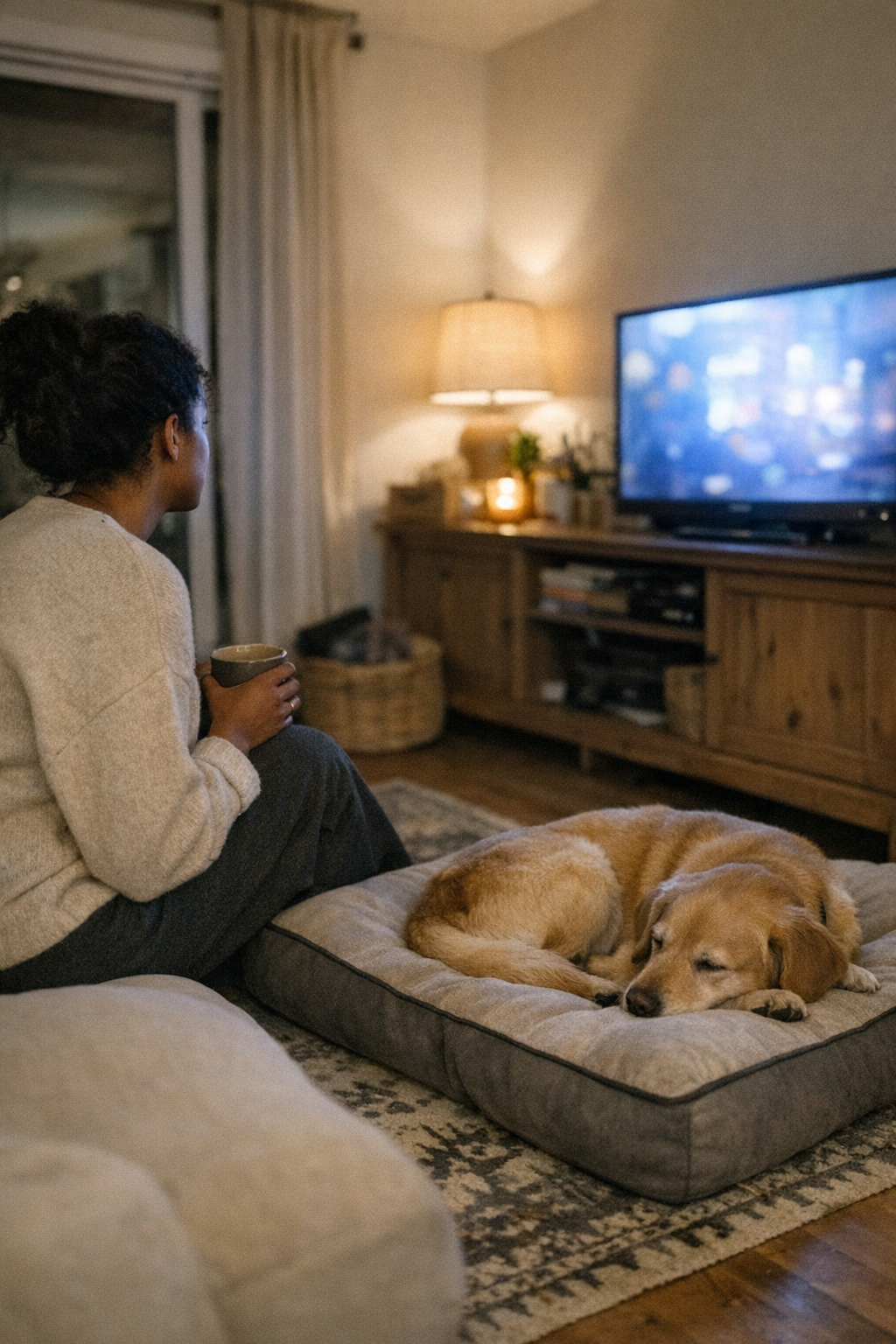
Dog rest at night isn’t just about a soft bed or a cozy blanket. It’s about everything that gets in the way—like the TV’s low dialogue, sudden laughs, or swelling music tracks that echo after hours. Owners rarely point to nighttime background noise as the culprit when their dog “settles but never really switches off.” The living room setup looks fine, but by 9 p.m., as routines slow and dogs curl up, a hidden problem becomes clear: the room feels still, but the rest is thin. Each burst from the speakers prompts a head-lift, an untucked paw, a long pause that interrupts what should have been a winding down, not a waiting game.
When the Room Looks Calm—But Your Dog Never Fully Lets Go
You finish the last walk, deal with small cleanups—maybe you have towels within reach, or maybe you’re half a step late as muddy paws hit the floor. With lights dimmed and water bowls checked, you expect rest to follow. Your dog finds their bed, but what follows is a string of small corrections: a stretch here, a quick glance up, a shift right after a TV shout. There’s a gap between a dog holding their spot and a dog sinking into deep rest—most owners see it only when they look for it.
Nothing dramatic happens. Instead, it’s the steady leak of tension: a “reasonable” TV volume that, for a dog wired to notice sudden sounds, never fully fades out. Commercials pop, showdowns spike the audio, laughter stabs the quiet. The dog doesn’t hide, just hovers on edge. By the end of the week, you’re both more worn down than you should be, and nights are less restorative than they look.
“Quiet” Isn’t Always “Restful”—And Structure Can Work Against You
It’s easy to mistake silence for calm. A tidy room with a corner bed and topped-off bowl gives the illusion of rest, but routine background noise tells a different story. For dogs, barely-there TV sounds become a steady source of micro-alertness. Your setup might look ideal on paper: dog in the best corner, blanket arranged, food and water lined up. But sound drifts, and the bed near the speaker traps them in a zone of shallow dozing—never quite off-duty.
This is the invisible friction that reshapes the entire evening. If you spot your dog readjusting every commercial break, flinching with each spike in volume, what you’re seeing is tension layering itself into the night. The problem rarely announces itself all at once—you feel it in the drag of routines, the slow leak of patience, and the restless start to your own end-of-day wind down.
What Restless Looks Like: Micro-Interruptions You Can Miss
Restlessness isn’t just pacing. It’s the nearly invisible struggles that stack up:
- Dog shifts three times before finally lowering their head, only to shift again at the laugh track.
- A single loud commercial means a hesitant paw stretches off the bed, then retracts once the noise calms.
- Each new scene triggers a quick head-turn, eyes checking—always a half-step from real sleep.
- Their curl is tense, paws partly folded, muscles flexed, as if waiting for the next jolt.
Over several nights, you don’t need data to spot the cumulative effect: your dog’s rest spot turns into a permanent “just in case” station. For owners, it means routines drag, bedtime gets later, and everyone wakes up with less reserve. The trouble isn’t dramatic, just persistent—always hiding behind an “almost fine” setup.
The Repeat Weak Point: When “Fine” Fails Over Time
After the last walk—sometimes after a scramble for wipes you wish were closer—you return, cue up the TV, and expect the day’s friction to ease. Instead, the bed placement leaves your dog inches from every noise burst. Night after night, this spot becomes the weak link: the late-night action scene or offbeat sitcom laugh undoes the calm. You catch yourself pausing the show, hushing the volume, calling the dog over to try again—as if resetting the same mistake repeatedly.
The weakness rarely shouts. It builds across nights: setup looks normal, but the sum of small disruptions undoes the tidy appearance. Each fresh interruption stirs up just enough confusion that rest never really lands, and the routine starts needing constant “just one more” adjustments.
One Tweaked Detail Can Reset Everything
You don’t need a new system—just a realignment. Lower the TV volume by two notches, enough that it quietly disappears at dog level. Slide the bed away from the speakers—sometimes a single cushion-width creates the buffer you both need. Across three nights, you can actually track the shift:
- First night: fewer shifts but alert ears when the noise spikes.
- Second night: the dog settles earlier, stretches are slower, rest periods get longer.
- Third night: no more quick lifts or tension in the bed—only the true signal of rest: paws tucked, eyes closed, breathing steady.
Real rest isn’t silent—it’s unbroken. When your dog’s tension melts and those small resets disappear, you’ve worked around the friction point that most routines keep missing. The goal isn’t a “quiet room” but an easy one—a flow that stops needing owner-side intervention every night.
Spot the Early Clues—So Fixes Come Before Patterns Settle
This ongoing friction is easy to write off: after all, you both “deal.” But the owners who catch these low-level signs early—especially on nights without background noise—see real improvements. Notice what vanishes on quiet evenings: restless fidgets disappear, bed time shortens, and the cycle of shifting and resetting slows or stops. The room signals when it’s right, if you’re willing to notice what’s not happening anymore.
The fix isn’t overhauling your living space. Check where the bed lands relative to the noise source and main walking paths. Rearrange furniture—shift the bed near a wall or buffer it with a rug, ottoman, or folded blanket to muffle the TV’s edge. Repeatedly missed wipes after a walk? Move the storage point—not just closer, but within arm’s reach. The benefit isn’t in the picture—it’s in the unfussy flow: when cleanup and wind down fit without pause or detour, the routine gets lighter on everyone involved.
The Details Aren’t Decorative—They Stack Up Fast
What piles up isn’t visible clutter—it’s all the near-misses: a leash snagged under a chair, a towel one room away when the mess happens, a dog bed that looks ideal but gets ambushed by sound every night. These are the adjustments that move routines from “barely holding together” to quietly reliable. Each changes little by itself, but together, they end up flipping the week from draining to manageable—without fanfare or redesign.
Where “That Should Work” Leaves You Unprepared
Most owners stop at “good enough.” TV feels low, bed looks ready, dog stays more or less put. But friction hides in setups that look organized yet keep making the same small asks: a bit more patience, one more reset, or a late rescue for something that should have been at hand. Over time, these interruptions become baked into the routine—until you step back and layer out the last source of repeated drag.
When minor shifts—like dropping the volume or scooting the bed—wipe away the pattern of micro-disruptions, you see the difference immediately. The room demands less correction. The dog finally rests. You spend less attention managing a zone that “should” have just worked—and the routines lose their undercurrent of strain.
The Test: Does Your Setup Actually Make Nights Smoother?
Change nothing major. Instead, try what’s missing: soften the soundtrack, nudge the bed, give it three nights. Ignore the decor for a moment; watch the movement—do restless shifts and scanning glances fade? No elaborate fixes, just small tweaks that pull hidden tension out of the air. When a setup stops creating points of friction, routine becomes background, not a nightly task list.
The difference is practical, not pretty. Routines that stack up the right way—wipes within reach, walk paths clear, rest spot buffered from noise—let the small things fade away. That’s what makes a real dog-life setup work: fewer interruptions, quieter resets, and the slow removal of everything that kept the night just less than restful.
For more everyday dog-life