
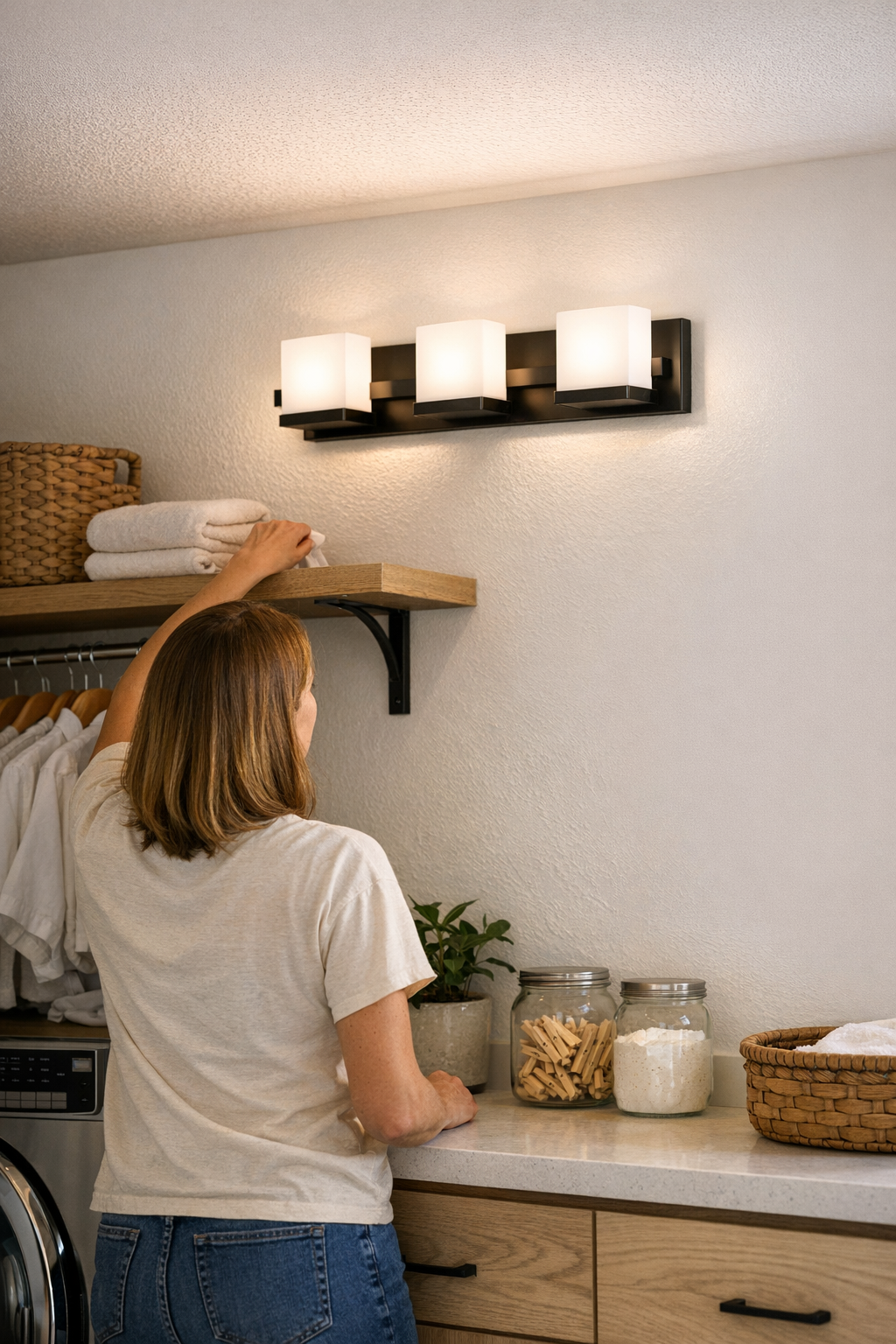
The real test for indoor lighting isn’t whether it turns on—it’s how reliably it works after a week of actual living. The mounting anchor, that unnoticed connection overhead, decides whether your light fixture stays steady or slowly surrenders to shadows, glare, or a creeping tilt. If you’ve ever crossed a hallway and noticed your path disappear into a pocket of shadow, or tried to use a bathroom mirror only to find the light above throwing split reflections or an uneasy wobble, you’re already paying for a mounting shortcut. Flush mounts, wall sconces, vanity lights—all rely on a hardware connection that sounds simple but quietly controls the way your light survives doors slamming, baskets bumping, and vibration building up, day after day.
The Hidden Cost of “It Fits Well Enough”
Not every lighting anchor is equal, and “close enough” results add up fast in real use. A flush mount that seemed steady on install day becomes slightly crooked once steam softens bathroom drywall or laundry baskets knock the ceiling. Glare sneaks in from an exposed screw. A shadow—barely there at first—expands with every footstep until you notice you’re folding clothes in a dim corner or re-aiming the bathroom mirror to avoid a distracting double image. These aren’t issues you catch while standing on a ladder. They show up below, every day, moving slowly but steadily into your routines.
The ceiling (or wall) might look uniform, but a misaligned light disrupts the whole room’s balance. Corridor fixtures cast shadows in odd directions, making a late-night pass feel less safe. Kitchen or laundry lights seem to work, except the actual counter or folding surface turns dim, or the cabinet run suddenly ends in a pool of shadow. The inconvenience is quiet, but it keeps returning—each time you reach for more light and find it off-center, unreliable, or demanding small fixes that never quite last.
Where Routine Begins to Reveal the Mismatch
Reliability slips when “good enough” anchors meet real movement. At first, a hallway’s ceiling light or laundry corner flush mount seems unchanged. But after a door slams or you drag a hamper beneath, a swap-in bracket starts to give itself away. A fixture that felt solid now leans, vibrates, or rattles—sometimes only enough to nudge a shadow line, other times enough to draw your eye every time someone crosses the room. The difference grows only with repeated use: one fixture stays silent and stable, the other breaks your routine with every small tremor.
It’s not an installation flaw—it’s a daily-living mismatch. Stop at the turn of a staircase and check how a slightly twisted ceiling light throws uneven lines on the steps, making your footing uncertain. Try to spot your reflection in a bathroom mirror while the overhead fixture slowly shifts, spilling glare across half your face or leaving details faded in the wrong places. The room is lit, but the lighting fails at the very points where clarity and safety are supposed to be automatic—movement paths, counter edges, mirror centers.
Laundry Corners and Drifting Fixtures
Install a flush mount in the utility room using a leftover bracket and most days it looks fine. But after you thump a laundry basket past, or wipe dust off the shade, the slightest nudge sends the glass rocking. Each vibration gathers shadows behind the machines or leaves dead spots just where you need to see. Suddenly, folding or sorting is less certain, shelf edges blur, and routines require you to shift or squint more than before. Over time, it’s not an issue of style—it’s an ongoing interruption, an accumulation of shadows exactly where clear light should be, nudging you to either fix the misalignment again or put up with subpar results.
Bathroom Mirrors: When Vibration Sneaks Into Vision
Generic anchors in bathrooms rarely last long without trouble. A fixture can start to creep downward, screws loosen with each heavy door swing, and the shade shifts until it stares back at you—off-center or slightly vibrating—each morning in the mirror. If you’ve ever seen a faint second image or a flutter at the corner of your eye while shaving or applying makeup, you know the subtle havoc: glare that steals contrast, shadows that obscure fine details, or a buzzing fixture that refuses to stay aligned through repeated use. Every cleaning or hurried towel-swipe widens the gap between how the fixture appears and how reliably it controls your light.
Why Original Anchors Matter for Repeated Use
The right anchor is invisible when you get it right, and quietly disruptive when you don’t. Flush mounts and panel lights depend on anchors designed for their specific vibration, weight, and ceiling slope. Semi-flush or wall sconces face sideways torque each time a nearby door closes or someone brushes past. Fixtures meant for damp or high-activity spaces—bathrooms, laundry—require anchors with moisture resistance or built-in damping. Replace any of these with a generic or mismatched part, and you transplant the issue from “quick install” to “constant adjustment.”
- Flush mount fixtures need secure anchoring to hold their shape against the daily low-level tremors of multi-use rooms.
- Semi-flush and wall fixtures reveal small bracket errors as mounting stress—one side droops, shadows lengthen, and patterning on the wall becomes uneven.
- Damp-rated and utility fixtures need corrosion resistance and anchors that won’t loosen after weeks of humidity or repeated wiping—qualities generic parts usually lack.
One small tilt makes a room look bright but function poorly: glare bounces off shiny handles, pooled light forms where you want even spread, and the safest walking path blurs with unpredictable shadows. Instead of a once-and-done installation, lighting becomes an ongoing, low-grade annoyance—tightening, straightening, repositioning—or just putting up with less usable space.
What Real Repeated Use Teaches Us About Indoor Lighting
After a week in a lived-in space, the flaws of a “universal” anchor start stacking up in routines you didn’t plan to change. These are not catastrophic breakdowns. If you’ve stepped into a corridor and watched your own shadow switch sides, or turned at a stair to find half the step washed out with glare—while the fixture above looks untouched—you’ve seen the limits of quick-fit hardware. Maybe your laundry area’s surface seems to dim week by week, or the bathroom mirror splits your reflection after each door slam. Even minor issues—having to adjust a fixture every few days or ignore a slight buzz—signal that the anchor isn’t working for your real space.
- Hallways where the fixture-level light looks fine, but your movement path drops into uneven shift or shadow
- Bathrooms where the mirror repeats edges or throws glare that makes close work tough
- Laundry or utility surfaces losing bright, even spread, especially after routine bumps or cleaning
- Fixtures you have to nudge more than once a week just to keep level
None of these failures are dramatic—but they keep your lighting from ever feeling finished.
Two Small Upgrades That Prevent Big Annoyances
- Always use the purpose-built anchor for the fixture and surface you actually have. It’s the smallest, most decisive detail for keeping light steady and spread predictable—not just on setup day, but through weeks of moving, cleaning, and living.
- Check and retighten mounts after one week of normal activity. Most misalignment sneaks in only after repeated shutdowns, bumps, or cleaning. This single step helps you avoid the slow drift and loose hardware that turn strong lighting into a repeat problem.
The Difference You Notice—And the Frustration You Don’t Have To
No room fails because it “looks” dim or bright—what matters is whether sightlines, surfaces, and movement paths stay clear, without ever grabbing your attention for the wrong reason. The right mounting anchor doesn’t perfect the lighting, but it ends the cycle of creeping shadow, shifting glare, and silent frustration that pulls you out of your daily rhythm. It’s not about flawless interiors—it’s about finally being able to forget about your lighting because it just works, day after day, in the rooms you actually use.