
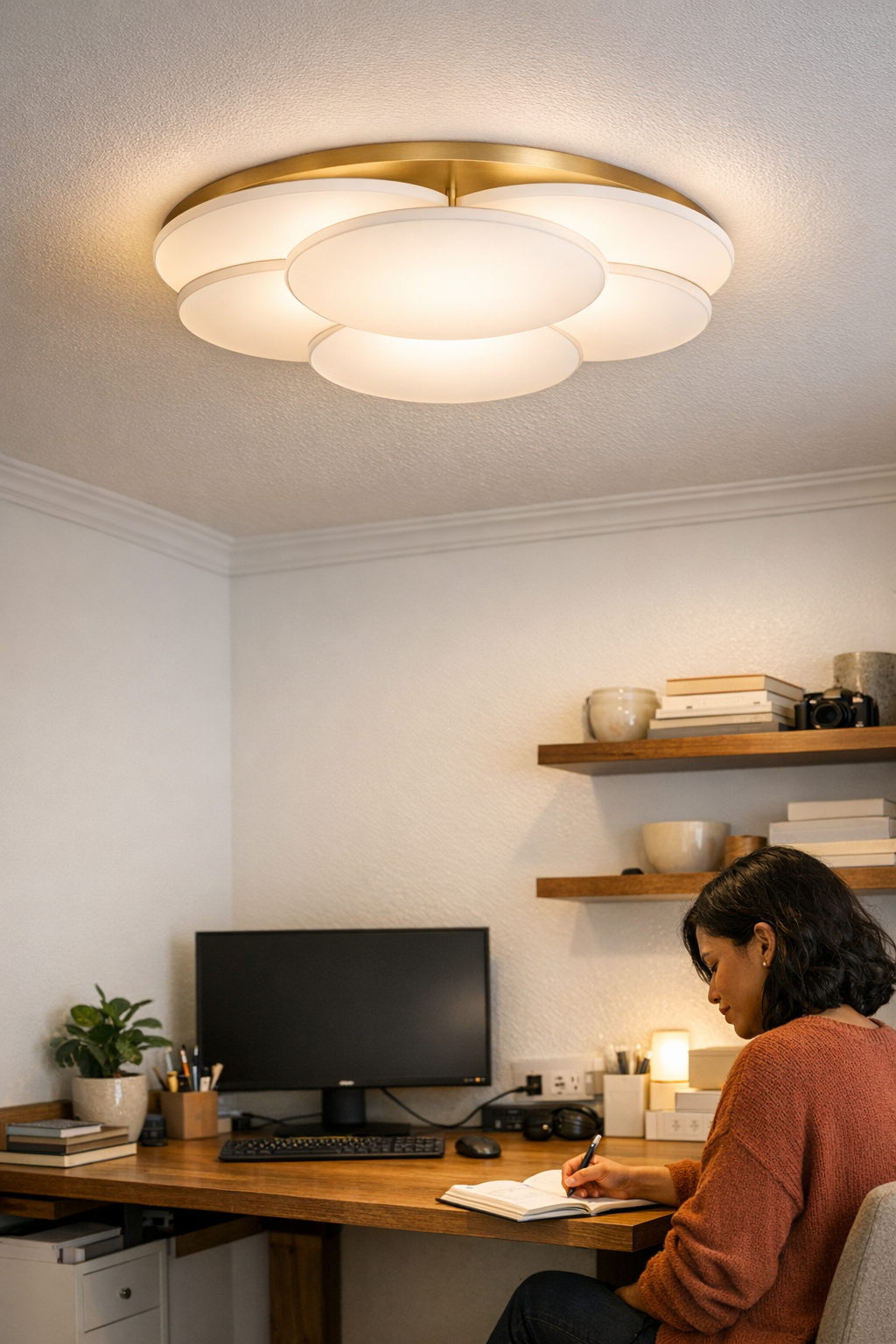
Every unfinished desk setup has a tell: the corner that stays dim, the tangle of cables that outlasts every tidy-up, the lamp you nudge three times a day and still can’t get right. Cramped workstations, shared surfaces, and shelf-lined walls reveal a stubborn pattern—glare where you want comfort, shadow where you need clarity, exposed cables catching dust and attention. Even when you cycle through different accent lamps or reposition cords, there’s a sense of grinding friction—the routine won’t flow, the space never feels resolved, and the mess rebounds after every reset. The trouble isn’t always a missing fixture; more often, it’s mismatched lighting and a patchwork of supports that can’t keep up with how the space is actually used.
Where Patchy Lighting and Clutter Keep Returning
Spend a few real weeks at a desk wedged into a room edge or between shelves: you route cables, you reorganize, slide the lamp closer to the monitor. Within days, the drag returns. Accent lamps and scattered desk lights carve small wells of glow, but they can’t catch the far edge or the shelf end where you reach for chargers or files. Shadows stretch just past every lamp’s reach; cords sneak out from behind the monitor or puddle below the outlets. Nothing feels anchored. More rerouting means more visual clutter.
The frustration becomes real the moment you move from quick check-ins to actual tasks—collaborating at a shared desk, switching between reading, typing, handling paperwork. The limitations pile up: dark strips along the desk edge, a blind spot under the shelf, and cables always threatening to trip up your next move. A cluttered look is a warning, but the deeper drag is how often you need to fix, tweak, and adjust just to get a basic level of comfort.
Why Panel and Linear Ceiling Lights Change the Equation
Mounting a panel or linear ceiling light above your core zone is a shift you feel in the routine, not just the look. Direct, evenly thrown light clears up both work surfaces and those awkward shadow patches that accent lamps never reach. Outlets stop overflowing, extra lamps become obsolete, and scattered cabling drops away. The old loop—rolling your chair to catch a better angle, unplugging one device to find another, nudging a lamp every time your mood or task changes—starts fading out of the workday.
Another side effect hits instantly: uniform, practical light exposes the corners standard accent lighting left in hiding. Dull cables, dust-bunny outlets, the missed pen under the shelf edge—they’re suddenly plain to see. What passed as “good enough” under soft, patchy light now reads as half measures. Real, even illumination reveals each weak spot in the routine and makes the “clean” state last because there’s no easy place for disorder to gather.
The Moment Dead Zones Disappear
Picture a desk stacked tight against a wall, a shelf pressed close, and power bricks fighting for access below. A couple of accent lamps provide a pleasing start—a cone of light on your keyboard, a glow marking the corner. But within the first week of real work, familiar friction returns. Cables overload a single outlet run, your drawing hand falls into shadow, and changes in layout (adding a new charger, sliding in a second monitor) set off a new wave of cord mess and dim patches.
Swap in a flat panel ceiling light, placed in line with the desk and shelf—not just anywhere above—and the change is obvious the first evening. No more shadowed tools, no more hidden USB drives swallowed by a dark strip, and a dramatic drop in daily cable tangles—often by half or better. This isn’t cosmetic: working, reading, and cleanup all happen without pause, because visibility finally matches the space’s real use, not just its display angle.
When Surface Cleanliness Equals Real Usability
In most workspaces, “tidy” is mostly for show—easily unbalanced by new projects or one too many cables. The real payoff comes when every surface stays both visible and accessible across every task, without constant fussing. Before a ceiling panel upgrade, you might start the morning with a bright, neat space, but by lunchtime—after a few project changes—papers creep into shadow, and the desk face is split between glare and dimness. Tools migrate to the lit pocket; everything else disappears under piles and weak light.
Smart mounting and support fix this at the structural level. Center a panel light above both desk and shelf—aligning it, if you can, to match the main run of your power strip or bracket supports—and the benefit is immediate. The need for daily untangling, constant re-positioning, and awkward wrist angles vanishes. Even minor detection—the stray microSD, that runaway pen cap—is easier, because you aren’t battling glare or guessing if you missed something in the shadow. Instead of tidying by shifting clutter out of sight, you simply stop having places for clutter to hide.
The Drawbacks of Relying on Accent Lighting Alone
Accent lamps fit a purpose—but handling main work zones with them is a recipe for repeating the same interruptions. At a glance, they promise flexibility and mood. After any real stretch of use, the cracks appear:
- You’re up and down all day, re-aiming to dodge glare as the sun shifts or your task changes.
- Cables sprawl across the desktop or into arm’s reach, refusing to stay routed, getting worse as you add or swap devices.
- Every tweak in layout—new screen, moved printer—means another plug, more support, and more visual mess, not less.
No cable routing trick holds for long. And the bottom line: if you need both sides of your workspace—the “good” side plus those neglected corners and shelf-ends—accent lights can’t stretch far enough. Every new task or device restarts the shuffle, consuming time and attention before you even begin actual work.
Better Placement: How to Avoid the Most Common Lighting Misses
Real misses aren’t abstract—they crop up every day:
- Mounting a fixture too tight to a wall so one section blazes while the rest sits in shadow.
- Focusing the light on the main desk but ignoring an adjacent shelf, leaving a dark band where needed gear goes missing.
- Running cables or support brackets in the open, cluttering sightlines and turning every clean-up into an extra job.
A fix that matters: Lay out your real tools, devices, and daily stacks before choosing a lighting layout. Judge whether you can reach everything without crossing through cords or angling for stray light. Then, run brackets or cable supports out of direct sight and above, not along, the workspace—so access and visibility aren’t disrupted the second you sit down.
When Lighting Setup Stops Requiring Attention
The best proof your lighting and supports are working is this: you stop thinking about them entirely. With a solid ceiling light placed where the work happens, and all support hardware trimmed out of the way, everyday routines run smooth—and boring in the best way. Papers slide, hands swap tools, new gear moves in. Nothing about the setup demands your attention. You’re not hunting for lost items, not juggling cables, not shifting lamps to find an untouched patch of clarity.
The tradeoff is clear: accent lighting’s layers look great but can’t manage the reality of day-to-day work. What matters, in the long run, isn’t first impressions or showroom looks—it’s the disappearance of friction: no more shadowed tools, cable distractions, or half-finished surfaces breaking your flow. If you work at a compact desk, share crowded table space, or need every shelf useable—not just visible—the step from patchy light to clear, evenly distributed ceiling lighting makes the difference. Check that coverage extends where you need it, and even the messiest routines stop fighting the space.
Visit LightSupport for practical indoor lighting and support.