
Every organized carry-on looks ready for anything—right up until the first real test. That crisp setup: grid of packing cubes, zipped pockets, folders stacked neatly, offers the illusion of total control. But give it an airport—one security line, one gate change, a few reach-and-replace scrambles—and the cracks start showing before you even board. The wrong item surfaces; must-haves get buried; just as pressure climbs, your access gets slower, not smoother. What begins as order, fast becomes a new kind of travel drag—hidden until your bag sees real, repeated use.
The Hidden Flaws of “Departure Order”
The classic hotel ritual—everything boxed, grouped, and zipped into place—seems rational. Devices lined up in one sleeve, documents pocketed, cables coiled with care. Yet, on the move, perfection unravels fast. The first time you need your passport—standing at a cab or a checkpoint—you’re already peeling back layers, second-guessing where things went. Outside that neat hotel room, “organized” turns into shuffled layers, and what looked efficient now feels like friction multiplied across real airport routines.
Packing Neatness vs. Access Pressure
The tidy departure map doesn’t survive the airport shuffle. Chargers migrate, snacks wedge themselves above your critical tech, and the outer pocket—once Passport Central—is now a snarl of wrappers, scribbled receipts, and tangled cords. The original plan collapses under each new addition or last-second repack; needing one thing means unpacking three, slowing you down just when moving faster would matter most.
When Order Fails Under Real Movement
This tension plays out in a hundred tiny scenes: unzipping pouches in the security queue while people sigh behind you; digging elbow-deep past a shaving kit to reach a boarding pass; pausing in the aisle as you reshuffle half your bag just to show one document. The system you built for clarity now ensures every needed item takes its own small detour—adding up to frustrating, repeated delays.
Checkpoint Stress: Where Structure Gets Exposed
No moment exposes packing mistakes quite like airport security. At each checkpoint or boarding shuffle, you become a test case for your packing logic. Tray after tray, a passport slipped under a charger or a pouch that slumps below what you need becomes a mini-obstacle course. Suddenly, a “neatly organized” setup just means more steps to get anything out.
How Quick Access Slides Out of Reach
Sections marked “quick access” at first? They sink, literally, under the day’s debris. The outer pocket meant for travel docs slowly turns into a dead-drop for whatever you had in your hand last. Each reach turns into a blind grab—snags, cables, wrappers—leaving you second-guessing every placement, and slowing down for one more zip, one more hunt.
Boarding Lane Fumbles
Final boarding, and here’s the familiar script: carry-on swinging by your side, one hand searching for a charger or snack, the other balancing everything else. Quick entry gets derailed; you stop mid-aisle, blocking traffic while digging for a ticket now buried beneath travel detritus. What was meant to hide disorder now hides access. You notice who moves smoothest: it’s not the best-packed, but those with one clear reach for the essentials.
Why Perfect Packing Rarely Survives the Return Trip
Leave home with everything sorted; return with each pocket a mix of survival improvisations. New receipts mingle with socks. That “temporary” snack now lives in the document sleeve. By the time you’re chasing a connection or waiting to reclaim your bag, the failure is obvious: it isn’t how neatly you packed, but how quickly you can get to what you actually use that determines if your system works under pressure.
Access Over Appearance: The Shift That Actually Helps
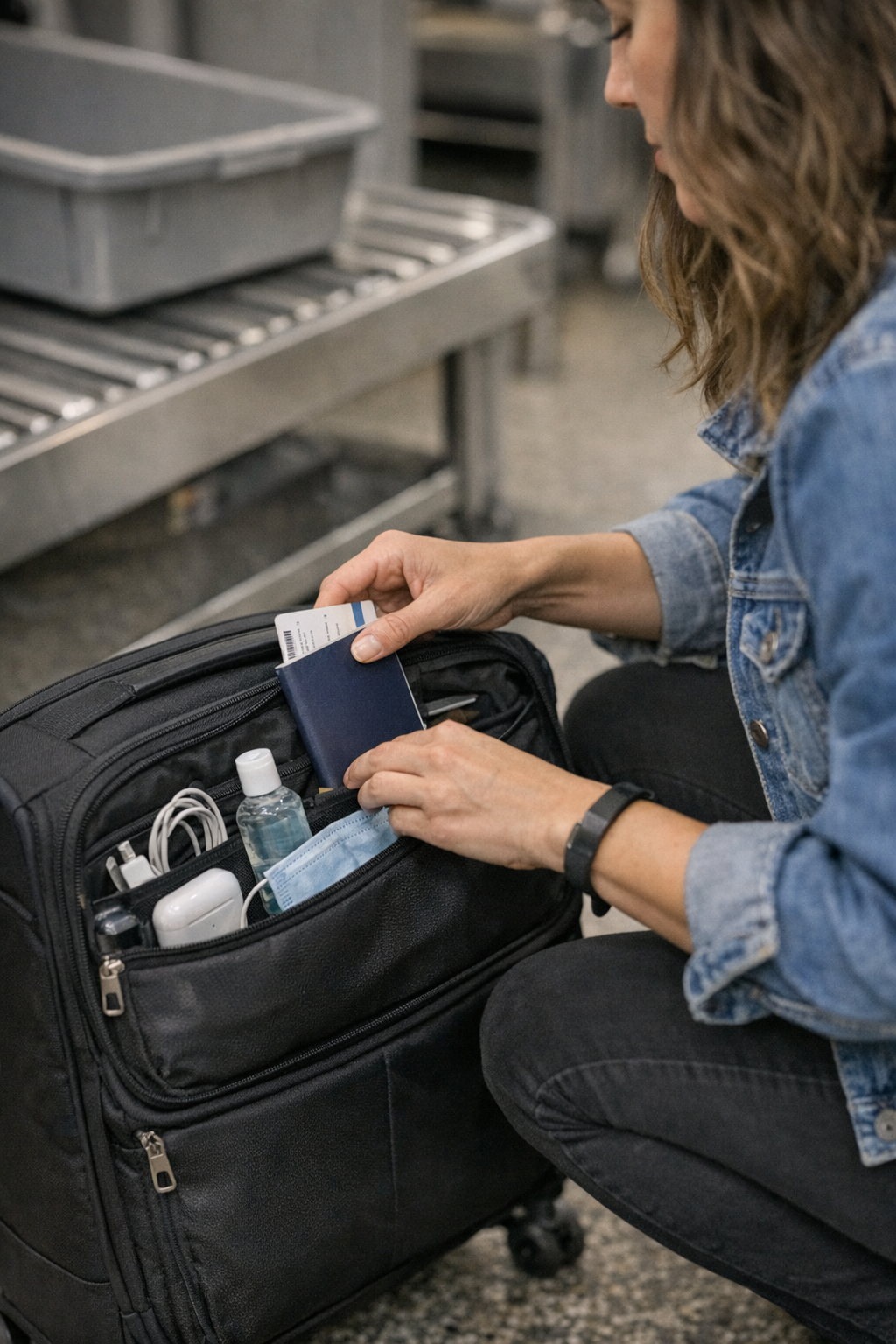
The difference-maker isn’t another clever pouch. It’s giving up on restoring showpiece order for your return and making practical, in-transit access king. Before checking out, strip away performance packing habits. Gather only what you’re guaranteed to use—passport, boarding pass, critical tech and charger, sanitizer, snack, maybe a mask—into a single outer access point. It refuses perfect symmetry, but under travel stress, you’ll spend zero time searching, and skip the failed “quick tidy” before every hand-off.
One-Zip Control: The Hidden Upgrade
By clustering all essentials in an accessible front pocket or section, you slash the number of movements at every checkpoint and gate. One zip. One reach. Everything else—rolled t-shirts, backup pouches, hotel folders—stay untouched. The visual appeal of the main compartment is untouched, but you’re no longer sacrificing flow for neatness when things get crowded or time gets tight.
The Repeat-Use Reality: Smoothness Beats Symmetry
Pure order works for photos and first impressions, never for real, repeated travel. An organized carry-on doesn’t guarantee you’ll glide through security or boarding if every access point triggers a domino effect of repacking. With every trip cycle, the demand for smoother operation exposes the limits of “perfect packing.” Real travel chips away at pretty order until only functional setups survive.
The Case for Sacrificing “Perfect” for Practical
Most travelers try to recapture initial neatness before the flight home, only to block direct access to what the airport will repeatedly demand. A better rule: access beats aesthetics, especially under stress. Instead of reshuffling for looks, front-load the stuff you’ll grab most. If outer pockets fill with chaos but nothing important is lost or delayed, that’s a travel win, not a packing failure.
Simple Setup, Real Change: What to Try Next Trip
Skip the mirror-image repack—run a fail-proof exit check:
- Relocate every must-grab item (passport, ticket, tech, charger, mask, wipes, snack, pen) to one instantly reachable outer section, even if it looks a little more lived-in.
- Ignore the urge to restore “departure order”—if one-zip access works, don’t mess with it for appearances.
- Use each trip to adjust: if you kept reaching for something tucked away, give it a better spot next time. Each leg is a live test.
In the end, the best carry-on setup isn’t the neatest—it’s the one that keeps you moving through real travel strain with the least interruption. Order matters, but friction (or the lack of it) matters more in the long run.
For more practical travel tools that survive real-world carry-on routines, visit CarryOnSupply.