
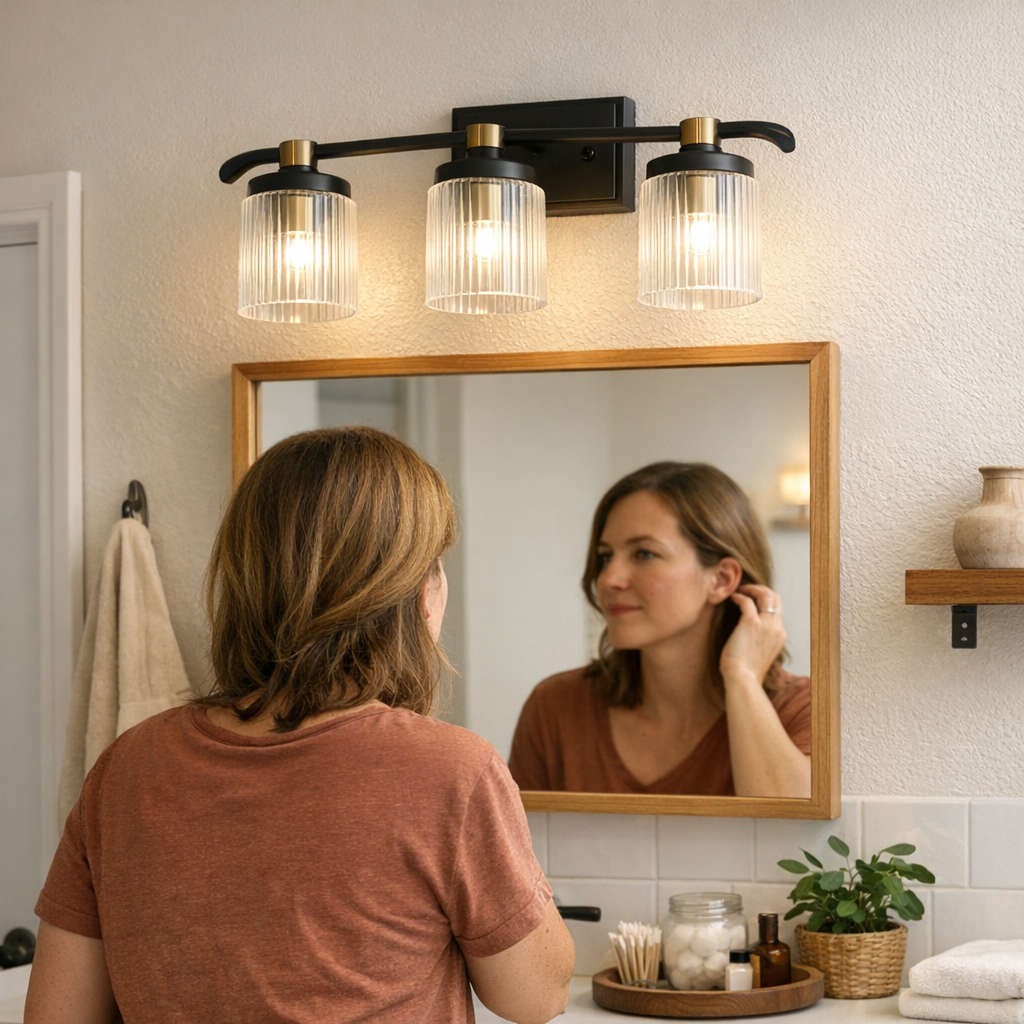
You install a new flush mount, wall sconce, or bathroom light and expect a finished upgrade—until you step back and see it: the faint tilt, uneven glare across the mirror, or a shadow slicing through the one spot you use every day. Small misalignments at install—the kind that slip in from “eyeballing” or quick measurements—don’t just look sloppy. They shape the room: task areas go dim, stair landings gather dark patches, and daily movement gets awkward. In real-world lighting—hallways, vanities, laundry rooms—a few millimeters off at the start means years of living with fixtures that never feel quite right.
The Hidden Gravity of a Few Millimeters
Indoor lights rarely fail dramatically; they fail in the margins. A ceiling panel that’s even slightly skewed throws shadows where you fold laundry. A bathroom mirror catches glare on one half, leaving the other in semi-darkness. Spaces that look bright at first click feel tiring after a week, simply because a misplaced light throws off routines. Repetitive annoyance creeps in—lingering at a stair turn to find your footing, leaning to one side at the mirror for even light, or shifting groceries around for a well-lit countertop. These aren’t one-time irritations; they’re baked into the space by the way drill holes were marked in the first place.
Every small error grows when the routine sets in. By the third or fourth pass up the stares, or the tenth time you notice your face half-shadowed at the vanity, you realize these quirks aren’t going anywhere. That’s when tiny miscalculations become noisy, everyday friction—avoidable, but now part of the room.
Why Tape Marks Change Lighting, Not Just Looks
Lighting isn’t just about hardware or style. What matters most is how that fixture’s position matches up with how the space gets used again and again. Tape marks—simple painter’s tape, not a fancy tool—are where intention gets checked against reality. Without them, lines go crooked, shadows stretch the wrong way, and glare jumps into view from exactly the spots where you stand and move.
Marking with tape beats memory and visual guessing by:
- Making real perspective visible: Tape lets you check the intended position exactly from where you’ll walk, turn, or do work—so you catch problems before drill bits leave scars.
- Protecting small spaces: In narrow baths or corridors, just a little off-center becomes a glaring flaw. Tape helps lock in the right spot on the wall or ceiling, where the fixture actually serves the room’s pattern.
Real Scenes: Seeing the Problem Emerge
Small Bathrooms: Every Inch of Light Counts
Picture a bath where the mirror’s edge nearly kisses the wall. Hang the vanity light by feel, and you’re stuck leaning at an angle each morning—one side of your face bright, the other in shadow. You stop noticing the room and start compensating for it, shifting with the fixture’s mistake every single day. It isn’t just a cosmetic miss—it’s built-in inconvenience at the most-used zone.
Hallways: Subtle Shifts, Immediate Effects
Hallways and entries survive on a single fixture. Mount it without taping the mark and, over time, you find the left wall’s always gloomed, or the right side stays washed out. Movement patterns twist: you hug the bright side, rush past the shadows. A minor mounting slip interrupts flow for years—until you finally face a rework.
Laundry Rooms and Task Areas: Glare and Shadows
What looks “centered” from the doorway can mean constant shadow at the folding table, or glare bouncing straight into your eyes by the second load. Under-cabinet lights seem promising, but a guessed placement leaves the best working edge dark, making you angle every dish or shuffle piles just to see clearly. A room can look well-lit but still blind or strain you right where it matters.
The Cascade from Small Errors
The difference between “it looks finished” and “it actually works” comes down to placement. Tape marks are a small step that turns potential errors visible—before the drill locks them in. Without that check, routine failures start stacking up:
- Ceiling lights or sconces show a tilt that grows more obvious every day
- Work surfaces stay in the shadow, no matter how many bulbs you swap
- Mirror zones collect uneven glare, making tasks awkward instead of easy
- Fixes mean patched drywall, paint, and more time lost—never fully restoring the surface
In small rooms and flexible-use spaces, these flaws are amplified. Once you’ve lived with them, “almost straight” becomes a persistent defect burned into your routines.
A Small Habit for Consistently Usable Light
The most functional lighting is invisible in everyday use—you don’t have to sidestep shadows, lean for clarity, or wonder why one spot never feels comfortable.
Getting there isn’t about expensive fixtures or complicated plans. It’s this: mark center and edges with tape, transfer marks to the surface, and review from every real angle you’ll use. Hold the fixture in place, check for off-kilter shadows or glare, and adjust before drilling. In corners and tight runs, a centimeter is the make-or-break difference. This habit pushes chronic little problems—odd tilts, dim edges, fixed glare—out of your routine for good. You notice best not because the lighting wows you, but because nothing interrupts; the room finally matches how you move, see, and work.
Practical Tips for Lighting Precision
- Choose blue painter’s tape—it stands out, peels off cleanly, and won’t pull paint.
- Mark your spots from use-perspective, not just stand-in-front drilling. Get to where you’ll actually need light.
- For fixtures with multiple screws, measure between tape but also double-check by visual alignment—since walls and ceilings aren’t always as straight as the level suggests.
- Before committing, hold up the fixture (even loosely) to spot which way shadows or glare land, and tweak placement if needed.
Lighting that Works, Not Just Lights Up
Good tape-based marking doesn’t show off when the switch flips. Its value is felt later: a hallway that just stays evenly bright, a mirror that doesn’t force you to lean, a laundry counter that stays lit no matter the hour. The best setups “disappear” because they don’t draw attention—they clear the path for whatever you’re doing, without constant correction.
Lighting isn’t about wattage or bold new styles; it’s about whether the space actually works at the points you use the most. Painter’s tape isn’t a shortcut—it’s the everyday tool for getting usable, satisfying light without drama, mess, or expensive second tries.
Find more practical indoor-lighting solutions at LightHelper.