
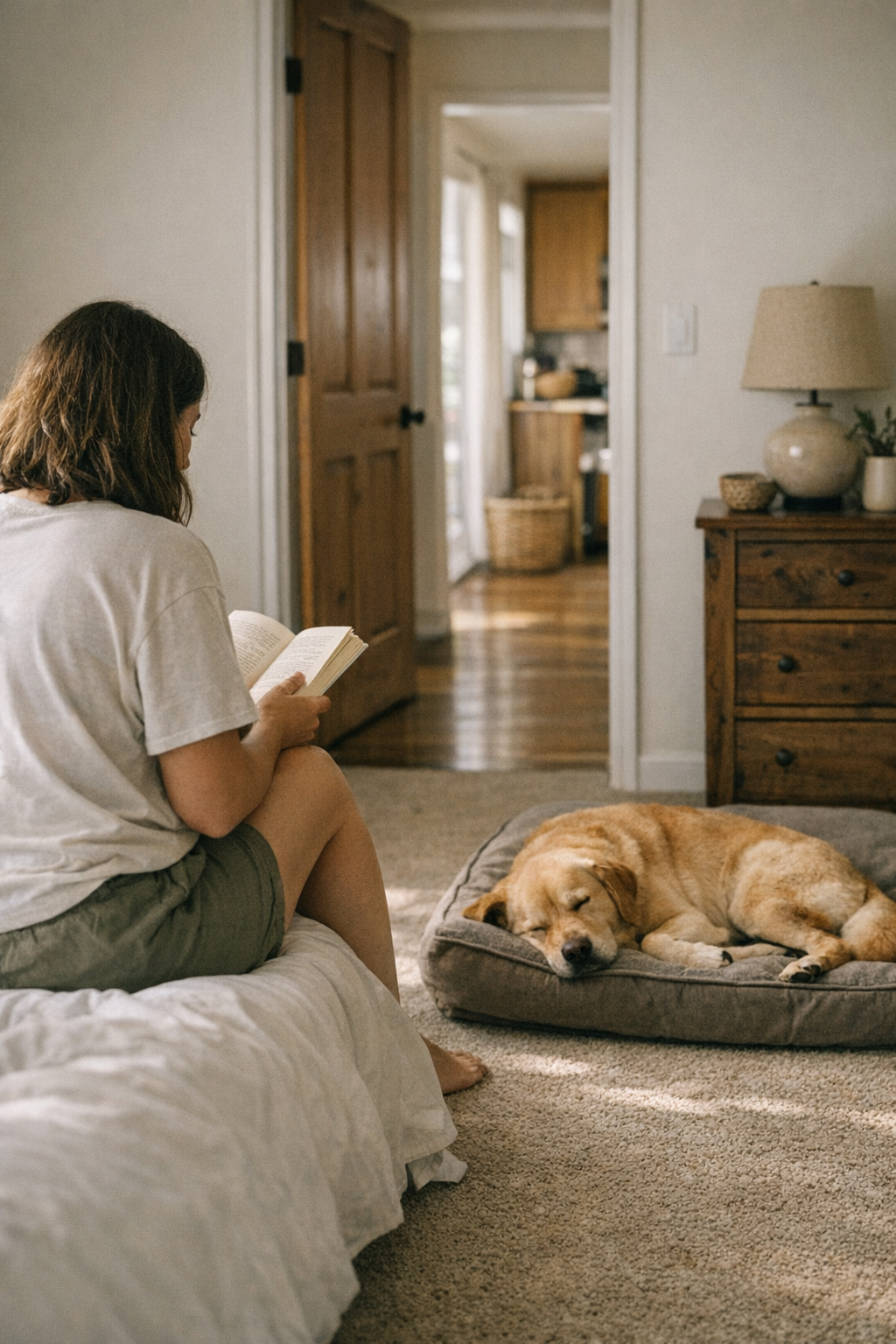
Step through the door after a walk, unclip the leash, and within seconds, a quiet standoff starts: your dog drifts toward his bed, ready to sprawl, but the house is never really on pause. Shoes left by the mat, a damp leash over the banister, stray toys blocking the hallway—routine signals you should handle “just one thing” before sitting down. But skip your dog’s first ten minutes of post-walk rest or let the setup drag him back into your orbit, and the price shows up fast: pacing in the kitchen, toys skidding underfoot, a dog rooting through cleanup supplies while you’re still trying to reset from outside. Calm looks possible, but friction keeps sneaking in from how the home actually works, not how it looks on paper. This is the tension most owners ignore—until it shapes the entire flow of their evening, every single day.
Why Post-Walk Rest Is More Than Downtime
That first block of stillness after a walk is the hinge for the rest of your evening. On the surface, it’s nothing—just a dog sprawled in the corner, eyes half-shut, the house quiet for a moment. But if the pause breaks—even for a call, cleanup, or a too-soon dinner rush—the interruption keeps echoing: the dog gets up, patrols for dropped scraps, scatters toys across walkways, or jumps back into the thick of action. The underlying drag doesn’t come from the visible mess, but from a routine that refuses to settle, doubling the effort it takes to regain momentum the minute the reset gets skipped.
How Small Misses Create a Larger Tangle
You barely notice the first miss: a package arrives; the dog’s eyelids lift. You sweep the hallway; the whine starts up. Even a simple check of your phone can bleed distraction into what should have been off-limits calm. Each break seems harmless—a quick look, a short round of laundry, a footpath cleared. But together, these interruptions turn evenings into an obstacle run: poorly timed chores collide with canine restlessness, and everything from meal prep to bedtime takes double the focus just to keep together.
Common collision points:
- Dog circles the kitchen in search of food while you struggle to clear counters, wipe paws, or reach for a bowl without stepping over toys.
- Every trip to grab wipes or towels is delayed—supplies might be nearby, but you’re already playing catch-up with a dog blocking your path.
- Playtime turns manic, or the evening feels filled with more barking and pacing than anything resembling “settled.”
- Instead of a predictable post-walk calm, your home slides into repeated micro-resets—always one step behind, even though supplies are within reach and the bed looks inviting.
The Background Fade: Why Owners Write Off Rest
The most common reason dogs don’t get a real post-walk pause? Stillness looks like nothing needs protecting—dog is down, bed seems fine, room is tidy, so every other errand wins out. But a “clean” space doesn’t keep routines smooth if every reset gets interrupted. Owners often trade ten minutes of protected calm for the illusion of productivity, only to find more sudden outbursts, longer pre-bed wind-downs, or chaotic play creeping back as the real tax on evening flow.
Interruptions Add Up: Scenes From Real Life
Routine pressure points are easy to spot once you start looking: The moment after a walk, you slip off your shoes, tug the leash free—and your dog is sizing up which space is actually his. Will the phone buzz, starting a hallway pacing loop? Will the vacuum jar him out of calm before he’s even had a chance to lie down? Each misplaced noise, each blocked spot, leads to a dog ping-ponging from room to room, scooping toys into busy walkways or trailing you for scraps. Meanwhile, you’re slowed by toys underfoot, towels just out of reach, or a dog parked exactly where you need to step. The tidy setup stops mattering if the function falls apart under normal movement.
The tension isn’t about coddling. It’s about seeing that even in a room that looks “finished,” rest that gets broken by everyday movement—feet shuffling, chores ramping up too soon, cleanup bins that aren’t truly reachable—drags the entire evening back into disarray.
Simple Changes That Deliver Noticeable Relief
A full overhaul is rarely needed. A minor, focused reset often makes the difference: move the bed out of main traffic strips, shift the bowl to a silent corner, or pause chores for a short stretch until your dog has uncoiled from walk activity. The real gain isn’t in appearance, but in not having to manage or reassert calm every fifteen minutes.
Tangible differences when you protect the slot:
- Kitchens and walkways stay open—for humans and dog—when rest happens clear of foot traffic, not right at the threshold.
- Supplies like towels, wipes, or toys wait in reachable, low-friction spots, reducing scramble and repeated reshuffling as soon as you’re back in the door.
- Knowing the routine—ten or fifteen protected minutes first—stops the mental checklist from spiraling, and the whole evening regains predictable flow.
Your dog actually rests. You don’t trip over loose gear. Meals get made with less interruption, and the bedtime ramp-down doesn’t relapse into a late burst of “forgotten” energy. Nothing’s flawless; dogs still adjust and life will still break pattern. But less evening energy gets wasted on fixing what a small, deliberate layout change could have prevented.
Beds and Placement: Making Calm the Default Option
No bed is calm by itself. It’s where it lands—and how easily your dog can stay there undisturbed—that matters more. Corners behind the kitchen table or along the hallway tempt fate: people pass through, towels pile up, toys creep into the wrong zone, and rest gets trimmed down to chance. A low-traffic spot—even just off the bedroom, away from the main rush—lets your dog stay put without being chased up by every routine ripple. If your dog’s bed lies across the only route to cleanup supplies or dinner, he’ll be in motion as much as you. If reaching for the leash in the morning or drying muddy paws after a walk means waking a dog who just got settled, that’s a sign setup is working against you, not with you.
Resetting When Things Get Tangled
No kit or plan can anticipate every post-walk curveball. Dogs track movement—and pileup can happen anytime routine background noise spikes. But once you’ve seen how a solid rest block after walks stops the cycle of pacing, tripping, blocked paths, or a wound-up night, the upside of a protected pause is hard to ignore. When evening flows start feeling messy or energy splinters into too many urgent tasks, scan those first ten minutes after walks. If chores, bed placement, or hallway clutter keep throwing friction at the calm slot, reset: shift the bed, slow the rush, temporarily block a passage. Reliable calm comes from removing obstacles, not adding new rules or organizing for looks alone.
How Much Rest, and What Matters Most?
There’s no universal “correct” number—most dogs settle in 10 to 20 minutes if the spot is protected and familiar. It’s not about precision, but repeatability. The easier it is for both owner and dog to drop into real post-walk calm, the less old, messy energy bounces back.
What This Looks Like After Repeated Use
Let post-walk calm become habit, and small improvements stack up:
- Dinner moves faster; no blocked hallways, fewer scattered toys, and less scrambling for a misplaced towel.
- Reaching for dog gear—leash, wipes, toys—actually takes less time, because each item has a home you can reach without stepping over the dog or his stuff.
- Movement through the home—dog and owner alike—loses that friction from repeated resets. No more double-backing, sidestepping, or negotiating toys underfoot just to get things done.
- Routine cleanup, feeding, or rest resets feel manageable—not just less messy, but actually easier, with less risk of routines unraveling under pressure.
The difference slips in quietly: it’s a little less tripping, a little more flow, and a block of calm that resets everything else. It’s rarely perfect, but suddenly, it’s not about fighting the setup. Instead, it’s about a small adjustment—bed moved, chores paused, towels within reach—that changes the whole evening’s shape. For more practical, daily-life dog setups, see the collection at DogPile.