
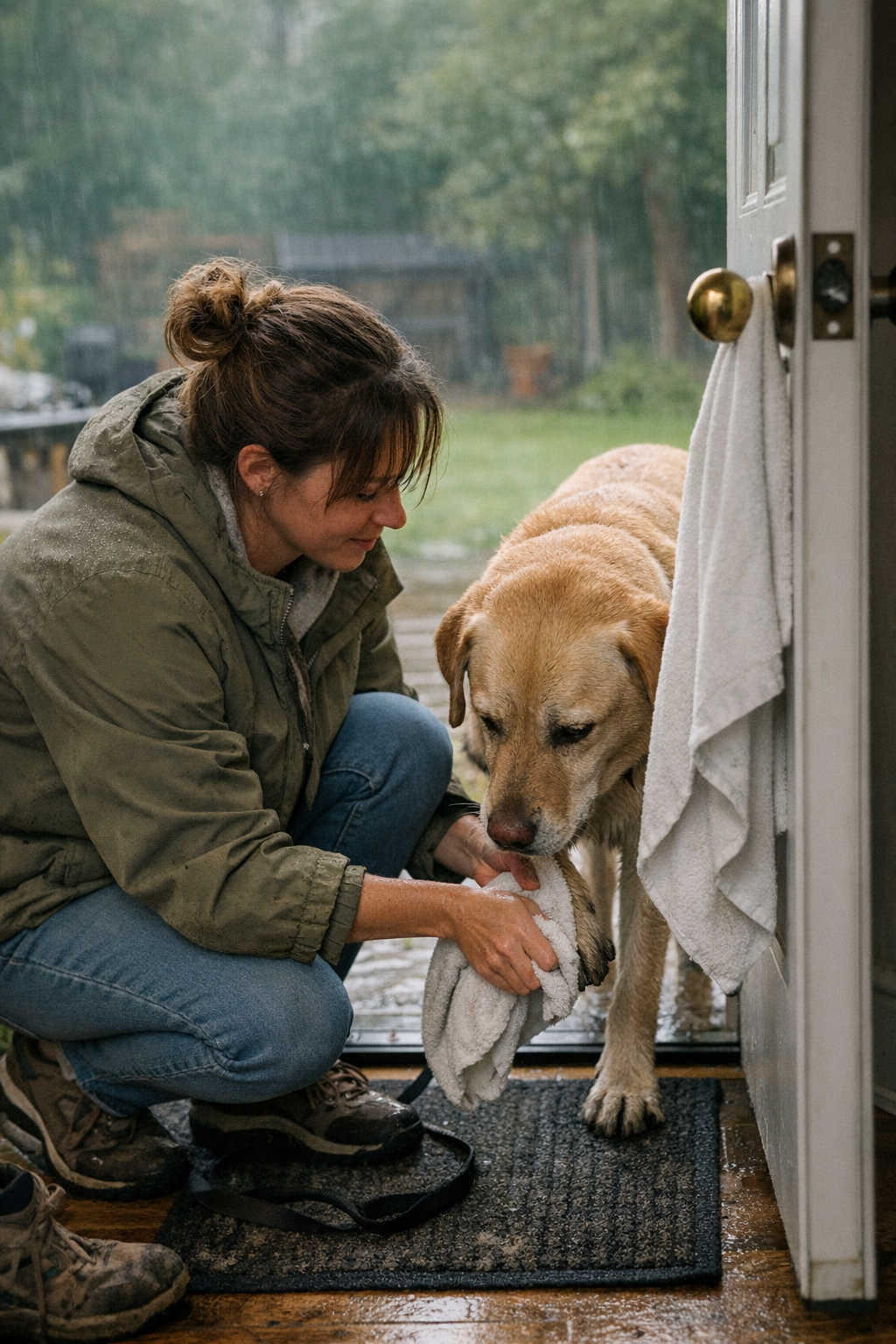
The mess after a dog walk doesn’t start on the street—it begins the second you hit the door, leash in one hand, hunting for that missing towel while your dog circles, already dropping grit. Every return home turns on this nagging gap: do you grab the towel instantly, or does it take a scramble and a wet trail before settling back in? A routine with a single hesitation—where towel, wipes, or mat aren’t instantly reachable—means your “organized” entry setup keeps sabotaging itself, one muddy paw print at a time. DogPile’s world isn’t about collecting gear; it’s about getting from outside to inside cleanly, with fewer stutters and stops.
Why the Paw Wipe Bottleneck Refuses to Leave
Most owners try to control paw mess with a towel by the door or a tub of wipes close by. Usually it “works”—until you need it to be immediate, and the system falls apart. It’s not a lack of cleaning power or care. It’s death by micro-annoyances: towel slid off its hook, wipes buried under the mail, a dog twisting to bolt forward while you lunge with one hand. Every small misplacing gets repeated and each time, it slows your re-entry and leaves you one step behind, again.
Picture the moment: leash wrapped in your fingers, dog eager to move past you, and you’re scanning for the towel—now shoved onto a chair, just out of reach. Every post-walk return starts with this split-second stumble. By the time you recover, grit’s already moved from paws to hardwood, maybe the dog’s halfway towards the rug. It isn’t a crisis. But with each day, the pattern gets more frustrating and more in the way.
The problem never comes from just one thing missing. It’s a layer of minute disruptions—the reach too awkward, towel a few feet off, dog picking up on your clumsy pause—turning what should be a reset into a small, repeat mess. That choppy handoff means you’re always patching, not preventing, the dog’s homecoming trail.
How Tiny Delays Multiply into Ongoing Mess
These aren’t disasters, just friction that adds up fast. You come inside several times daily. Any repeated slip—towel not right at hand, dog pulling as you hesitate, wipes out of view—forces the routine into extra steps and extra cleaning. A routine that’s “good enough” one day exposes its cracks twice as much the next.
It becomes visible: sometimes your dog pauses in “the spot,” sometimes they crowd ahead, guessing you’re about to grab for something. A two-second stall becomes a trail of mud, or a damp patch on the dog’s bed. That minor lapse—missing a paw, pushing the towel hunt to “later”—twists into the next cleaning job down the line. Leave wet or grit unchecked, and bedding, floors, or even your own shoes pay the price, not just the entryway.
The Ripple Effect: Delays That Mess Up the Rest of Routine
No one names it, but blocked cleanup at the door leaks into the rest of the schedule. That five-minute drag means meal prep starts late; the paw smudge you missed shows on a clean comforter, sending another load to the laundry. Slight damp means the dog’s preferred rest spot turns into a new mess. A single sticky entry step doesn’t just look untidy—it quietly chips away at your momentum and time through the rest of the day.
The Patterns That Keep Entryways Struggling
If you’ve got a dog, you know these are the real tripwires in “clean” front-door routines:
- Reaching for what’s not there: the towel you need ends up out of sight or mixed with other clutter just as muddy paws hit floors.
- Managing a dog in motion: trying to keep your pup still with one hand while the other searches blindly for the gear you swear you left in arm’s reach.
- Tidy storage that isn’t fast: baskets or bins set up to look neat—always a step away or under something else when you reach for them mid-motion.
- Visual order that slows you down: moving cleanup gear aside to clear the hallway, not noticing it’s made the right-handed grab almost impossible when the clock is actually running.
- Stacking options, solving nothing: multiple towels or wipes piling up but never where your hand naturally rests during the actual, leash-in-hand routine.
These setups pass a glance test but fold in day-to-day use. Cleaning feels “organized,” but one wrong reach and you’re back at square one, correcting the same mistake you tried to fix last time.
Placement Clarity: The Real Paw Wipe Fix
Reach is everything. Most stumbling blocks vanish if getting to the towel or wipe takes zero thinking—no searching, no stretching, no bending. The “fix” isn’t buying something specialized; it’s reworking what you have so the wipe is in hand the instant you step over the threshold and the dog pauses on cue.
This is where the doorknob towel beats every other location. Hanging the towel there—always precisely where the door opens—makes the motion direct: reach, wipe, move along. No detours, no “one sec” glances at baskets or under mail, no bonus second for paws to scatter debris.
Measured out, just that change typically shaves 15–20 seconds off post-walk delay. But the sharper difference isn’t time—it’s the re-trained rhythm: your dog learns there’s only one stopping point, so less fighting, less zig-zagging, and dramatically fewer paw prints where you don’t want them.
When Comfort Gear Makes the Routine Worse
It’s easy to “level up” with a plusher towel, scented wipes, or designer caddy. These feel like upgrades—until real speed matters and none of them are where you need them mid-flow. Hide a towel under leashes or inside a closed box, and you’ve traded soft for slow. Oversized baskets corral clutter but make fast grabs impossible. The only thing that matters is: does your hand instinctively find the gear, every single time?
The Dog’s Wait Spot: More Than a Convenience
Routine friction isn’t just about your speed. Dogs read your hesitation—shift your hand once, and your dog might bolt, flinch, or circle. Having a fixed pause spot (threshold rug, clear mat, or even a sticker) isn’t a luxury; it’s a behavioral shortcut. “Wait here” only works when your hand lands on the towel at the very same moment, every walk, regardless of weather or mood.
With repeated practice, a consistent reach for an unmissable towel and a dog that expects the stop—rather than the scramble—means faster resets for everyone. You’re not calming them after the fact, just integrating them into a predictable routine that doesn’t give time for second-guessing.
Tools Are Optional — Placement Is Mandatory
Every thick towel and super-absorbent wipe on the market works if it’s the first thing your hand meets. Don’t let the hunt for another “set” or trending gear get in the way. The strongest entry routines skip the temptation to perfect; instead, they make reach, wipe, and move forward a habit that vanishes into the background—even for impatient dogs and rushed mornings.
Check yourself: Do you waste seconds on every return hunt? Does your dog’s excitement spike when you hesitate? Do you spot the same dirty prints despite all that setup? Those patterns are neon signals: it’s structure, not more stuff, that rewires daily friction.
Spotting—and Removing—the Real Points of Drag
“Almost works” is the entryway trap: you see order, but when rushed or dealing with muddy paws, the system collapses. The cleaning gear is present but inaccessible, or easier to trip over than grab. Maybe shoes eat up your dog’s designated wait space, or the leash always knots under hanging baskets. Sometimes the area looks better, but real use is chunkier, not smoother. Every time the slow spot comes back, you lose a little more patience and the willingness to really reset after each outing.
Your entry doesn’t need a total overhaul. The simple, low-friction fix: make paw wiping instant and consistent—towel or wipes on the knob, pause spot fixed, and gear that requires zero reshuffling mid-flow.
- Keep cleanup tools at the exact place your hand lands—preferably the doorknob, not beside or below.
- Set one unmistakable stop for your dog, so they know the pause is always here, never halfway inside.
- Resist “organized clutter”—if a setup adds grab time in pursuit of looks, it’s the wrong setup.
- If you’re delayed at the same point after every walk or return, that’s your fix—streamline that spot before reaching for new gear.