
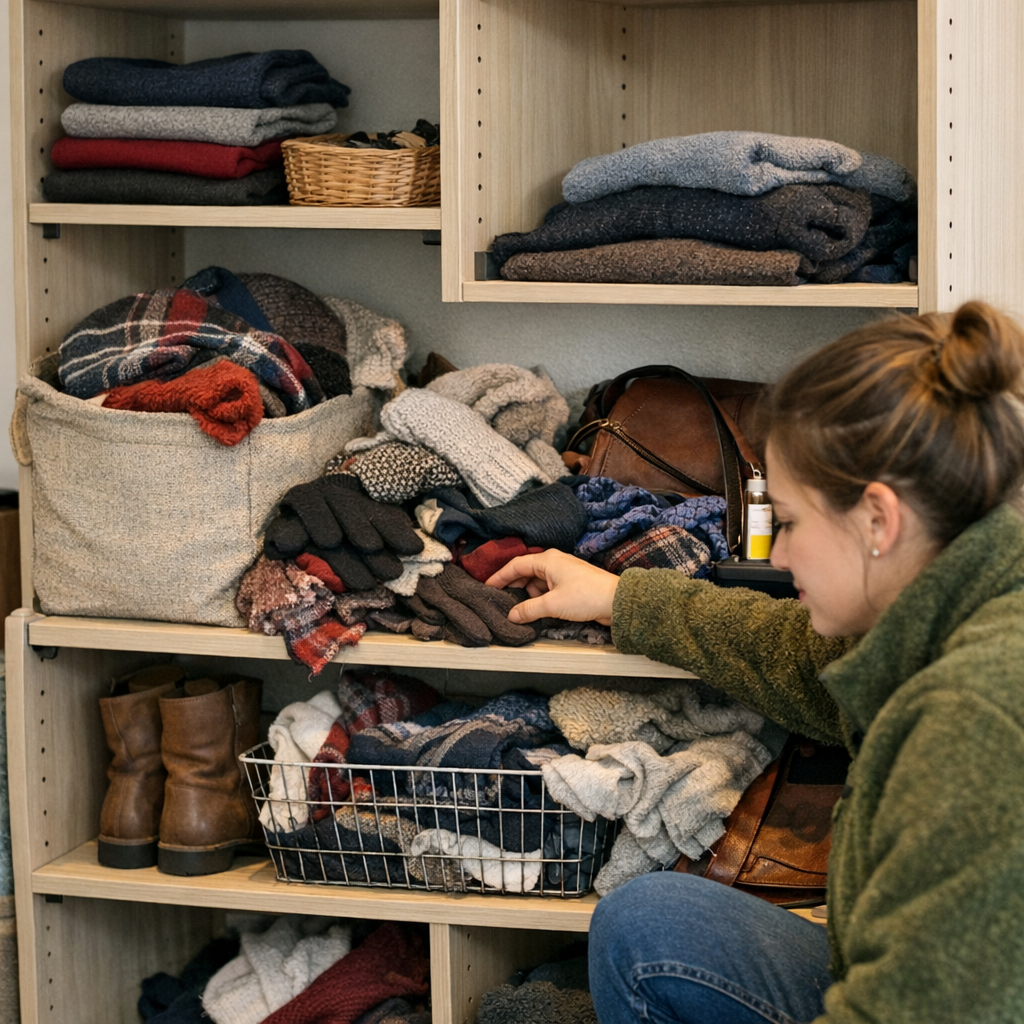
Every organized shelf hides its risk of chaos. Even the best-looking closet or storage nook has a weak spot—a single shelf that never seems to keep its promise. At first, the system feels solid: bins lined up, labels neat, each category in its place. But as soon as life gets busy—kids come blasting through the door, you’re running late in the morning, or groceries pile up faster than you can put them away—the fault lines appear. That well-ordered shelf is suddenly the bottleneck, and disorder radiates out from it, reshuffling your whole system from the inside out.
How Shelf Clutter Actually Starts
Clutter doesn’t start everywhere at once. It begins in small, familiar ways—one shelf is too high to reach easily, or a divider fails to keep stacks upright. Maybe gloves and scarves share a bin that looks perfect after a reset, but within days the contents are tumbling into each other. The routine moments—pulling out a hat and having two scarves come with it, or reaching for a folded shirt and toppling half the stack—expose the shelf’s hidden weakness long before the closet looks “messy.”
The signs are subtle but relentless: Shift one pile to reach something behind it, and now nothing fits right. Return a basket in a hurry, and next time you just push things aside to make space. The system wears down in daily, invisible increments until you’re constantly searching, shifting, or giving up.
Everyday Clutter: When Storage Starts to Slip
Entry Closet: The Winter Pile-Up Problem
Take a standard winter entry closet—an attempted set-up: hat shelf, glove bin, spot for scarves. It looks controlled on Sunday. But by Wednesday, gloves pool at the bottom of the hat bin and scarves are blurring into bags. Why? Maybe the “glove zone” was never separated, or a too-deep bin swallowed the smallest items. Short on time, you stuff hats and gloves anywhere close, convinced you’ll sort it later. Soon you’re digging for that missing mitten and knocking three hats to the floor just to find it.
It’s the closet’s catch-22: baskets appear organized, but nothing is where you expect it. Everyday access becomes a mini scavenger hunt, and returning anything to “its place” feels harder than it should.
Bedroom Shelves: The Leaning Towers of Laundry
Even the most careful folding can’t conquer a weak divider or a too-wide shelf. Shirts stack beautifully on day one, but by day three, stacks tilt, piles merge, and you’re pulling socks from between two toppled mounds. Pull one item in a hurry, and the rest threaten to follow. Quickly, that snug stack becomes a generic pile—shirts, shorts, odds and ends, everything blurring by midweek. Resets grow slower; you spend more time restacking than storing or retrieving.
Looks Organized, Works Sloppy: Spotting the Gaps
At a glance, your shelves pass the “organized” test. But the cracks show up in real life. How do you know when structure is breaking down?
- You double-handle items just to get what you actually need.
- Baskets get stuffed, sending small things to the bottom, practically lost until next month’s cleanout.
- Labels stare back at you, but what’s inside never quite matches up—especially after a rushed day.
The true verdict isn’t the after-clean photo—it’s how fast things slide out of place between resets. If putting away a simple stack or bin requires more steps each time, or if you avoid using a shelf because it’s always a hassle, your system is quietly failing the daily test.
How One Weak Shelf Triggers a Chain Reaction
Persistent clutter doesn’t explode; it spreads. One loose bin, shallow divider, or ambiguous category quietly creates overflow. Suddenly, bags start piling where coats go, shoes drift off their rack, or hallway surfaces collect a “temporary” drop zone that never empties. In laundry rooms, towels drift into the cleaning shelf, eating up space and unraveling the order you set on day one.
The more you work around the problem, the worse it gets. Small frustrations—moving a stack for the third time, blindly rooting through a bin—add up. Even if the rest of your system is solid, that one weak shelf turns storage into a guessing game and makes every reset feel like a lost cause.
Repairing the Real Problem: Sharpen the Shelf’s Role
The weak spot isn’t always the most obvious mess. It’s often the shelf you keep tinkering with or the bin you dread opening. Watch for these tells:
- Grabbing for the same item and moving two others just to free it.
- Piling “random” everything into one catch-all container.
- Reaching into a bin and coming up empty-handed because things have drifted into the next zone.
- A hesitancy to use part of your storage because it’s never quite right.
Take a normal week. Where do categories cross over, piles grow, or you always “just leave it for later”? Here’s the real leverage point: install a divider at exactly the width you need, or swap in a shallower bin you can see into at a glance. Instead of fighting the shelf, you let structure do the work.
Micro Adjustments, Major Impact
One winter, I finally got tired of the entry closet avalanche. Oversized bins weren’t helping. I measured and added a simple wood divider, splitting the hat-and-glove shelf in two. Suddenly, gloves stopped leaking into hats, and everything stayed in view. The reset time disappeared—I could toss things in without stacking, and they still ended up sorted. It wasn’t perfect, but that tiny shift turned a daily “I’ll fix it later” into a less-than-a-minute tidy-up.
It’s not about a showroom finish—it’s about making good habits nearly automatic so daily clutter has nowhere to spread.
When to Use Bins, When to Use Dividers (And When to Mix Both)
Customize the fix to the stuff you actually use. Small, loose items—think winter gloves, toiletries, or hardware—do best in open bins you can scan with a glance. But bins that are too deep or too many create their own chaos, hiding things at the bottom. Dividers rescue flat, foldable items—shirts, towels, sheets—by keeping piles upright and categories separate. The real win? Combining both to match the shape of your chaos: a divided shelf with bins for the smallest things, one clear zone for stacks, and nothing too crammed or hidden.
Quick test: If every day you’re restacking or shuffling through piles, measure the usual width and add a divider that’s just wide enough for the max load. You’ll see the pile hold its ground for a full week—or at least long enough that resets feel trivial.
Fix the Weak Link, Watch the Whole System Improve
The payoff for upgrading one shelf isn’t in show-off neatness—it’s how much smoother everything around it gets. Once that trouble zone is contained—bins aren’t overflowing, stacks actually stay up—suddenly, everything else works better. Categories stop mingling, reset time shrinks, and you spend less energy on finding, fixing, or faking order. It isn’t flawless, but it’s steady, and you stop dreading the moment things go off track because now it’s easy to restore normal.
Shelf systems don’t collapse overnight. They quietly unravel from one weak section out. Fix that point of friction—right bin, right divider, right size—and the rest of your storage feels simpler, calmer, and tougher to undo.