
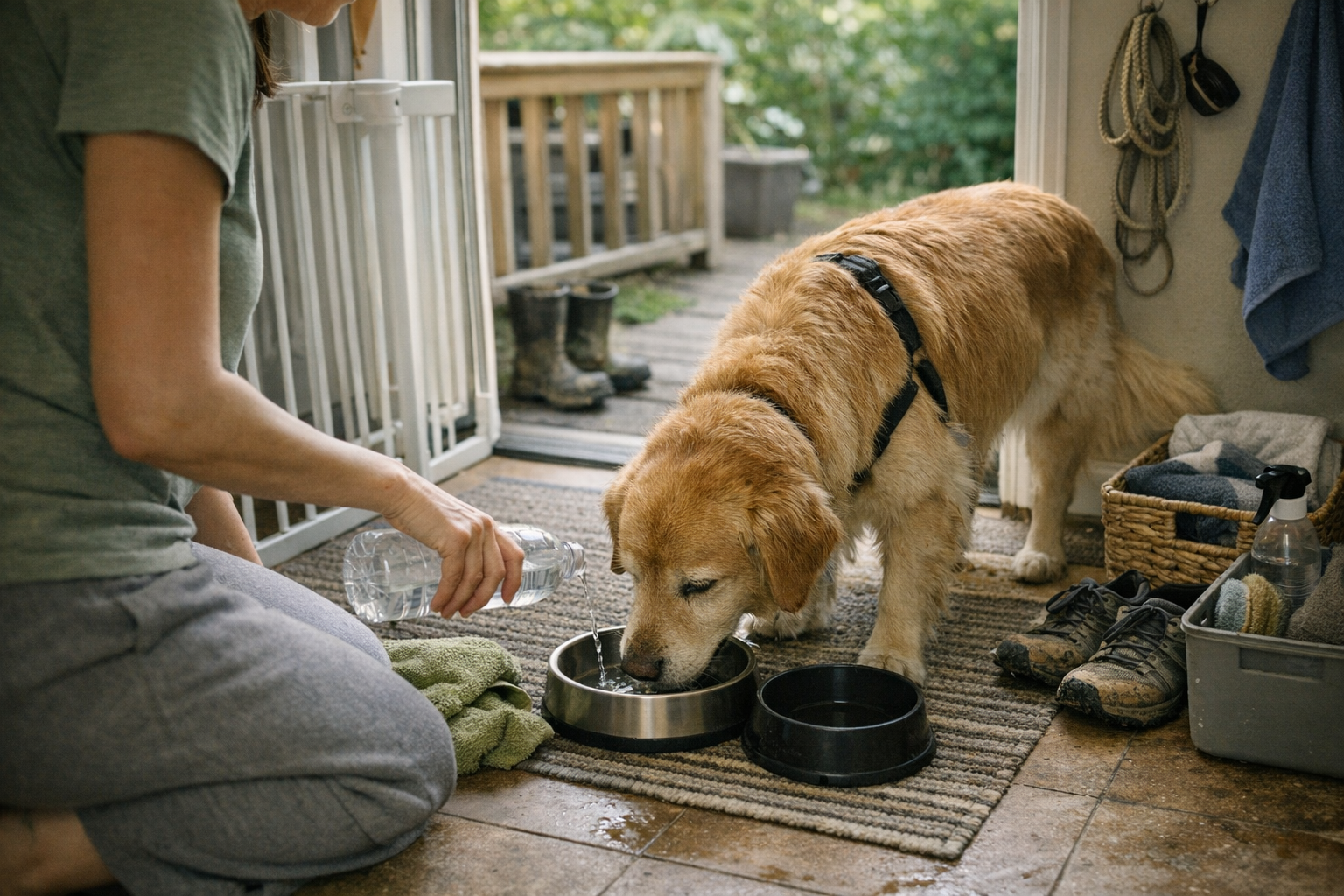
The real cost of a messy dog-care routine is rarely obvious until the morning you’re already late. You reach for the water bowl by the door—and instead catch a stray leash, or find the bowl itself kicked off to the corner from last night’s greeting chaos. Suddenly, a task that should take seconds drags into a loop of searching, stepping over scattered toys, and mopping up extra puddles. Most “manageable” pet routines don’t fail all at once—they break down through these silent bottlenecks, where a missing scoop, blocked hook, or absent wipe slows the rhythm and turns every quick refill, cleanup, or feeding into another round of repeat work. Even as things look tidy at a glance, the friction piles up in ways that only show up under repeat pressure. That’s the practical tension CalmPetSupply is built to notice—and to reshape.
The Slippery Slope: When Everyday Pet Care Gets Tangled
Real-world pet care isn’t just about having the right tools; it’s about actually reaching them at the right time. You go to grab the water bowl, but a leash left mid-rush is blocking the spot. The scooper you always use has drifted under the bench—again—because it never has a fixed home after cleanup. Towels for muddy paws migrate from entry hooks to the laundry pile, so wiping up happens late, and a gritty trail stays by the door. The friction isn’t one missing item, but a layout that breaks down each time daily chaos resets the space.
These misalignments get worse when you’re under time crunch: right before leaving for work, or walking in at night. Each round, another item is out of reach, another quick corner cut, and the same routine gets tangled. The towel now doubles as a mop for an earlier water spill. Treats, used to distract barking at the window, multiply across rooms until you’re left searching, not soothing. Each workaround plants a new friction point for the next day, and the cycle continues.
Routine Weak Spots: Seeing the Patterns
The trouble isn’t always glaring. You aim for a no-mess feed–refill–go—only to find a dog lunging for a window, one hand juggling treats to redirect, and a run of fresh drips by the entryway. “Quick resets” become multi-step scrambles: pick up toys, shift the bowl, wipe a corner, go back for towels. Even a minimalist setup can unravel if grab-and-go items drift or block each other at crucial moments.
These pain points often hide behind an organized facade. At first, your doorway looks clear—but real use means you’re still sidestepping errant toys, or shuffling bins to access a daily essential. It’s this mismatch between how a space appears and what it demands in motion that exposes two or three persistent weak spots, stubbornly returning despite your best routines.
When Solutions partly Work—But Friction Crawls Back
The reflex is to add more: extra bowls, extra towels, baskets in every room. Early on, this feels like progress, but supplies start to wander. That evening’s paw-wiping towel lands in the living room and stays there. Treat pouches migrate to wherever the excitement erupts next, with crumbs trailing behind. Bulk solutions become new shuffling burdens—your “convenience” turns into rerouting and extra resets.
This is where many routines stall. A visible shelf by the door seems tidy, but placing a leash over the only water bowl, or storing the refill bottle two rooms away, means daily function keeps losing out to surface order. Mess looks managed, yet the time and irritation wasted on these micro-migrations never really go away.
The Impact of Repeated Resets
Pet care should flow: feed, refill, wipe, move on. But a towel missing from the door, a bowl nudged unreachable, or toys rolling into high-traffic spots adds up. Each incomplete step demands correction—an extra trip, or a barefoot journey to fetch what’s not at hand. The friction isn’t dramatic; it’s the silent drag where the expected one-step task quietly turns into two or three.
The cost grows in active households. Every half-reset at the door leaves muddy prints and restless energy that lingers into the evening. It’s not just minutes lost; it’s that low-level tension of knowing the next routine will also stall somewhere predictable, just when you need it smoothest.
Practical Adjustment: Meeting Friction Where It Happens
There’s leverage to be found in small shifts: putting the critical care tools right up against the main friction point. Set a washable mat and use a gate or low barrier at the entry—suddenly, dashes turn into paws contained and debris captured. Stash a refill bottle at the entrance, not in the kitchen; now water messes can be wiped before they multiply. The need to detour elsewhere drops off.
This isn’t about draining the joy from dog greetings, but about channeling the mess. Over time, baskets and bins pay off only if they meet triggers head-on—not as afterthoughts, but as actively checked parts of the normal flow. The shift isn’t a new product every month, but a setup that cuts the scramble in half because what you need is exactly where chaos starts.
The Real Difference: Looking Tidy vs. Working Smoothly
An area lined up with bowls, hooks, and folded towels may look ready—but if you have to step over something every single time, or supplies are always one fetch away, it’s only half functional. The sign your routine isn’t serving you? The same resets, wipe-downs, or supply hunts creep back day after day.
Real improvement happens by tuning setups to match where mess and rerouting truly happen. Don’t just accept that tools drift or that order slips each week; station essentials where friction builds, and notice what repeatedly gets in the way. Most of the hassle isn’t the tool—it’s that the tool’s home doesn’t match your actual dog-care movement in the house.
With a bit of observation, the loop starts breaking: not by hoping excitement disappears, but by letting daily placement and smarter readiness soak up most of the mess before it becomes repeat work. CalmPetSupply is made for this kind of practical attention to flow and to what actually fixes—not just hides—routine weak points.
See practical setups for repeat-use care challenges at CalmPetSupply.