
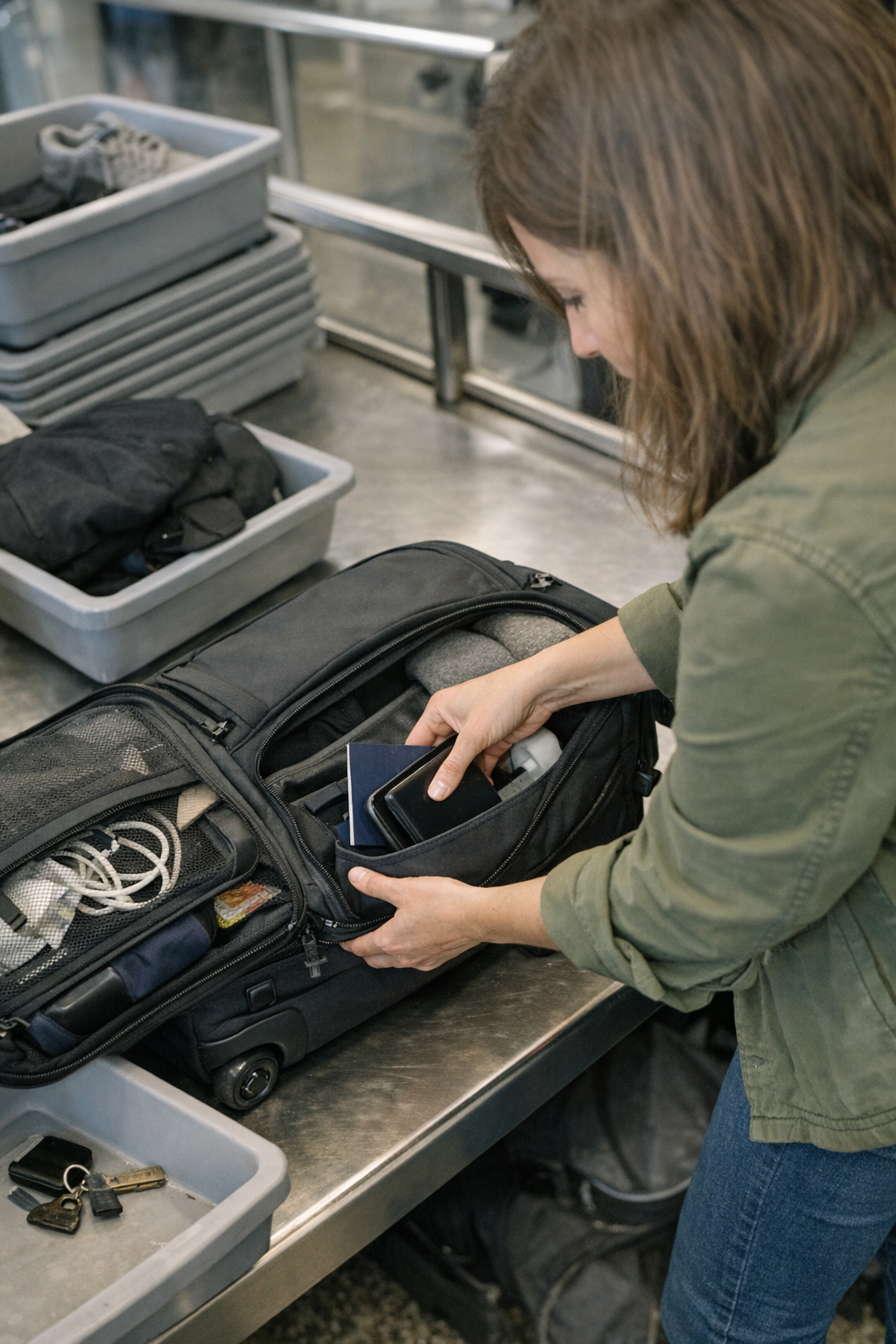
Here’s what actually happens when your carry-on bag is packed to perfection at home: by the time you’re inching through the airport line, that “order” begins to slow you down. Suddenly, every small action—reaching for a passport, tucking away a charger, returning a boarding pass—becomes an obstacle. Things that fit in a controlled, motionless setup at your kitchen table don’t survive real airport movement. The issue isn’t about bringing too much; it’s about leaving no open space for quick access or last-second drop-ins. When every pocket is filled, retrievals take longer, pockets turn into dead ends, and delays pile up exactly when you need to move fast. This is where seemingly minor packing habits create ongoing friction for every real-world traveler using carry-on luggage or travel pouches from CarryOnSupply’s world.
Why Buffer Space Makes All the Difference
When your carry-on is maxed out, every process—security, boarding, seat entry—hits sudden resistance. It’s not just about minimalism or cutting corners; it’s about having a margin, a buffer that you can actually use on the go. This “active” space isn’t wasted—it’s what keeps your bag functional, not just organized.
At security, you’re juggling keys, a passport, a phone. You’re nudged forward by both staff and travelers behind you. Without somewhere to drop high-movement essentials, you’re left shuffling, dropping, or hunting for pockets you wish were empty. The wrong packing structure reveals itself fast: bags that looked ready for anything get in the way the minute you try to use them in context.
Looks Versus Real Movement
Perfectly slotted pouches and zipped pockets look great on camera or in product shots. But real travel isn’t static. The “finished” setup—every item in its compartment, every pouch matched to a purpose—won’t let you stash a scanned ID, a water bottle you weren’t planning for, or even a boarding stub the agent asks for twice. The absence of slack means the bag can’t flex with unplanned events. The setups that survive movement aren’t the most “complete”—they’re the ones that keep deliberate space open for shifting circumstances.
The Missed Opportunity: Real-World Examples of Lost Buffer
Here’s how an overfilled carry-on blocks you, over and over:
- At security: Nowhere to place a loose watch or forked charger—so you fumble in the open, with the line pushing forward.
- During boarding: Needing a document means digging through packed layers while a crowd builds behind. The right pocket isn’t clear, and now you’re exposing what you meant to keep tucked away.
- Seat entry: The aisle gets tight; you have to shift items just to make space to stow a phone or snack, risking a spill of smaller contents while squeezing into your row.
- Overhead-bin lift: Items roll, slide, or drop out of overstuffed sections—what was organized slides just out of reach for the remainder of the flight. Now you’re either holding up the aisle or stuck digging mid-air.
None of these are rare flukes. These are the breakdowns that stack up—often by the third checkpoint or first boarding call. A setup that looked efficient from the outside forces you into repeated repacking, awkward reaches, or slow-motion retrievals at every in-transit pause.
Building Buffer: How to Create Usable Space in Your Carry-On
Smart travelers don’t just “pack less”—they leave one pocket or section intentionally empty for real use. This buffer isn’t wasted; it becomes your control zone for quick swaps or sudden drop-ins. For most setups, this means protecting at least one dedicated pocket or about a quarter of your biggest compartment—something that can take on loose items, documents, or unexpected handoffs at a second’s notice.
The Buffer in Action: Recognizable Use Cases
- Security checks: As soon as the tray returns, your phone, passport, and metal watch have a known landing zone—no digging, no double-checking, no hand jams or dropped items underfoot.
- Boarding sprints: Documents pulled or returned mid-line? The buffer keeps you from blocking the aisle or shuffling through packed pouches on repeat.
- Seat entry: You slide in, drop headphones or snacks one-handed, and move on—no need to open the main bag in front of strangers while balancing everything else.
- Arrival repacks: When your travel order breaks down after landing, the buffer captures odd items or “floating” pieces until you’re ready to sort. Nothing goes missing or gets buried by accident.
The buffer is travel slack. It covers every unpredictable moment, stopping routine items from turning into travel interruptions.
What Happens Without Buffer?
If you ignore buffer space, these are the consequences you face on loop:
- Consistently opening the wrong pocket—because your most-used items are no longer where you expect, or can’t fit without shuffling old contents out of the way.
- Stopping in crowded lines to repack, untangle, or refit items that always seem to clash. Chargers coil with snacks, documents slip under makeup, and anything “put away” is hard to get back in play.
- Needing to unzip the entire main bag for a tiny retrieval—slowing both yourself and everyone around you, and exposing other gear you wanted to keep closed.
- Maintaining the illusion of tidy packing, only to lose time and pace through every major airport transition anyway.
Over time, these small inefficiencies are what really cost you—not the little bit of volume you set aside as buffer, but lost travel minutes and the compound drag of repeated micro-frustrations.
Smart Buffer: Lessons from Long-Distance Trips
After repeated flights, hotel shuffles, and gate movements, the hidden value of buffer space becomes obvious. Travelers who set aside a fallback pocket at the start notice:
- Less chaos at security, since fast-movement items don’t get trapped under layers or forced into the wrong spot as bins roll down the line.
- Lower odds of losing essentials in the handoff zone; everything that’s high-touch lives in the same temporary spot, not wherever there’s random leftover space.
- Faster boarding, since you’re not struggling to cram one more thing into an already-stuffed bag under pressure from the crowd.
- Way less time spent repacking between transitions—the rest of your layout stays intact, and only one pocket absorbs the churn and scramble of repeated movement.
The end result: your bag’s order may not ever look “magazine-ready,” but it stays reliable under real travel pressure.
Making Buffer Space a Habit
The fix is simple: when packing, mentally reserve a front pouch, top compartment, or just one segment as untouchable buffer. Run a final check before zipping up—if that space is full, unpack and shuffle until it isn’t. Later, when you need a fast drop-zone or a retrieval with a line at your back, that open section makes the difference between smooth movement and another airport bottleneck.
In the end, reliable carry-on setups don’t just control clutter—they give you structure that works with you, not against you, as the airport routine stacks up. Tools like packing cubes or organizers help, but a dedicated buffer makes sure your carry-on adapts—not just survives—when travel gets messy, rushed, or unpredictable.
For tools that help your carry-on actually keep pace with repeated use—not just appear orderly—visit CarryOnSupply.