
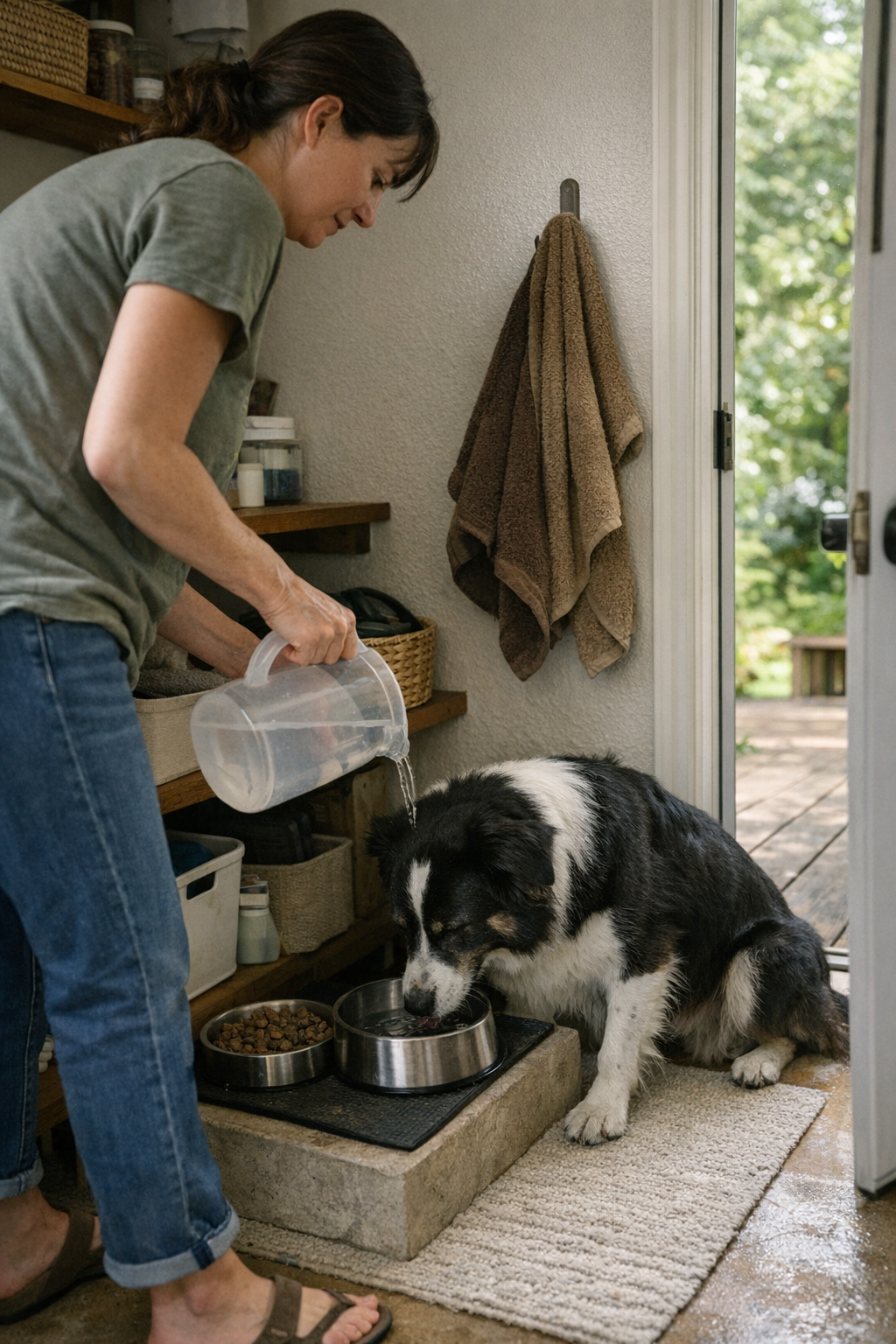
Most pet setups hide their real problem until you’re in the middle of the day, trying to refill a water bowl and bumping into yesterday’s misplaced toy, or searching for a grooming brush that’s wandered yet again. Pet care isn’t just measured in bowls filled or walks done—it’s in the extra trips, awkward searches, and little resets that eat away at whatever looks like order on Monday. Miss a single return or leave a towel “just for now,” and by Wednesday, the routine’s already stalling—an invisible drag on every refill, wipe-down, or feeding reset. The result: what seemed tidy at a glance turns into repeated reshuffling, clutter quietly building, and cleanup delays you can feel but barely see. The CalmPetSupply world is built for these friction points—where fixing one missing step can mean the difference between a routine that flows and one that keeps snagging.
Where Daily Routines Really Stall
The friction isn’t dramatic—it’s the sum of all the small, repeated gaps left in your routine:
- Going for the water bowl and finding it blocked or knocked off-center by another item you last moved “just for a minute.”
- Reaching for a towel after an after-walk cleanup and realizing it’s still vaguely damp because it never got fully aired out after the last use.
- Grooming wipes are “there” but behind a stack of unrelated things, so you hesitate and then put off wiping until later—if at all.
These aren’t obvious messes, but they stack up. Reset momentum stalls: a mat goes unwiped, a bowl goes unreturned, and suddenly you’re hunting around or doubling back, sometimes two or three times for one basic step.
What Happens When Early Order Slips
Pet spaces usually start the week looking functional—dishes lined up, brushes and towels exactly where you expect. But routines break not through chaos, but through one or two shortcuts. Set a brush down across the room, leave a food bowl by the couch after a quick water top-off, or skip a mat wipe “since it doesn’t look that bad.” These tiny breaks in the loop guarantee that by the next meal or walk, you’re making do: reaching for items twice, patching over what you skipped, or clearing up leftovers you meant to handle last time. The reset never lands completely; the setup keeps drifting until you realize you’re always a step behind.
Real-World Scenes: Chasing Down Supplies
Think of the after-walk routine. Towel goes down for muddy paws—then instead of drying on its hook, it ends up slumped over a chair while you hurry to refill water. By the time you realize, the towel’s half-dry, the entry is cluttered, and the next walk starts with a pause while you scan for something clean and dry. Or after a quick feeding: the bowl doesn’t return to its mat, but migrates to the coffee table “just for now” during an errand. Next mealtime, it’s a detour involving a missing bowl and a half-hearted surface cleanup before you can even feed.
Tidiness vs. True Function: What Looks Ready Isn’t Always Ready
A pet zone can pass a visual check—everything seems in place, no massive mess. But the difference comes at the first snag: stepping over a forgotten toy to pour food, realizing the towel is still perched where it doesn’t belong, or needing to backtrack for a wipe you thought would be closer. Over several days, these little catches repeat. Supplies that look “put away” are actually layered behind other things, so the routine interruptions keep coming—despite a tidy surface.
Small Changes Make Resets Automatic
The key isn’t about deep cleaning—it’s about eliminating excuses for delay. Hang a hook exactly where you reach for the walk towel, not around the corner or buried on a coat rack. Store wipes and brushes right next to the feeding spot—within arm’s reach, never across the room or under the sink. Commit to returning bowls to the same mat the second they’re cleaned or refilled, not on the way to do something else. Each micro-adjustment cuts one moment of forgotten effort or double-back searching. Over the week, that difference means fewer interruptions and a flow that holds up even on repeat.
Making the Routine Smooth, Not Just Clean
An organized zone is a weak test; a real routine is whether every bowl, brush, or towel is instantly usable, without hunting or extra shuffling. Build in a single, simple check-and-reset every day—right after use, before the inevitable drift kicks in. This habit stops supplies from bleeding into common spaces and keeps each area ready-for-action instead of almost-ready. What feels like a minor discipline becomes the difference between daily drag and effortless upkeep.
Why Routines Fail: Weak Points Return
No matter how clean you start, focus slips once: bowls drift, towels go walkabout, wipes don’t reappear. Each awkward-to-return item becomes the first weak link. “I’ll do it later” starts small, but by next round you’re stalling again, redoing what you already solved earlier in the week. In the CalmPetSupply pattern, if a return isn’t easy—if access is clumsy or a storage bin is too far away—routine drag creeps back, and so do the interruptions you think you already fixed.
Setting Up for Effortless Flow
Getting pet care to run quietly in the background isn’t about spotless appearances—it’s about setups that make every reach and return brainless and immediate. When tools stay at fingertip distance and supplies snap back to ready-without-effort, daily maintenance shrinks to almost nothing, and interruptions drop away. It’s these small, structural adjustments—a closer bowl mat, a visible bin, a towel always at its hook—that turn routines from a chore into something you barely notice. And if you can spot the one step that keeps breaking your loop, that’s often where the next fix will have the biggest payoff.
Find practical gear and setups for smoother daily routines at CalmPetSupply.