
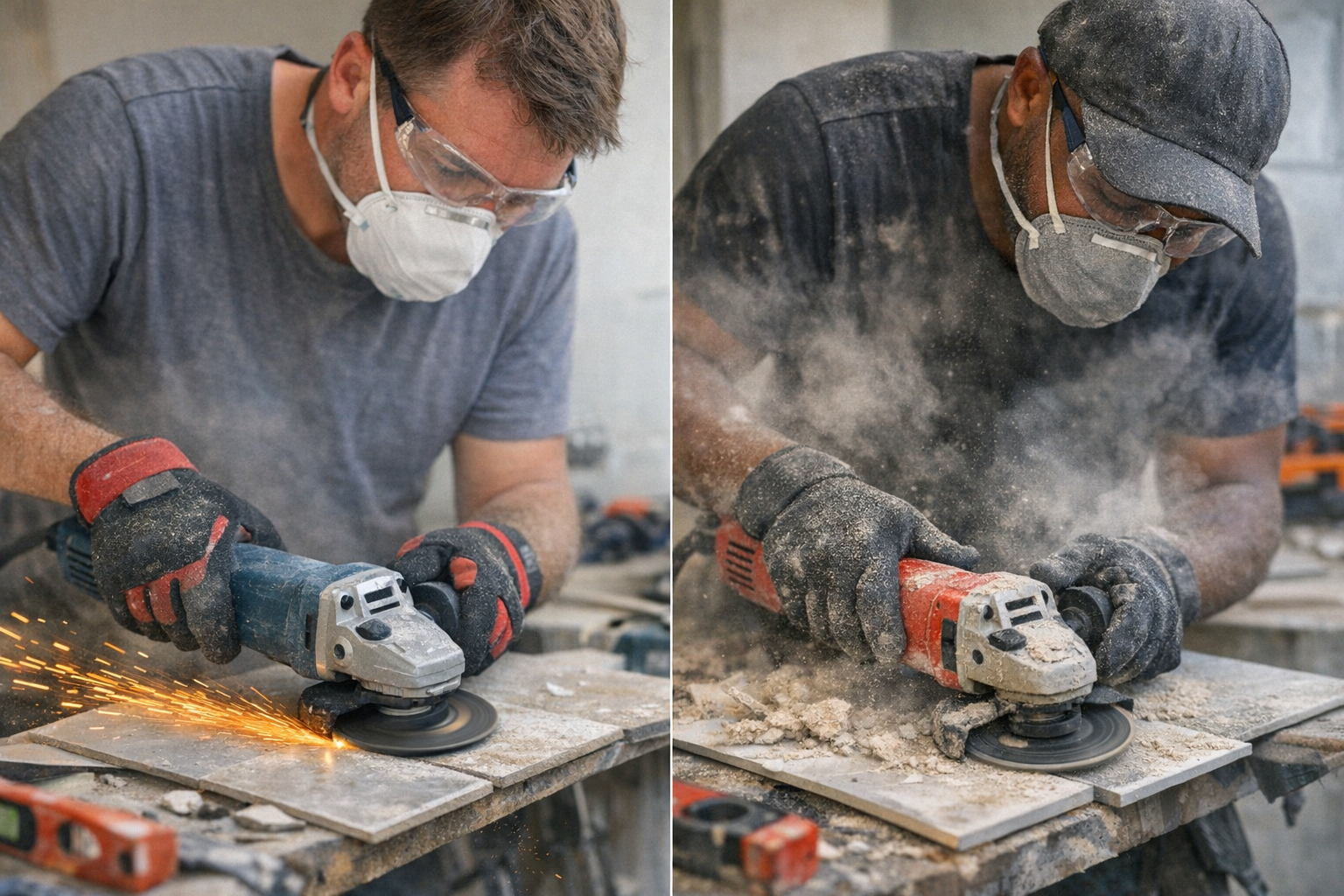
If you’ve ever ripped through a full day of drywall cutting, tile trimming, or metal sanding, you know the shift: the job starts crisp, but progress quietly grinds down. The angle grinder that flew through grout lines an hour ago is now fighting you—edges chip, lines wander, and your hands ache from the tool’s growing warmth. You try to muscle through, and suddenly you’re stuck: a simple project hijacked by an overheated grinder you thought could handle more than it actually can.
The Slow Creep of Overheating—And How It Shows Up
No one feels the problem out of the gate. On a fresh start, even bargain grinders cruise through thin steel or tile backer with satisfying control. But stretch an afternoon replacing a backsplash or resurfacing a bathroom—dust thickening in the air, handle slick against sweat—and you start losing the fine touch. Clean cuts demand brute force. The casing radiates heat. Instead of shavings, you get clumpy, sticky dust. Every grip feels heavier.
It’s easy to chalk this up to tough material or a long workday—until your seams turn ragged and your patience starts leaking away. Repairs that should be five-minute fixes balloon into full re-cuts or desperate edge-sanding. All because the grinder started fighting you, not helping.
The Tool’s Limits—Not Just Yours—Set the Pace
Heat sneaks up, quietly changing how your tool behaves. On most job sites, it shows in repetition—grind, adjust, drill, repeat. That’s when you see the split: run two similar grinders side by side, and they feel identical until you hit the third or fourth stubborn tile or start sanding flush through rusted plate. Suddenly, one holds its RPMs and remains cool, delivering sharp lines and steady control. The other lags—RPMs dip, the handle warms ominously, and vibrations buzz through your grip. Cut quality nose-dives as resistance builds, and the motor’s smooth hum gives way to a strained, sluggish churn. Dust turns grainy and heavy. What’s really happening? The tool’s fighting its internal heat more than it’s working the material.
Little Warnings That Add Up Fast
Seasoned hands spot trouble sooner: dust clogging in odd places, vent slots hot enough to notice, a faint drag as you drive a screw or slice through a joist. A blade or bit that wandered easily now grabs and snarls, chewing up more board than you wanted. The finish falls apart: chipped tile, burned drywall edges, screw heads that strip rather than bite. It’s a domino effect—fatigue in the tool multiplies fatigue in you, and what should be an hour’s work stretches into two.
Picture grinding away at a kitchen renovation. By midday, your dust mask clogs with heavy powder, and control slips—cuts that started straight now require two-handed correction. Every blade swap and disc change feels more desperate. By late afternoon, the workspace is thick with debris and you’re cleaning more than cutting, wishing you’d stopped ten minutes earlier for airflow or a longer tool break.
Why Heat Sabotages Your Workflow
It’s more than just hot handles. Overheated grinders burn out soft-start circuits, chew through brushes, and dry bearings until every movement stiffens. That means sudden stall-outs or safety shut-offs when deadlines are tight. Missed heat cues force you into last-minute cleanups, or worse—blown tools that need downtime or, bluntly, replacing before the job is done. Trying to speed up by ignoring the warning signs nearly always adds extra hours, not fewer.
Build Smarter Routines—Not Just Bigger Muscles
This isn’t about pampering your tools, but about respecting the limits you only discover through real work. Switching to a grinder rated for at least 1,200 watts isn’t a luxury—it’s self-defense. The upgrade isn’t just raw power: it’s steadier RPMs under load, cleaner cuts deeper into the day, and discs that run cooler and last longer. But the real shift comes from changing your habits. Forced cooldowns—even five minutes every half hour—pay off more than one last rush to finish before lunch. Keep vent slots clear. Alternate heavy grinding or cutting with lighter prep work or fastening. Swap out a worn blade for a fresh disc before you notice the slowdown.
On a recent tile demo, sticking to a timer—twenty minutes on, five off—kept the tool’s chassis cool enough to touch. Every detail went smoother: lines stayed straight, cuts stayed crisp, and by 5 p.m., there were no ugly surprises or frantic touch-ups. PPE was less of a chore, and fatigue slacked off instead of building up by the hour.
Simple Hacks for Hot Jobsite Days
If your routine still leaves your grinder gasping for air, improvise. Run a box fan across your bench or clamp a desk fan nearby to move hot air through the body. It’s not high-tech, but a steady breeze spares the tool—and your nerves—on sweltering afternoons or in tight corners where heat just lingers. Swap bits and blades quickly; don’t wait for smoke or that scorched, metal smell.
Catch the Signals—Or Pay Double on Cleanup
Blown finishes almost never start with an obvious failure. Instead, it’s sticky dust, rough seams, guide lines going off-track, or a suddenly aggressive blade. Catching these moments early isn’t fussy; it’s practical. It spares you evening recuts and helps you hand off a job that looks professional from start to finish.
Big claims and technical specs matter less than how the grinder actually behaves hour after hour. Trust how the tool feels in your hands and set your workflow accordingly. Every grinder hits its limits—ignore the warning, and the tool will decide when you’re done, not the other way around.
See all practical power tools and jobsite equipment at Gumboll.