
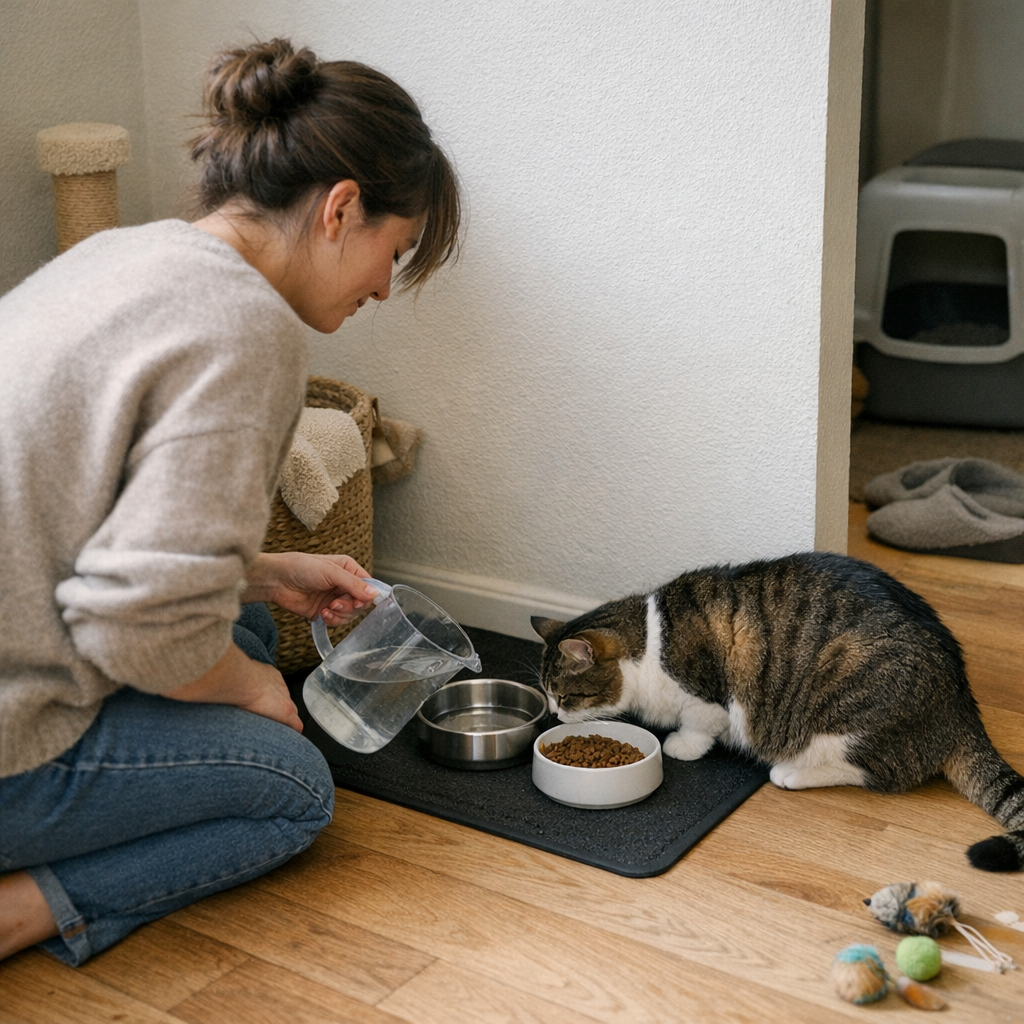
That feeding bowl always finds its way back into your path, the mat edges are never where you left them, and the floor under the water bowl stays freshly ringed—these are the friction points that don’t go away on their own in an indoor cat household. A new setup might promise order for a few days. It’s only after you settle into your routine—first refill, first real cleanup, first time you try to grab the bowl during a morning rush—that the so-called “organized” solution starts sliding. You wake up to dry kibble scattered just far enough to avoid easy sweeping. The mat, no matter how many times you line it up, folds or bunches by the end of the day. Water bowls refuse to hold their ground, smuggling fresh marks to the edge of whatever tile or wood sits below them. These small breakdowns repeat, creating a loop: smooth start in the morning, slow unravel by night, reset and repeat. With every nudge, sweep, or unplanned wipe-down, “tidy” turns into one more invisible, daily drain—and that’s the real cost most indoor cat setups hide.
When “Organized” Stops Working: How Everyday Friction Builds
What looks calm after a reset soon demands extra steps—interruptions your routine can’t afford. Indoor cat spaces aren’t static: a bowl slides during the breakfast shuffle, a toy blocks your refill hand, a mat curls under a chair leg. Appearances hold only as long as no one moves and no cat plays. Each pause to wipe water, chase down litter, or fish a toy from under the cabinet slices into your momentum. Instead of actual order, you get an ongoing series of micro-fixes that eat into your real morning or evening flow, sometimes turning a five-minute task into eight or more.
Hands Full, Flow Blocked
Morning: you scoop to refill, but find your wrist catching on the crumpled mat—a quick job slowed by a simple barrier. A stray toy jams the side of your food setup so you can’t sweep crumbs in one pass. Nearly every “organized” zone works until you need two hands free and—right then—need to nudge or reset something before you can reach what matters. The setup that felt practical on day one has quietly added extra steps to each daily loop.
Hidden Costs of Keeping Up Appearances
Even after you reset everything in the morning, the odds are high: by nightfall, crumbs return, water edges reappear, and those invisible tasks accumulate. With each stop to flatten the mat, dry a patch, or hunt the scoop, you realize you’ve repeated the same movements more than you notice. The effect isn’t a mess—it’s the friction of effort spent on what was supposed to be a background task. Over a week, untangling these little complications becomes routine in itself.
Real-World Scenes: Recognizing Repeat Trouble Spots
Most indoor-cat “fixes” fail by degrees, not in dramatic breaks. You feel it as the same corrections return: mat realignment at lunch, water wiped up mid-afternoon, scratch of litter tracked back across a hallway. These aren’t headline failures—they’re slow reveals of where your setup resists you, day after day, in multiple rooms and flows.
The Bunched Mat That Never Stays Flat
Consider the feeding mat: light enough to move when kicked, heavy enough to block a quick sweep. Edge tucked beneath a table leg in the morning, out in the walkway by dinner. Each nudge seems harmless, but the repeated interruption—pause, bend, fix, resume—breaks the illusion of a “done” space.
Water Bowls That Don’t Hold Their Ground
Some water bowls seem programmed to skate. Your cat drinks, the bowl shifts, and by week’s end you’re scrubbing a familiar crescent-shaped water mark you just removed days before. What should have been a once-and-done refill becomes a multistep mop-and-placement mission. Not a failure—just a time drain that loops back into your daily routine.
The Escalating Litter Experiment
A bathroom or corner litter setup may look strategic, but a thin or slick mat never truly boxes in drifting granules. Dust and litter expand their territory—by the end of the week, you’re sweeping not just around the box but across unrelated floor space. Every placement looks right until the border creeps out, demanding bigger and more regular cleanup.
The Subtle Difference: Looks Tidy vs. Feels Easy
The slickest setups fool you the longest. Right after a reset, the scene suggests hands-off calm. But if you’re revisiting, retouching, or resetting one spot more than once per day, that’s a friction warning. The difference between “looks tidy” and “functions smoothly” isn’t in how things appear—it’s in how few repeated actions they force on you.
When Maintenance Becomes the Routine
A setup that actually helps drops out of your conscious list. Mats and bowls that stay in place mean refills and wipes flow without adjustment. If you’re touching the same object—be it a mat edge, bowl, or scoop—five, six, or ten times a week just to realign or retrieve, the pattern is quietly stealing time and ease. You notice it when one corner requires a fix almost every time you walk by—signaling it asks more of you than the cats.
Small Improvements, Noticeable Results
Sometimes the fix is physical: a mat that stays still, or orienting a bowl into a room corner rather than the open floor. One change—like trading a lightweight pad for a rubber-backed version—can mean the difference between a mat bunched twice per day and one that sits solid through a week. The benefit isn’t dramatic, but it reduces repeated tension, letting you move past the same spot without being drawn into correction every time.
Feeding, Water, and Litter: Core Points Where Setup Matters
Cats need few things; setups control your effort. These three friction points anchor most problems seen after the routine sets in:
Feeding Spots That Creep
Without grip or weight, any bowl or mat on bare floor is an invitation for items to drift. Cat nudges, a quick push with your foot, or a brisk sweep—and suddenly, feeding gear is not where you left it. Each migration becomes a new pause or quick clean-up, especially when bowls settle into shared space or disrupt foot traffic.
Litter Scatter That Won’t Stay Contained
A thin, decor-driven mat won’t block litter for more than a day or two. Every week, the “cat zone” boundary blurs as dust and granules creep outward. The repeated shuffle of mat, bin, and cleaning tools expands your maintenance territory, forcing extra sweeps and more divided room use.
Water and Food Crossing Boundaries
Persistent water marks—those that return after every typical refill—signal a weak spot. If you’re grabbing a towel or wipe for the same spot multiple times per week, the bowl or underlay needs a rethink. These are not occasional accidents, but signs your structure makes cleanup perpetual instead of rare.
Making Seamless Setups That Don’t Call Attention to Themselves
The best setup disappears into your day. The right structure means a bowl or mat stays where it belongs; you refill, clean, and move on, not double back. Zones keep their limits. Mess stays contained, and routines feel less like a checklist and more like background motion—because you’re not reminded by the same corner waiting for correction.
Practical Moves That Actually Change the Routine
- Heavier, Grippy Mats: Choose mats that anchor themselves, so you stop nudging edges and spend less time untangling the floor after meals or litter box use.
- Bowl Placement: Place food and water bowls against a wall or in a sheltered nook to prevent consistent drift—eliminating mid-walk interruptions and spilled zones in common paths.
- Litter Zone Edges: Prefer mats with real thickness at the transition. A defined edge traps scatter before it escapes, tightening the cleanup zone from the start.
- Consolidated Cleanup Items: Store cleaning wipes, scoops, or scrubbers close enough to grab in one reach—without letting them drift into the daily mess or block routine access.
- Testing Changes: Shift one item or placement at a time, tracking if the usual hassle actually drops. A feeding nook that demands half as many fixes this week is a true improvement—even if it’s just a single mat swapped in.
Shared Home Space: When Cat Setups Meet Human Flow
There’s no “cat-only” zone in a real apartment or house. The hallway becomes both a play strip and a throughway; kitchen corners hold both food gear and foot traffic. Every placement competes with your own movement. A setup that looked invisible on day one may block a drawer, force detours, or slow daily routines over time. If picking up a mat or turning a bowl is needed to open a door or put away groceries, the setup intrudes, no matter how