
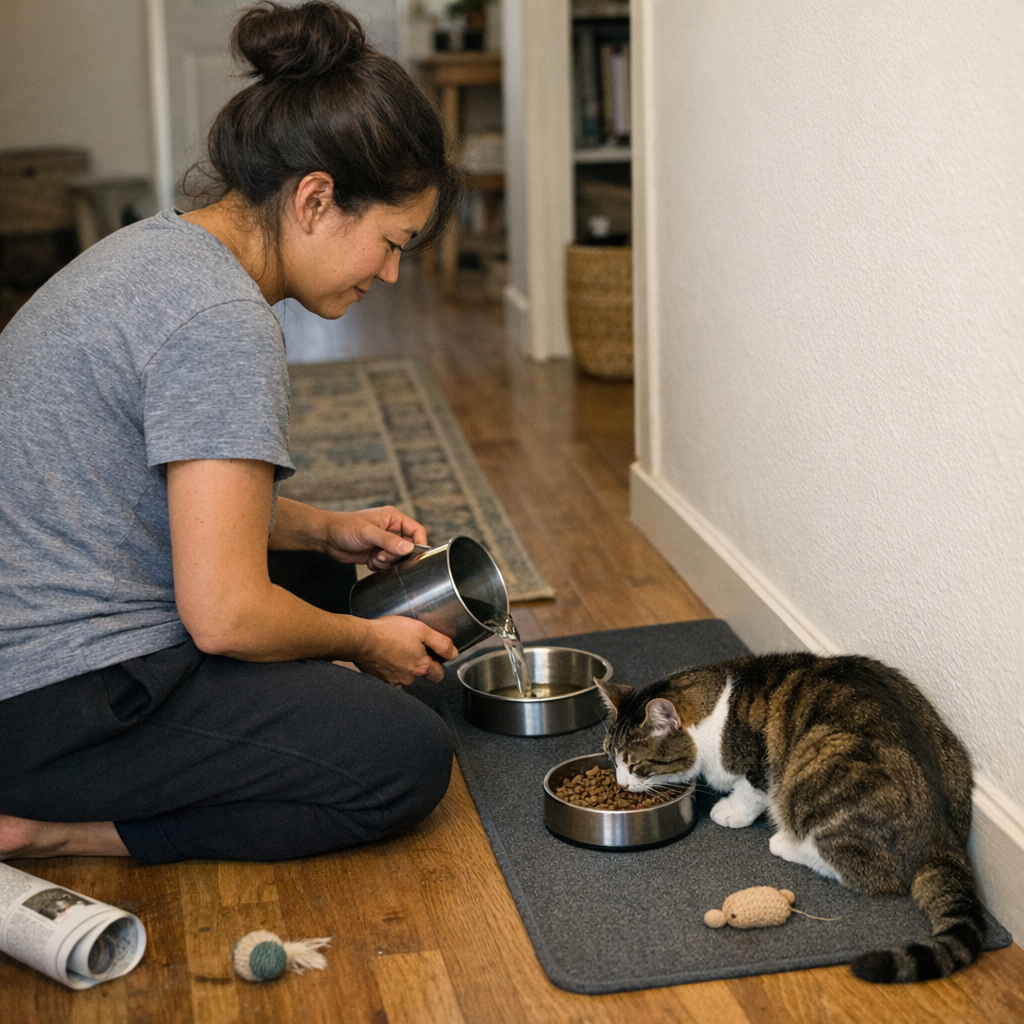
The tidy feeding zone you set up at noon will betray you by 2 AM. That water bowl, seemingly anchored, edges into the hallway as you stumble out for a refill. The mat that stayed flat in daylight has rolled and dragged, its grip lost to a paw’s midnight shuffle. Toys, bunched in their designated nook, slip out one by one and wait for your bare foot halfway to the bathroom. These aren’t flukes—every overlooked shift in your cat’s corner creates a new snag, turning quick late-night routines into mini obstacle courses. What looks organized at a glance rarely survives a week of real, repeated use—especially after dark, when small changes turn into daily friction.
The Hidden Instability Beneath a Tidy Surface
Most indoor-cat stations look composed under regular light: mats squared to walls, bowls lined up, toys corralled. But once the cycle of use begins, instability creeps in:
- Mats slide inch by inch—especially with high-traffic paws or one hard tail swipe—even when they seemed settled after the morning reset.
- Bowls and feeders drift. A few meals, a brief head-butt, and suddenly the bowl that was flush to the wall now blocks the next pass-through.
- Toys wander pathologically—always returning to the walkway or lodging under a chair right where your heel will find them.
These silent shifts become visible when wet footprints appear past the feeding mat, or when you’re clawing for a toy under the sofa for the third night running. Order dissolves and reset work multiplies, all from the relentless, routine micro-motions of living with an indoor cat.
Why Nighttime Exposes Every Weak Point
Weakness in setup stays hidden until nighttime makes it costly. As the household dims, your cat’s quiet pacing turns each small misalignment into an interruption: a bowl jutting into a shortcut, a mat buckled right where she steps, a ball wedged deep under the table. The “good enough” setup shows its cracks in the hours when every step and pause is felt—by you and your cat.
- Midnight checks turn from simple refills into late tasks: you nudge the water bowl away from the threshold, again.
- The rolling toy under the chair? It needs to be fished out—again—for a clear path.
- Litter mat, bunched just right, causes another trickle of grains across the floor, catching a sock at 1 AM.
This is not just a matter of aesthetics. Repeated, unaddressed drift during off-hours can keep routines stuck and owners awake—over and over.
Repeated Reset: The Frustration Behind the Motion
There’s a gap between setups that appear organized and those that resist disruption. The difference comes out in repeated routines, not first impressions:
- Refill block: The bowl shifts just far enough that you now need to use both hands—one to pour, the other to reposition—while holding back a cat eager for breakfast.
- Wipe-down delay: Dried splashes under bowls, invisible until the morning, mean another round of bending and scrubbing you didn’t plan for.
- Storage out of reach: Litter bags and scoops are technically present but always misplaced during a hasty cleanup, stretching a five-minute tidy into a circuit around the whole room.
- Toy migration: That favorite mouse reappears in lounge walkways every day, no matter how often you return it to its proper spot.
No single event stops the flow. But the slow, daily build of inconvenient adjustments—pushing, bending, collecting, chasing—eats efficiency, making tidy spaces feel less functional every cycle.
When Looking Tidy Isn’t Enough
An “organized” setup can still trap you in repeat work. Placing everything flush at the start feels done, but the real test starts after a few days: mat edge curled, water bowl shuffled loose, kibble scattered beyond last night’s reach. You end up:
- Stalking spilled kibble on the daily walk to the coffee machine—even when it “should” have been contained.
- Pushing the bowl back into the designated spot with a half-awake hand, only to see another puddle collecting where none should be.
- Straightening mats, then discovering another edge rolling, funneling debris where cleanup is harder.
Most of these issues emerge when no one’s looking—or when you wish you could look less. Tidy on the surface, painful beneath: that’s the real-world cost of setups built to look settled, not to hold up in motion.
The Impact of Stability on Routines and Rest
Purpose isn’t achieved by appearance but by structure. In repeated use, small setup weaknesses slow every step:
- Wandering bowls require constant correction and double the reset steps.
- Zones that don’t absorb the friction of traffic, refills, or cat energy invite more accidental mess and unplanned cleaning.
- Predictable, anchored setups shrink the wipe zone and bring routines back to one spot—no more running laps to restore order.
Cat routines become less choppy, owner sleep improves, and night interruptions drop—not because the setup is perfect but because it stops unraveling at every minor push or motion.
Small Changes With Outsized Effects
In testing real setups, the fix rarely means starting over. Swapping in a wider, low-profile mat that actually grips the floor can anchor a whole zone. It’s functional structure—removing the biggest causes of drift—with visible payoff:
- Bowls stay in position, reducing hallway creep and keeping feeding areas contained, not spreading toward shoes or doors.
- Kibble and water splashes get trapped early; mess no longer fans out into walkways or under furniture.
- The cleanup target shrinks: instead of tracking bits from every corner, you handle one reliable spot, every time.
Within a week: fewer disrupted nights, no detours around overnight mess, and a feeding and play corner that survives both cat rounds and human routines with almost no extra vigilance.
Dealing With Where Setup Drift Really Shows Up
Most drift goes unnoticed after the first night or two. Mats migrate just a half-inch at a time; by the end of the week, the zone has migrated across the tile. Toys veer farther from their return point until they’re a daily obstacle. “Fixes” like pushing the bowl or catching the mat corners become built-in habits, not solutions.
The real burden is slow build-up: Each repeated detour costs another ten seconds. Every delayed wipe shaves away patience. If your cat’s routine seems to stall at a feeding corner, or you anticipate the new mess location every morning, you’re feeling the structure—good or bad—long before you notice the cause.
Structuring Cat Zones for Real-World Use
The best setups aren’t just “neat”—they actually reduce movement, friction, and missed resets over time:
- Reduce movement where it happens: Grippy mats, combined stations, and physical boundaries keep essentials anchored, so zones don’t sprawl under daily use.
- Centralize and simplify resetting: Mess, scattered toys, and water stay predictable: always in one spot, nothing hidden at the far edge, no new search routes.
- Let the structure absorb the tension: Anchored mats, dual-use stations, and toy-catch setups prevent daily creep without constant human intervention.
The difference is clear after a few real cycles. The setup worth keeping is the one that feels easier to handle by week’s end, not just camera-ready on day one. The weak spots? They show up as lost time, blocked access, and one more cleanup that wasn’t on your checklist.
Recognizing When to Rethink the Setup
If you catch yourself bending down to recenter a mat every morning, chasing stray pieces of kibble on the same route each day, or seeing your cat pause instead of moving fluidly across zones, there’s probably a structural flaw waiting for an anchor or adjustment. The fix is rarely a full redesign. It’s noticing which item keeps shifting or which mess keeps spreading—then locking down that variable with a still, practical change.
You don’t need a complicated overhaul to see relief. Focus on what’s moving, what catches you out of rhythm, or what your cat keeps circling. A single better-anchored station, mat, or zone can calm the cascade of small fails that unravel the daily pattern. For setups, resets, and routines that actually last, see what works in the long haul at StillWhisker.