
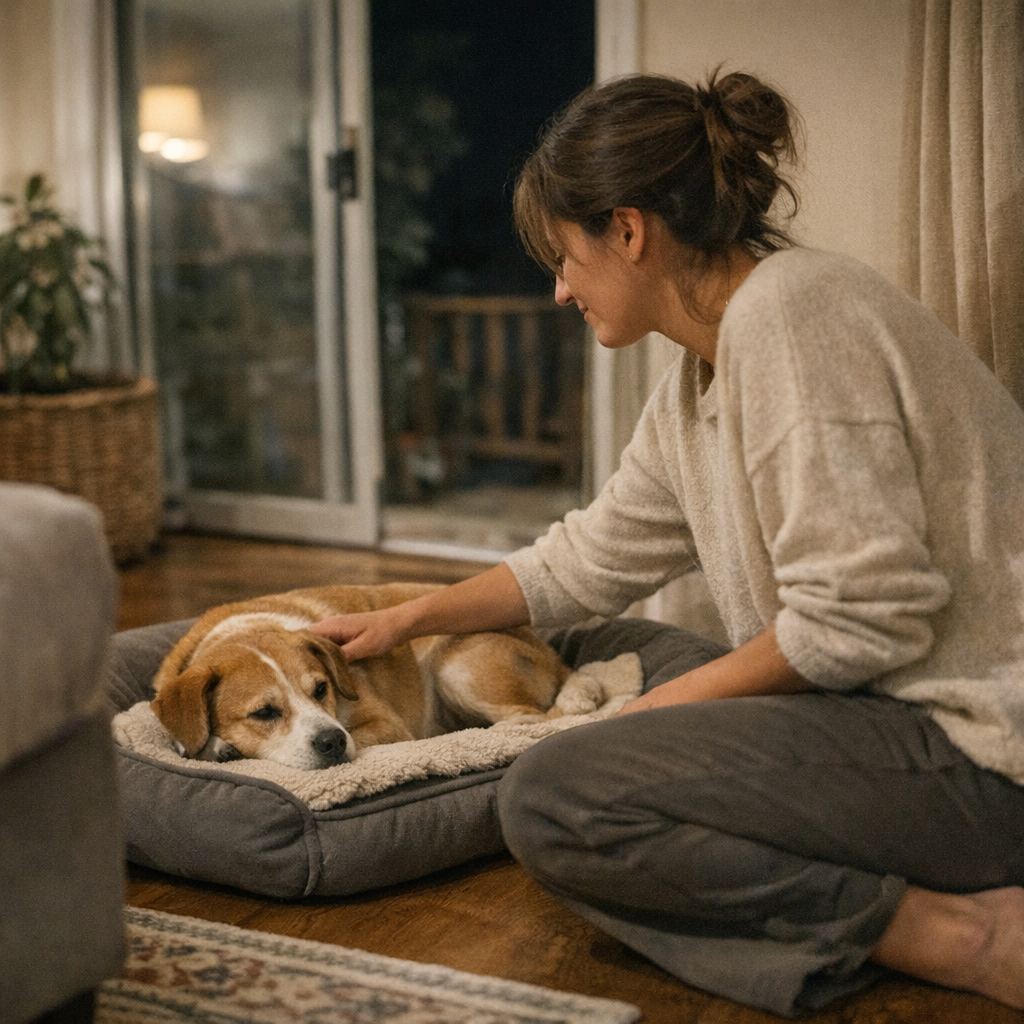
You finish the last walk, hoping for a quiet wind-down—but the next half hour keeps snagging on small but relentless friction points. You reach for the leash bin and knock over a towel tangled with toys. The bed looks comfortable in the corner, but your dog is pacing the gap between the hallway and living room, circling as if waiting for your next move. The routine is supposed to be done, but it keeps leaking out: repeated pacing, toy cleanup bleeding into your path, another trip back for a wipe that wasn’t in reach when dirt hit the floor. In too many homes, these minor breakdowns keep the evening from settling—no matter how neat the setup looks at first glance. DogPile’s product world exists for exactly this zone: where ordinary structure falls apart in daily dog-life reset.
When the Calm Hour Stutters: The Subtle, Repeated Friction
The evening slide from activity to rest doesn’t fail with a bang—it unravels in the edges. Your dog does one last loop down the hall. You settle on the couch, only to find her alert at the door, nails clicking on tile. You pause to return toys that migrated toward the exit, then notice another water spill by the bowl. Instead of winding down, you’re pulled back by micro-delays:
- Dog makes another restless lap as you turn out the lights.
- Just as you sit, she’s standing near the door, hoping for one more out.
- The supposed “rest corner” is where foot traffic keeps stirring her up.
Each individual moment feels small—a missed cue, a shift in position, a toy in the way. Stack them, and your quiet hour becomes a series of stop-starts, crowding out true rest. Most don’t see the buildup until the friction starts eating into the same part of every night. That’s the structural weakness: setups that repeat the same drag, silently trading comfort for routine interruption.
Why Tiny Routine Gaps Matter More Than You Think
That last loop across the floor isn’t idle; it’s your signal that the transition isn’t really done. Setups with no definite end point—bed half in the walkway, wires of leash and wipes out of reach, closing cues missed—pull your dog back into movement. Minor tension lingers: a whine at the door, a second toy pickup, a late-night round of paw wipes because supplies were buried. The mess isn’t chaos, it’s repetition—each incomplete pass stretching the “close” of the day an extra ten or fifteen minutes over the week.
These problems grow quietly—not from big disruptions, but from routine clutter that never really gets boxed in.
The Unseen Difference in Daily Use
What feels organized at noon breaks down at night. At 8pm, maybe the bowls sit close by—but the dog bed sits where you need to cross the room, so every snack run stirs your dog awake. You drop the settle signal too late, and now she’s hovering between door and bed, unsure where to land. The setup is tidy but inflexible; it looks fine, but in real evenings, it still asks for reshuffling or owner-side correction.
Anchoring the Rest Zone: A Small Change That Alters the Flow
Across homes, the same loop repeats: the dog takes her lap, holds at the decision point, and either settles—or keeps pacing if the environment pushes her on. Changing two things is what makes the structure “stick” under pressure:
- Shift the bed just out of the walk-through lane. Even one foot matters; if it sits where human traffic passes, your dog keeps responding to every movement.
- Make the settle cue direct and early—guide your dog with a clear phrase and an anchor hand, as she finishes her expected lap. “Bed,” with a calm point, beats the vague “Settle down” said after she’s already circling.
- When your dog hesitates at the threshold, gently steer—don’t wait for the wrong move to repeat. A small redirect at the friction spot saves 10 minutes of pacing later.
No system makes friction disappear, but these tweaks block familiar weak points. Once you nail placement and timing, most dogs slot themselves into the calmer flow—not perfectly, but often enough that the next night isn’t a rerun of last night’s patchwork delay.
Scene in Action: The Difference Between “Neat” and “Workable”
Evening, real version:
- You both come in from the last walk. The towel is balanced on a chair instead of a hook, and you fumble for wipes hidden under keys. The bed sits inches from the fridge path. After the “dry-off,” your dog sits, then drifts back toward the hallway. You’re still sorting the leash, already a half-step behind.
- Water bowl is within arm’s reach, but each refill prompts a sidestep—dog and owner in the same blind spot. Toys left beside the threshold draw a second round of pickup before rest is possible.
- The settle cue drops as your dog is already halfway elsewhere. She paces again; the end of routine stays out of reach.
Now, revise the setup:
- Bed slides barely out of the lane, so when you point and give the cue, your dog’s lap ends where you want, not at the exit.
- Towel and cleanup items are on a reachable hook or bin by the door. You handle mud and water in one pass—no late returns for wipes.
- With cleanup done and cues delivered as your dog circles once, both of you get a true “close” to the evening. The pacing stops before it starts; your own movement causes less repeated interruption.
The difference isn’t how things look, but whether they actually let the routine resolve—or just keep it bouncing back into your lap.
How the Evening Routine Falls Apart (and How to Cut it Short)
You don’t notice the small failures until you’re repeating the same inefficient fixes:
- You slide the bed over, but your dog stays glued to the door, waiting for something new to happen.
- The living room looks better, but toys trickle back into walking lanes every other night, stealing time and attention.
- A soft bed helps until a late-night snack triggers a second cleanup—midway through, your dog’s rest window disappears and you’re back to coaxing her to settle.
Ignore these leaks, and you inherit the same restless routine all week. Clearer setups don’t hunt perfection—they stop the “reset” from dragging on by making that last zone easier to access and close. Relocate the bed, align the settle cue with the decisive moment, and let simple structure do the work of signaling “done.”
The Feedback Loop: Repeated Friction, Repeated Fixes?
Each day, an open-ended routine guarantees tomorrow’s reset takes longer. With no definite anchor—bed near door, cues too late—your dog keeps filling in the blanks, circling and delaying as much as you. Fixing structure (on both sides of the leash) isn’t about impressing visitors; it’s about breaking the loop that costs you another 15 minutes when you just want sleep.
Most background tension fades the moment placement, signal, and owner access are finally in sync. It won’t make evenings flawless, but it will let both sides quit chasing that elusive “finally settled” moment night after night.
Real-World Tweaks: Small Adjustments, Noticeable Ease
No one expects a miracle—what you want is fewer snags across the finish line. Over a week, little changes add up:
- Dog takes the bed on her cue four nights out of five, no extra patrol along the door.
- The last 30 minutes flow more cleanly—less looping back; toys and wipes are right when needed.
- You stop weaving through scattered clutter or dodging a pacing dog on the way to your own rest.
- Routine feels solid enough to handle sudden interruptions—instead of crumbling at the first stray sock or late visitor.
It’s not about appearances. True improvement is when structure finally pulls its weight: fewer reminders, quicker resets, one less distraction at the edge of every day.
Spotting the Routine vs. Real Distress
Most dogs benefit from a closing lap or two. A little hesitation is normal. But if you keep hearing nails on tile, see her staring at the exit after every transition, or hit that familiar loop of whines and pacing when you thought the day was done, that’s the flag. Nearly always, a bed shift or better-timed cue interrupts the spiral—often more reliably than trying to “out-wait” her. The goal isn’t over-control, just the kind of structure that stops friction from stacking up.
Everyday Setup, Everyday Payoff (and Where Smoothness Comes from)
Even the smallest