
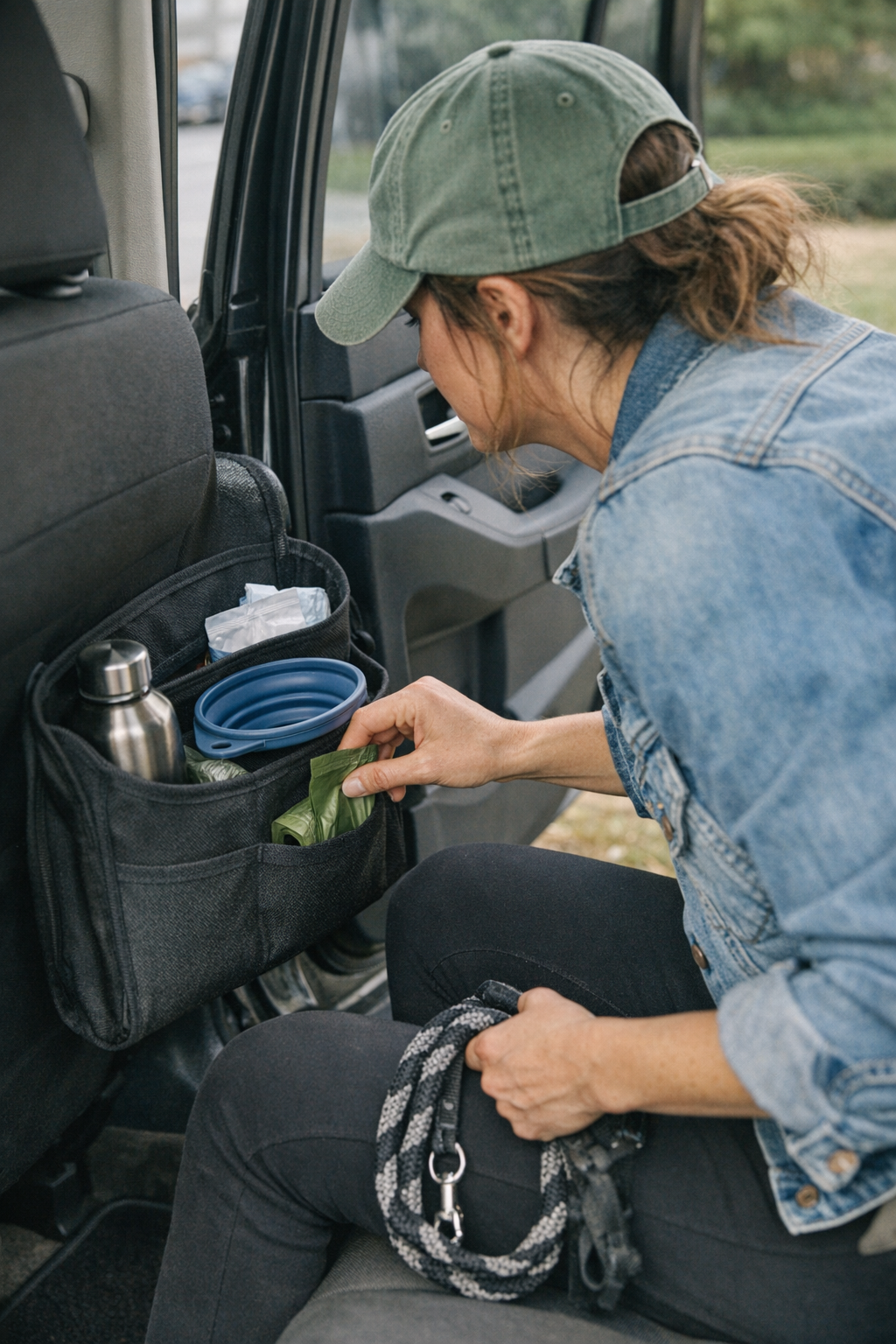
If you’ve ever paused mid-walk, leash tense in one hand, fumbling through your bag for a wipe or cleanup bag while your dog loses patience, you already know: the difference between “packed” and “actually ready” for pet travel exposes itself fast. What looks organized on your doorstep—everything stacked, zipped, sorted—feels totally different three stops in, with your dog shifting, your bag sagging, and your hands juggling too much at once. The real friction isn’t just the pet’s unpredictable pauses: it’s being slowed down by gear that hides essentials behind layers, traps cleanup under comfort, or makes every sidewalk stop a messy scramble. PawGoTravel is made for these pressure points—where the real routine breaks discipline.
When “Organized” Isn’t Really Ready: The Classic Pet Travel Setup Trap
At home, a pet-travel tote looks set: wipes lined up, treats visible, leash and water bottle easy to spot. But the first curb stop on a busy street turns this neat prep into a slow-motion tangle. Instead of cleanly grabbing what you need, you’re reaching past a blanket to snag a baggie, sliding wipes out from under bowls, or unhooking a leash buried in the bottom. What felt tidied-up in your living room quickly turns awkward when rapid access—not appearance—matters most.
This isn’t a rare meltdown; it’s the standard pattern on real city walks or car trips with three or more “quick” stops. Organized layers collapse into overlap: waste bags slip behind other pouches, snacks get trapped under a comfort item, and even a well-packed setup can force awkward reshuffles. You want a fast grab, but the bag structure works against your movement, so both you and your dog end up waiting out each pause instead of moving forward smoothly.
Real Life Repeats: How Overlapping Compartments Slow You Down
The problem gets more obvious with every stop. After the second interruption—dog pulls left, you grab the leash, try to reach for wipes—you’re not just slowed by the pet, but by your own bag design. The cleanup pouch you placed on top is now under a half-loosened snack bag or water bowl that’s shifted. Sometimes even dedicated pockets don’t prevent items from slipping, especially if the tote is soft-sided or built as one big compartment with loose dividers. Each attempt to speed up instead means an extra pause, a quick mini-restack, or a hunt for one needed item lost in the mix.
There’s a visible cause: compartments overlap and shift under movement; “all-in-one” sounds efficient until you watch how one item constantly blocks, covers, or trips another when you hit real use. It’s not only unpleasant; each delay stacks on the last, adding drag and missed beat after every curb stop, water break, or nervous-dog comfort attempt. The gear that promised less stress ends up interrupting the trip over and over.
The Hidden Cost of the All-In-One Bag
Big-pocket totes and “multi-purpose” pet organizers pitch flexibility and tidy looks before you leave, but they reveal their limits after a couple of stops. The flexibility feels like freedom in a demo, yet becomes chaos soon as bowls, waste bags, and personal stuff start swapping places or sliding deeper into pockets mid-walk. The lesson hits fast: surface neatness rarely survives repeated access, and the more you’re forced to dig or reorganize, the more frustrated you—and your dog—become.
The Chain Reaction: What Keeps Interrupting the Flow?
The interruptions aren’t dramatic, but they’re constant. Each slowed reach, blocked pocket, or item overlap doesn’t just irritate—it quietly drains the flow from your trip. Instead of moving on after one quick action, you’re stuck juggling leash and bag, pet tugging while you rethink which pocket you stuffed the wipes into or where the snack pouch landed after last time. These micro-delays accumulate, making even an easy schedule end in scattered nerves and a dog that’s become twitchier from every unplanned wait.
Picture this: by the third pit stop, you’re sure you packed plenty of cleanup bags, but now they’re wedged behind a bowl, or wedged next to the treats you added on the way out. Each reach becomes a quick search, bottle tips, treat pouch slips—just enough hassle to turn “organized” into “off-balance.” It’s not a setup failure, just death by small, repeated interruptions—none dramatic, all adding up, all stealing from the rhythm you expected.
Comfort Items Can Slow Down the Whole Routine
Even items meant to smooth the ride—blankets, sprays, chews—can turn into friction. A comfort blanket is great in theory, but in the wrong place, it covers or shifts other essentials just as you need them, so every calming move creates new fumbles. The effect multiplies if your dog gets anxious or distracted, forcing you to break stride again and again. Even with a “better packed” bag, this kind of spillover can keep sabotaging trips, no matter your preparation level.
Small Changes, Noticeable Payoff: Rebuilding Seat-Side Access
Fixing this routine tangle isn’t about adding gear—it’s about where items stay and how they come to hand after every movement. Relief comes from isolating what matters most: pulling high-use gear—cleanup pouches, bowls, wipes—into seat-side or door-pocket organizers. Instead of main-tote chaos, the stuff you reach for the most is always at hand, knee-level, with no zips or reshuffles. One-handed, on-the-move grabs become the norm rather than the exception.
The shift is visible: the usual untangling, dug-in searching, and awkward restacks just… stop. Cleanup gear, water bowls, treats all stay exactly in place, ready to use as you pause—no hidden pockets, no rolling under blankets, no leash dropped while you dig. It frees your attention for your pet, not your bag, and makes every restart feel less like an ordeal and more like continuous motion—the single biggest difference in how a travel setup feels over the course of a real outing.
Why the Difference Lasts—And Where Setups Still Break
The goal isn’t perfection but reliable friction reduction under repeated use. Even the best seat-side setup doesn’t erase every awkward moment—mis-packing can still sneak in interruptions. But by separating your most-used pet, cleanup, and comfort gear into clear, always-accessible spots, the main rhythm of your out-and-back walk genuinely shifts: less clutter, fewer forced pauses, far less of the shuffle-and-repack routine. Instead of making changes mid-movement, your setup lets you move, stop, and restart without a second thought—and you stop avoiding trips that used to feel like a hassle.
After a week of repeat trips, you notice the change: cleanup isn’t a search, snacks don’t go missing, and the pause-to-pace ratio finally tips in your favor. Calm looks visible, but it’s structural—your setup now works to keep the day moving, not to slow it down. That’s the difference between looking ready and actually traveling ready, and it’s where the real value in the right setup shows up, day after day.
Find practical pet-travel gear designed for repeated, real-world movement and faster, less frustrating stops at PawGoTravel.