
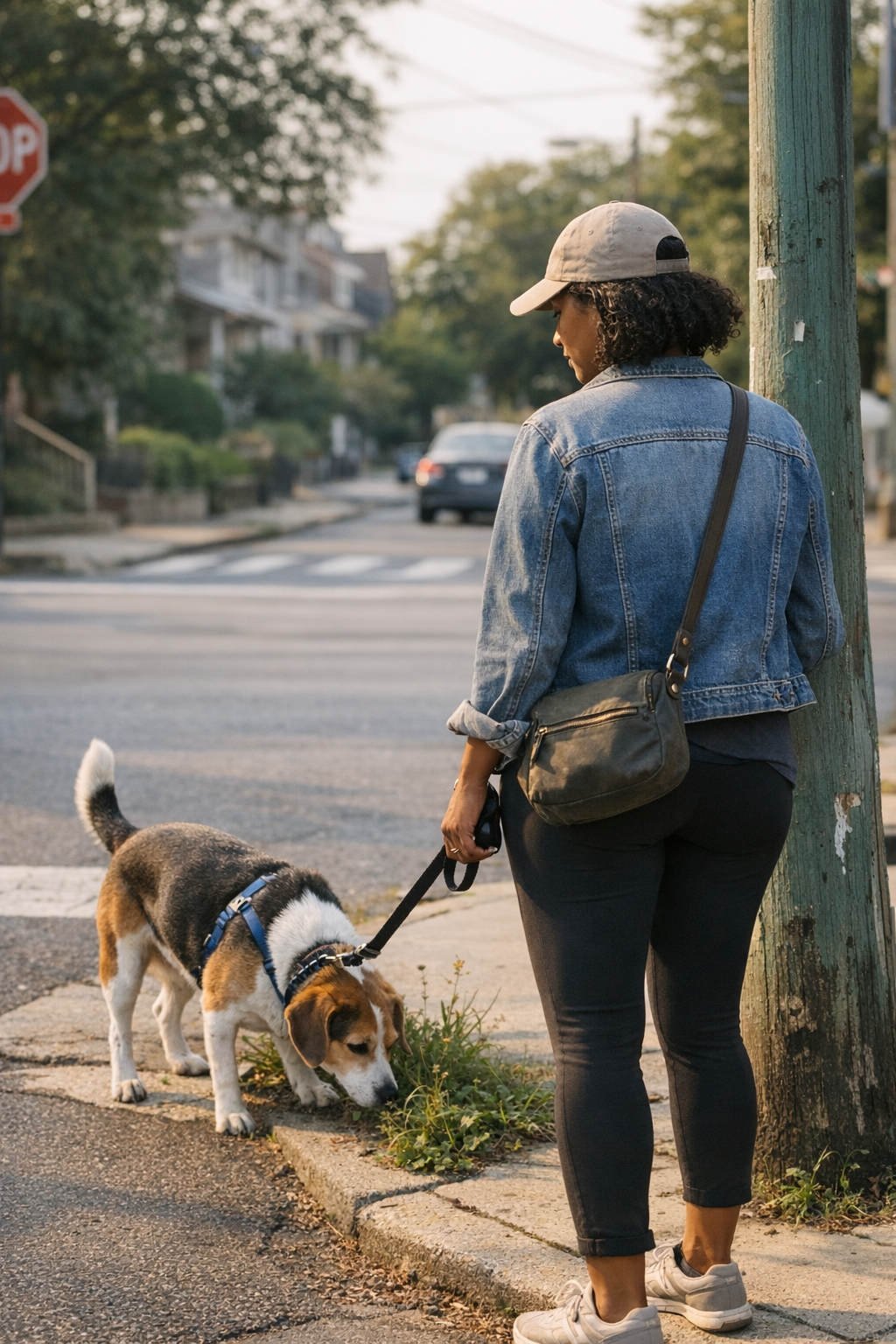
When your dog stalls at the same corner every single walk, it’s not just another sniff—it’s a routine-level problem you can feel in your hands and patience. Suddenly, that daily loop you expect to finish in twenty minutes crawls—leash tight, your energy dropping, your dog less focused and more stubborn each day. The early signs: feet planted, repeated detours around last night’s tangled leash, cleanup wipes missing until the hallway’s already streaked with paw prints. The cost of ignoring these frictions isn’t theoretical. It creeps into your day as slowdowns, repeated stops, longer resets, and a routine that quietly gets heavier with every pass.
When an Everyday Walk Turns Sticky
Most dog owners notice the shift in feel before they spot the pattern: walks that once zipped by now stall, each block taking more time and energy. The leash rarely goes slack, your dog’s pull turns unpredictable, and the straightforward loop mutates into a slog you find yourself dreading—not for any one dramatic reason, but because the friction multiplies. You start negotiating with the route, not enjoying it.
This isn’t behavior to correct or quirks to shrug off. These friction points are the routine’s exposed seams. Left alone, they wrap around your process and quietly overwhelm the “simple” walk you thought was locked in.
Spotting the Real Friction Point: The Street Corner Pause
Here’s where it starts stacking: You grab the leash at the door and fumble around backup collars or a dog toy sprawled in the entryway. Your dog’s bouncing to get started, but your first step is a shuffle through misplaced gear. By block three, the familiar snag hits—your dog brakes at the same lamp post, sniffs so long you eye the clock. Any time you try to rush past, the leash tangles, your dog lags behind, and forward movement stutters the rest of the way.
This delay isn’t random—your dog is stamping their mental map, re-centering in the only way they know to keep the world familiar. For you, it’s a routine snag visible only because it repeats. Miss the signal, and you’ll keep battling the same pause every walk, same as you keep tripping over last night’s gear on your way out.
Misreading vs. Noticing: Why Repeated Pauses Matter
Push your dog past these checkpoints, and you don’t save time—you lose it further down the block. The leash snaps taut, your dog protests with backward glances, and the walk’s rhythm never recovers. But shift your handling—pause for a counted five at that spot, let your dog finish their check-in—and suddenly the leash softens, the stride smooths, and the rest of the walk realigns with far less effort. Ignoring friction points extends the struggle; noticing and adjusting dissolves them before they can stack up.
Patterns That Sneak Up on You: Everyday Resets We Miss
The pause and restart problem isn’t just out on the sidewalk. It moves back inside with you: post-walk, you reach for paw wipes only to find them buried under mail or left in the wrong room. Your dog, already antsy, plants muddy tracks through the hallway—now cleanup drags on too long, and your quick reset is anything but. Dog bowls may look lined up, but if you’re blocked by a stray toy or the food scoop is buried under yesterday’s receipts, the tidy setup costs time with every repeat.
These aren’t disasters—just small access issues, stacking through each process. The more often you run the routine, the more these frictions turn into a handling drag, stealing minutes and mental energy in ways that rarely show up in the “picture perfect” version of your space.
Real Signs Your Walk Routine Isn’t Working as Smoothly as It Looks
- You find yourself rerouting to dodge a certain block. Not because you like the other street, but because you’re subconsciously avoiding the struggle of your dog’s repetitive pause.
- Your dog pulls more, lags more, or refuses the leash after you force a pass. One sticky slow spot begins to drag down the rest of the outing.
- Resetting after walks keeps getting slower. Leash adjustments, forgotten wipes, entryway detours—every step feels like it takes one beat longer than it should, every time.
When these signs show up, you’re not just looking at an “untidy” day—you’re watching a routine losing its practical snap, turning the daily walk from a quick refresh into a cycle you want to cut short.
Why Dogs Pause: More Than Just Scents
This isn’t stubbornness; it’s dog logic. Your dog maps their world by locking in the familiar and double-checking boundaries—always at the same corners, posts, or curbs. A repeated pause is their way of managing territory and comfort, not a fluke. Forcing through only piles on resistance. Letting the check-in happen, on your terms, often quiets the restlessness that leaks into every other part of the outing.
Skip their pause and expect more leash tension, reluctance, and less interest in what should be a routine pleasure. Give them those moments, and friction shrinks—not just on that block, but through the next reset and reentry at home.
What Actually Changes When You Slow Down
Try this tomorrow:
- At the normal slowdown spot, stop and count to five. Let your dog do their check—instead of yanking ahead.
- Watch for leash slack after: are you walking or dragging?
- Notice whether your trip home and cleanup reset step down in strain—or if it all still feels like a series of hurdles.
Within a few walks, many owners see the routine flow shift—fewer tangles, a more even tempo, and their dog settling faster at home. The setup hardly looks changed, but the pressure point—the “why does this always happen here?”—is getting handled, not ignored.
When a Tidy Setup Isn’t Enough
A space that looks organized isn’t the same as one that runs smoothly. You can have a leash rack by the door and a bin for toys, but if everyday flow means shuffling gear out of the way, reaching around hats to grab the leash, or tripping over shoes on the way out, you’re adding tiny delays each time. Likewise, a rest corner that looks plush can catch crumbs and hair, slowing the refresh you promised yourself would be quick. Bowls placed for “tidiness” may end up crowding the kitchen entry, blocking feet and drawing out reset with every bump and spill.
The trap: a setup that passes the neatness test but costs you time and momentum every single repeat. These weak points aren’t fixed by making things look better—they’re solved by changing the way things actually work in repeated everyday use.
It’s Not About Perfection—It’s About Repeated Use
No one’s routine is friction-free. Even the best setup can’t keep surprises out. But if the same slowdown keeps creeping in—at the door, on a familiar block, resetting after a walk, or at the food bowls—the message isn’t subtle. These friction signals are invitations: rearrange the leash spot, stash wipes at the true point of need, shift the bowl out of the constant crosswalk. Sometimes the fix is physical, sometimes it’s just patience for the pause. Both matter more than keeping up appearances.
Small Pauses, Big Payoffs: The Real Value of Adjusting Routine
The routines that work best aren’t the fastest—they’re the ones that build in space at the right moment. A planned pause at the sticky spot outside, wipes waiting at the actual reentry (not across the room), or moving bowls out of the busiest kitchen lane all cut friction before it multiplies. New gear helps, but only if it lands in the path you actually take—not just filling a shelf.
The real hack? Watch for the places you keep tripping, rerouting, or resetting and treat those as the center of your system, not an afterthought. The routine gets lighter, flow picks up, and the annoying drag stops building up day after day.
If the sticking point keeps coming back, you’re not missing a secret. You’re spotting exactly what can change for smoother flow: reorganizing the leash zone, upgrading wipe access, or trading a forced rush for a controlled pause—exactly where your routine shows you it needs it.
For more ideas on smoothing out your daily dog routines or to see helpful tools that make repeated resets less frustrating, visit DogPile.