
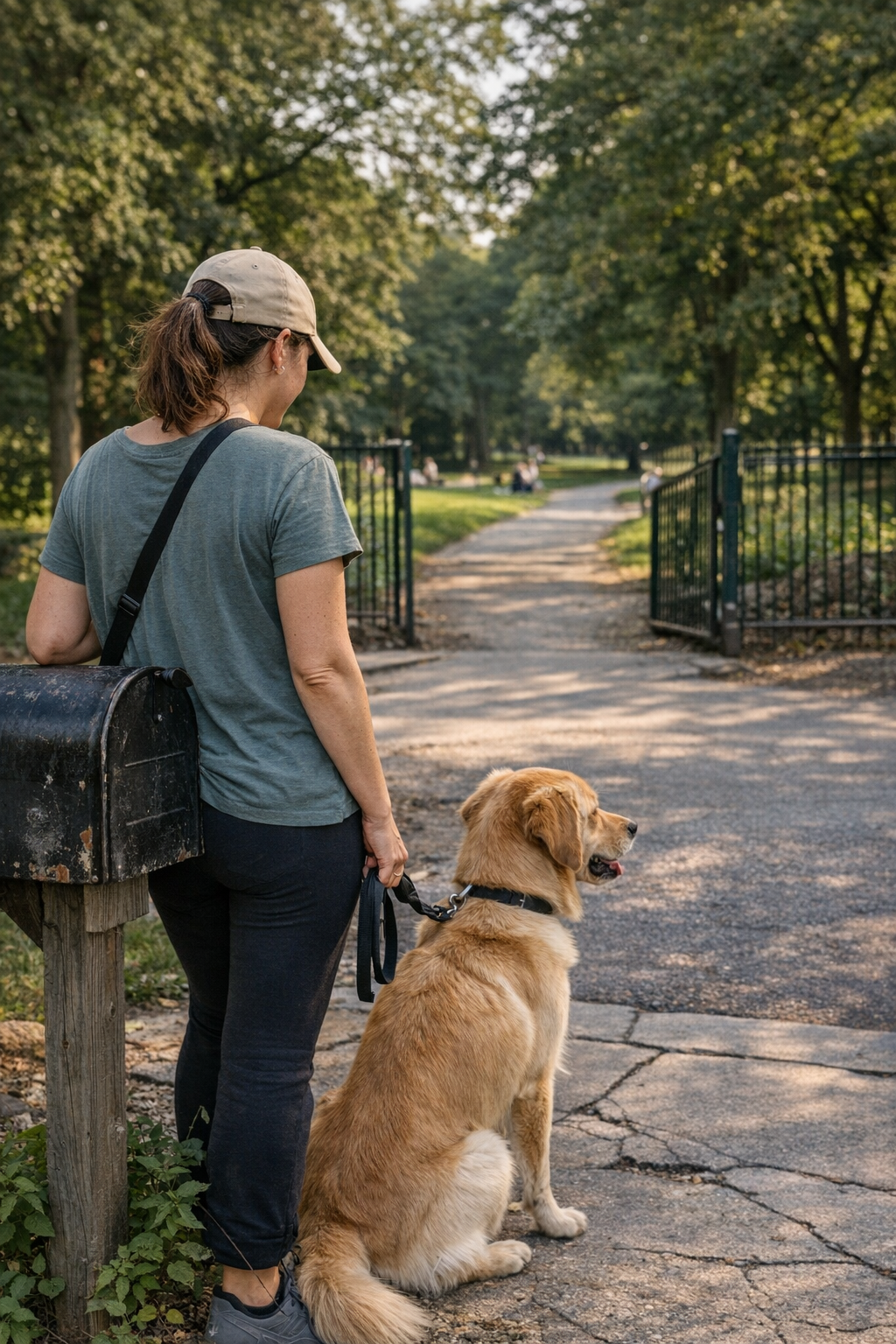
Every dog owner hits the same snag: your walk runs smoothly—until it doesn’t. You reach the corner, the park gate, or even your neighbor’s mailbox, and the leash yanks tight. The problem hits the same spot every day, not because of bad behavior, but because the structure of your routine keeps creating the same stumbling block. From the outside, the walk looks easy. Up close, it’s interrupted rhythm, quick frustration, and the unmistakable feeling that some part of your setup keeps letting you down—one more reminder that “tidy enough” isn’t always livable when you’re actually moving, leash in hand.
Spotting the Problem: Where Walks Break Down
Your route never really surprises you—neither does the friction. The leash is right by the door (until it slips behind a shoe pile). You know exactly where the walk drags: busy corner, park entrance, mailbox. Every time, the leash pulls or your dog surges at the exact spot you expect. The pattern repeats—slow walking, grip tightening, scramble to reset—and your morning feels chopped up before you’ve even started.
These trouble points aren’t flukes. Each small snag chips away at your patience and makes the rest of the walk—and even coming back home—feel ragged. A single five-second stall doesn’t just delay you; it makes the rest of the route more awkward, and each repetition trains your dog to expect tension right there, every time.
What’s Really Happening? The Friction Behind Predictable Pulling
If you always pause or fumble with your phone, keys, or bag at the same spot, your dog isn’t just sensing your habit—they’re primed to bolt or tense up the second you slow. Routine gets baked into the environment. That messy curb, that patch before the park, the habit of shifting your bag at the same time—these become signals for disruption. Not every walk is a training problem; most are symptoms of a home setup or gear placement that wires friction into your flow, again and again.
Dogs watch for signals—sometimes it’s your voice, but just as often a curb, a patch of shadow, or the sound of you re-gripping the leash. Over time, these micro-patterns steer the entire outing.
Many owners learn the hard way that friction grows from habits they never meant to build. The “organized” entryway becomes an obstacle course. The spot you always adjust your jacket becomes the very place your dog lunges. Instead of a relaxing loop, the walk feels like a chain of tiny battles that never quite get solved.
The Hidden Impact of Small Rhythm Breaks
It’s easy to shrug off a two-second pause—until you realize it shapes the walk that follows. One stumble near the park gate and you’re quicker-tempered, your dog is jumpier, and both sides are losing patience. On paper, you left the house prepared, but by the second snag the route feels choppy and tense. Nervous energy saps the fun from sniffing, the leash feels heavier, and coming home means more wiping, more grabbing, more stress—none of it visible in a tidy room photo.
Repeated friction doesn’t just shorten the walk. It leaves you both spending energy in the wrong places: fussing instead of exploring, correcting instead of resetting. The moment that should restore calm starts draining it, step by step, from leash clip to return.
Real Scenarios Where Friction Shows Up
Reaching for the Leash—and Finding Something Blocking the Flow
It never starts outside. You’re hurrying, hands full, reach for the leash—except it’s tangled behind boots, or lost under yesterday’s bag drop. A “fixed” storage spot is only as good as it feels in the rush, not the tidy photos. When grabbing the leash means shuffling half the entryway, you’re starting every walk with a layer of stress you didn’t budget for. With every repeat, that same awkward reach costs seconds and drains patience before a single step hits the sidewalk.
Cleanup Delays After the Walk
Returning home, your dog’s paws are muddy, the leash is damp, and ready-to-reset feels like a myth. The wipes were there—last week. Now they’ve migrated under a tote bag or slipped behind a crate. You look organized, but when cleanup’s not instantly reachable, you’re stuck fumbling while mud creeps further in. A setup that passes the “company’s coming” test still fails the daily dog routine if it makes you dig for supplies every single afternoon.
Comfort vs. Repeated Reset Friction
Chasing comfort usually creates its own loop. You lay a plush mat near the door so your dog can land soft after walks, but now it soaks up stray water and traps muddy prints; cleaning the mat adds work, not relief. Or you push toys close for easy play, only to spend half your afternoon nudging them away from door swings and walking paths. “Comfort” solves one problem and quietly hands you another: easier settles up front, extra cleanup or tripping hazards on the back end.
Routine Anchors: The Power of a Predictable Pause
When the same tension points repeat, the answer isn’t more correction—it’s moving the anchor. Step off routine autopilot and choose an intentional pause before the problem zone. Instead of yanking the leash at the gate, stop and settle at the mailbox—a step earlier than your usual snag. This moves the tension cue back, interrupting the reflex before it builds. A simple, clear pause—used consistently—signals both you and your dog: here is where we reset.
This predictable anchor creates a margin. Repeat it, and the worst spot loses its power. The frantic energy gets redirected; the leash holds lighter just by routine adjustment, not by battle. Over a few days, you get fewer stops and sharper transitions—less scrambling to recover rhythm, more smooth movement through the usual trouble zone.
Not Just Theory: How Routine Adjustment Changes the Walk
Most people don’t realize the gains until they live them. After a week of anchoring pause before the pressure point, you’re moving steadier. The leash loosens, the walk flows, and cleanup on return is less hectic because you’re not coming home frazzled. On paper, nothing major changed—the real shift is in rhythm: fewer micro-adjustments, less compounded stress, more space to actually walk the route you meant to take.
No setup is perfect. Squirrels, noisy trucks, or a rain-soaked doormat will throw off your best routine. But when your daily structure signals “reset” before trouble starts, both the walk and the homecoming hold together better under pressure. You move from reacting to controlling the pace—and each week, more of the routine goes on autopilot, with less need to correct midstream.
Frequently Noticed Weak Points in Everyday Walks
The Same Problems Keep Coming Back
Change the baskets, move the hooks, swap the mat—some weak points just keep resurfacing. The toy in the aisle, the towel always a step too far, the leash jammed behind rain boots. A setup can be neat and still fail in action if it interrupts you at the same second every day. Repeated use quickly shows which solutions are only “organized” by sight, not by speed or reach when you’re mid-routine and hands-occupied.
Setup Decisions That Feel “Okay”—Until They Don’t
What seems logical on day one—treats by the door, shoes out of the way, leash in a basket—can unravel once real life repeats. The jar perfect for rewarding calm is suddenly out of reach right when you need it, so you skip the reward. The shoes you moved keep creeping back into trip-range, so you side-step, losing your rhythm. Over a week, the gap shows: tidy setups that only look ready aren’t the same as ones you can actually use, moment after moment.
Subtle Gains and Real-World Adjustments
The difference isn’t grand, but it’s real: the routine either eats into your patience a little more each day, or it supports you without extra effort. The right pause defuses leash tension early; the right gear spot puts the towel where you reach for it, not where it photographs well. Over enough repetitions—rainy mornings, after-dark returns—anchor points and friction-free placement trim the edge off every step. It’s not dramatic, but the feeling is obvious once you’ve lived it: easier, less interrupted movement from leash-up to reset.
Takeaways: Making the Walk and Reset Work Together
If you keep hitting the same snag on your daily walk, the problem isn’t habit or stubbornness—it’s the routine structure bottlenecking in the same place. Change the anchor, improve the flow: build your pause before the friction spot, place your cleanup where real hands reach, and judge every setup by how it handles repeated use. The best dog routines look barely different from any normal day—except they keep the weak points from piling up. And that’s the DogPile world: setups, placements, and adjustments that matter when the novelty’s worn off and your lived-in routine is what actually decides your day.
For