
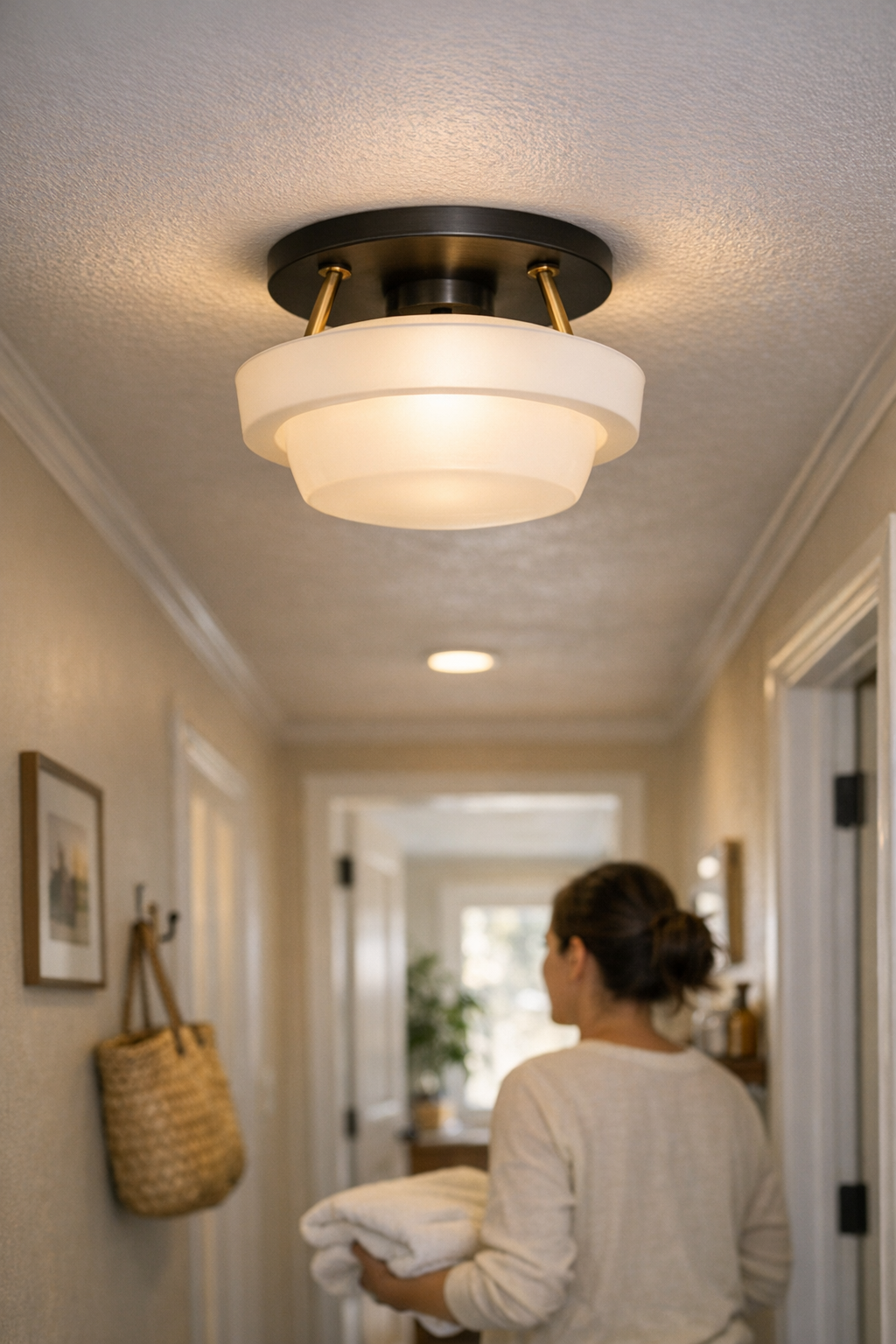
Weak ceiling and wall lights reveal their faults fast in places you use every day—hallways, bathrooms, utility rooms—especially where visibility and movement can’t afford interruption. If you’ve ever rounded a stair turn and caught a flash of glare at eye level, or watched a flush mount droop in your line of sight after a few months, you’ve seen how flimsy fixture materials betray themselves. The reality: a light that wobbles, shifts, or warps with each slam of a door or swipe of a cleaning cloth quietly turns “bright enough” into a daily frustration. That trim that twists as you tighten it, a base that lifts at one edge, or a wall sconce that leans by next week—none seem major right out of the box, but they compound fast, and the result is always visible: uneven spread, growing shadows, and a sense your lighting isn’t really helping.
The Real Trouble with Flimsy Fixture Materials
It never starts with disaster. You install a new flush mount or wall sconce, give the screws a last turn, and notice the metal yields ever so slightly. No one else spots it—at first. Then a week of bumped doors, hot showers, or vacuum handles, and that flex ripples into the light itself. What was once flush and stable now sags at the seam, casting shadow lines that weren’t there before or leaving patches of glare against the mirror. The fixture hasn’t broken, but it’s surrendered the job: instead of clear, predictable light, you get movement-caused uncertainty that piles up in daily use. Enter a hallway at night, edge past laundry baskets, and suddenly you’re tracing your own shadow along the wall, not moving with confidence.
Why Fixture Rigidity Makes a Real Difference
This isn’t about looks—rigid fixtures anchor usable, reliable lighting over time. Spaces that carry foot traffic, moisture, or cleaning tools—narrow halls, steamy bathrooms, utility corners—punish even tiny structural weaknesses. The moment you feel a bracket bend under tightening pressure, or a ceiling base that shifts side-to-side, you’re setting up trouble. Every vibration, every sweep across the trim multiplies the original flex. The effect snowballs: gaps at the base, mounting screws that loosen, alignment that never sits square. The difference is night and day—quite literally, as one section of your counter goes dark or the corner stair stays unlit after dusk.
What Soft Metal Looks Like in Daily Life
Visualize a hallway only a stride wide, always busy in the evening. That new, thinner flush mount holds—momentarily. But a week of narrow misses and direct bumps, and the fixture drifts out of alignment. A warped edge lets shadows leak out; one side now casts down more sharply. The room isn’t dimmer by the bulb, but your vision fills with dead spots, and suddenly dragging a bin or carrying groceries after sundown feels off-balance. At the vanity, things are no better—one poorly anchored sconce throws light unevenly, making one half of your face crystal-clear and the other washed out or lost in shadow. Everything’s more effort. You catch yourself compensating unconsciously: tilting your head, shuffling sideways, reaching for another light or squinting to check for spills by the washer.
It’s not failure, just a creeping burden. Weakness in the fixture warps how you use the space, every single time you walk in.
How Subtle Flex Compounds Over Time
The small shifts never stop accumulating. Every cleaning swipe, every cycle of humidity and drying, each vibration from footsteps or slammed doors drives the flex point further out. The fixture—especially flush mount or sconce—turns subtly but permanently off-square. That leaves you with unchecked shadow, glare that drifts from benign to blinding, and “hot spots” on otherwise even surfaces. Mounting screws loosen, trim pulls away, and the chase for true-even lighting becomes a weekly task you never needed before. It’s not just a visual flaw; safety edges vanish in the shadows along hallways or stair turns, and the work surface loses clarity just when you need it most.
The Gradual Creep: Shadow, Glare, and Lost Visibility
The warning signs are obvious if you’re looking—shadow triangles growing across corridor edges, perimeter gloom when you expected wall-to-wall coverage, hard reflections in the mirror where light used to be soft. You may find yourself reaching for a screwdriver for the third time that month, tightening, nudging, hoping for a fix, but the structural weakness always returns. The room is “lit,” but never actually easy to use: glare at the wrong angle, a missing half of the counter, or a staircase that feels less certain with every trip.
Can’t All Fixtures Handle Everyday Friction?
Most fixtures—fresh from the box—look satisfyingly bright and flush. But what matters isn’t their output on day one, it’s how the structure resists the push and pull of real movement: repeated vibration, contact, and damp cycles turn thin trims and bendable brackets into future problems. The prettiest rating sticker won’t offset weak metal. Even “damp-rated” ceiling lights can lose their fit and focus if the body flexes under installation torque or mounting pressure; those small movements never stop costing comfort and clarity in busy, high-touch zones.
Even Small Flex Leads to Big Shifts
Picture the reality—carrying two bags through a low, narrow hallway in the evening, only to find one side of the fixture shifted, and the far wall now lost in shadow. Or wiping a vanity sconce and sensing the metal flex beneath your cloth. Next morning, half your reflection feels washed out. The solution? Temporary workarounds: an emergency night light plugged in, a second cleaning run, or just a growing list of spots you avoid at certain times. None solve the root cause. The weakness remains—and so do the blind spots, glare, and shadow interruptions that force you to change how you move through your own space.
When a Solid Fixture Enters the Picture
Swap a wobbly, drifting fixture for a rigid, all-metal model—with a real, flush base—and the effect is immediate. Suddenly, door slams and steam cycles don’t matter. The light doesn’t tilt, shadows stay put, and you stop having to second-guess where the dark patches will show up each week. Hallway turns become predictable; stair landings stay clearly lit; cleaning no longer throws fixtures out of line. The improvement is felt by its absence: you’re not thinking about the lighting every time you pass through. Movement flows, edges are easy to see, and the room simply works—no repeated fixing, no subtle adjustment rituals, no stutter-step at the top of the stairs.
One Small Tip: Test Before You Finish Installing
Before committing, firmly press and torque along the trim and mount. If you see flex, bowing, or a base that will not sit flush, stop. The cost of “just good enough” now is months of extra adjusting later.
Quick Reference: Recognizing and Avoiding Flex-Driven Issues
How do I spot a weak fixture during install? Press, tighten, check the base line. Any movement, flex, or edge separation means the material won’t keep up—especially in places with vibration, moisture, or constant cleaning.
What happens if I ignore the flex? Expect drooping trims, loose screws, and shifting alignment—cue the daily return of glare, growing shadow, or intermittent dark corners. Over time, even the wiring stability is at risk from repeated movement.
Is “damp-rated” alone enough? Not by itself—plenty of models pass the moisture test but still use weak metal. Always combine good ratings with visible structure: test for rigidity before mounting anywhere that sees real use.
Why Fixture Build Quality Isn’t a Small Detail
What feels like a minor material shortcut in a fixture quietly shapes how you enter, move, and see inside your own home. Ignore the subtle flex, and you’ll live with unreliable coverage: half-lit paths, awkward mirror shadows, and a steady stream of small frustrations across rooms you thought were “done.” A well-built, rigid fixture isn’t just about avoiding repairs—it’s about actually using every part of your hallway, bathroom, or laundry for what it was meant for. The difference shows every time you stop gripping the wall in the dark, give up the work surface at night, or hesitate at a stair turn. Ignore build, and you inherit the friction. Choose solid structure, and the frustration never gets a foothold.
See practical fixtures that make daily movement easier at LightHelper.