
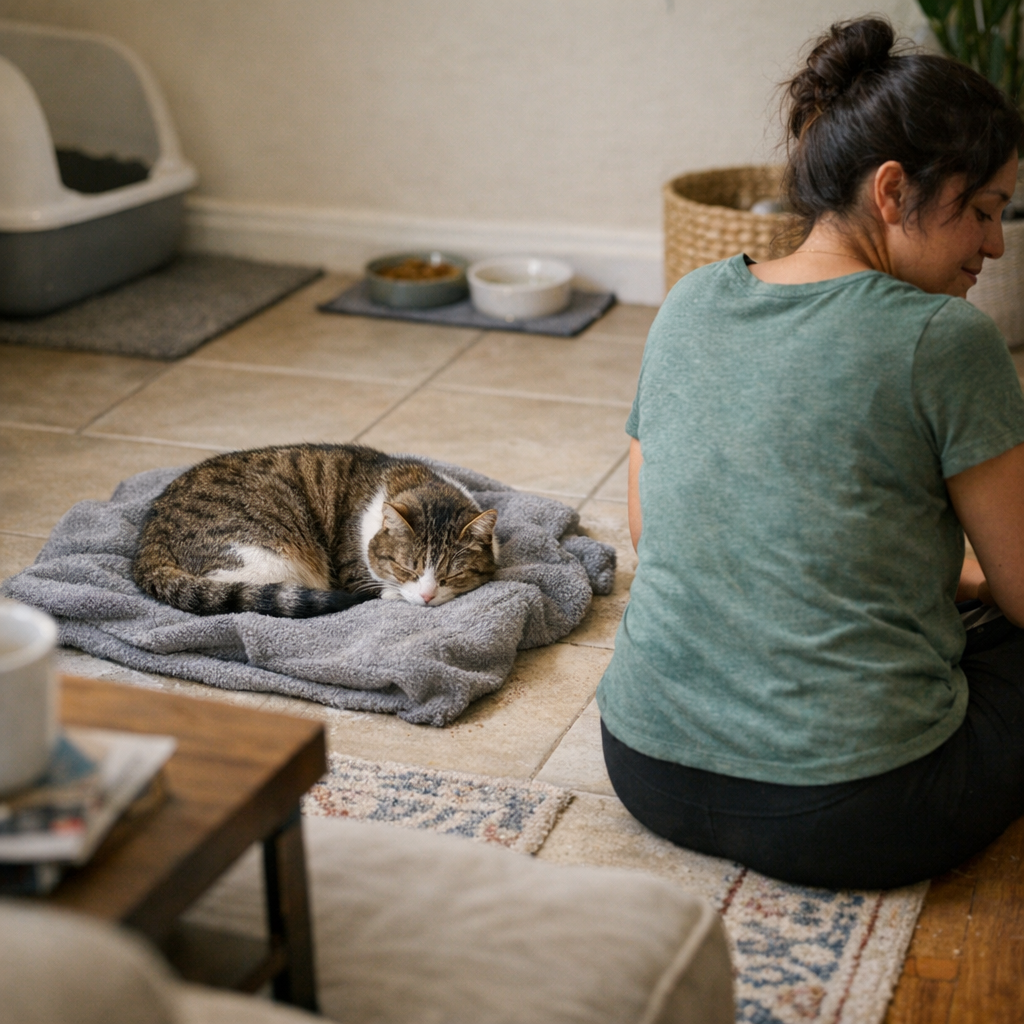
Move your cat’s favorite blanket or bed just a few steps—closer to the food bowl, tucked against the wall, wedged near the walkway—and you’ll feel the shift within days. The comfort zone looks right at first: your cat finds the fabric, the corner looks cleaner, and the room breathes easier. But by midweek, small messes spill in—a rim of crumbs collected after breakfast, fur lines deepening at the floor edge, damp corners waving up after every water bowl refill. What was supposed to be “cozy” gradually turns into extra work: more shaking, more wiping, and more doubled-back trips with cleaning supplies. The difference isn’t just the blanket; it’s the spot, the pattern of traffic, and how well that rest zone resists the daily flow of litter, food, and movement. StillWhisker’s world starts where all this friction meets the real home setup—where cat rest, owner routine, and cleanup overlap or collide.
When Comfort Collides with Cleanup: The Reality of Bedding Placement
Most indoor cat owners try the classic move: rearrange a space, then set the bed or blanket in a fresh corner out of the way. For two days, it works—cat settled, corner “done.” Then routine takes over. Every morning meal leaks a handful of crumbs toward the edge. Litter tracks in underfoot after each box visit. A water refill splashes. Suddenly, cleaning means squatting to shake out bedding that now sits in the traffic lane, with hair and debris collecting exactly where you thought you’d finished.
Problem signals show up faster than most expect. Noticed crumbs pressed into the blanket folds after a meal? Fur in the grain along the mat line? The single “easy” spot turns into a habitual interruption: bedding must be moved before you can feed, wiped before you can refill, and checked for damp spots even after casual spills. Each reset you add to keep this corner “comfortable” quietly turns into new routine friction.
Comfort Zones Near Activity Hotspots: A Familiar Trap
Rest zones sneak into active lines—classic mistake. Place a bed near the feeding setup, or against the loop between litter box and door, and you create a mess relay. There’s not always room to separate areas in smaller apartments, and the logic feels right for a day or two. By day four, what started as out-of-the-way now blocks sweeping, houses a seam of tracked litter, and hosts fur clinging tightly in the corners—requiring tools, time, and one more pass every single day. Padding “just outside” the kitchen seems clever until stray kibble, carrying paws, or a spat spills into soft material. Each tweak that makes a room look “cleared” can mask the routines that actually pile up daily work under the fabric.
Daily Routines: Where Setup Friction Surfaces
The gap between tidy setups and usable ones gets exposed after only a few cycles. Real repeated frictions include:
- Food prep interrupted because the cat blanket keeps creeping over the bowl line—another sidestep, another fold reset.
- Extra wipe-down that follows nearly every meal, because the bedding edge sits where food debris naturally drifts.
- Blanket gets picked up again—litter trails now tangled in the folds after a box visit.
- Vacuum bumps up against bedding touching baseboards—fur multiplies in the corners, just out of easy reach.
- Bed looks fine until you find a damp patch at the edge: a water spill missed, now trapped in fabric that needs washing, not just shaking.
Each isn’t catastrophic, but stitched together, they quietly convert one restful zone into a micro-chore that frames your whole routine. The “comfort corner” keeps asking for more resets than the old setup ever did.
Why “Cozy Corners” Keep Becoming Cleanup Zones
Mixing your cat’s rest zone with feeding or litter traffic lines constantly puts bedding in the path of the next mess. If your space is compact—studio, single walkway, open shared room—there’s little margin for separation. What seems solved one day becomes a collection point for scatter, fur, and crumbs as the week turns. Example: you move the cat bed into the dining nook—out of guest view. Now every post-snack return and litter dash flings debris straight into folds. In small homes, one leap or chase, and the bedding skids halfway across the room, making comfort impossible to separate from activity. The short-term “tidy” look comes at the cost of long-term lower workability.
Small Shifts, Big Impact: What Actually Reduces Mess
The only fix that endures past week one: create a buffer zone. Even a single tile, mat, or stretch away from food scatter and litter drifts changes the cleaning cycle. Move a bed out of splatter range, and you’ll spot the difference:
- Blankets keep clearer—shake-outs are now less frequent and faster.
- Fur collects in defined zones, instead of ghosting into every surface or wedging under chairs.
- Crumbs and litter stay on harder floors or mats, not embedded in the fabric.
- The reset cycle shrinks—less bending, less urgency, fewer duplicate wipe-downs.
This isn’t about cleaning harder. It’s about placing rest spaces where everyday mess can’t take hold so quickly. Over time, your routine feels lighter, not more demanding.
The Subtle Difference Between Looking Controlled and Feeling Easier
Photos or first-day assessments fool nearly everyone. A corner with a freshly cleaned bed looks ready—until repeat use chips away at the surface. Maybe you chose a washable blanket, but it drags across the floor every time you try to vacuum or reset the mat. Maybe it’s soft and familiar, but you end up shifting it just to access a cabinet or cross the room. The first hint of extra work rarely shows up on day one, but it always returns by cycle three or four: stuck fur, missed spills, or a stretch of space that always seems just out of practical reach. It’s never just about good material or a “nice” look—it’s about whether that exact zone holds up once it’s hit by real daily routines.
Fabric Makes a Difference—But Placement Does More
Sure, materials matter. Tight-woven cotton handles fur and crumbs better than plush fleece, which acts as a magnet for litter dust and stray hairs. But no texture can win if bedding sits right in the path of daily scatter. Even premium fabrics lose against relentless foot traffic and repeated kitchen or litter passes. Placement—not product cue alone—keeps your setup from crossing the line into daily interruption.
Adjusting Without Unsettling Your Cat
Cats anchor to familiar zones. Move bedding constantly and your cat might avoid the “improved” spot or settle somewhere even less practical. The move should follow a clear signal: a cluster of fur or crumbs forming faster than you can reset, the routine suddenly getting slower, new furniture rerouting daily flow—or a visible buildup that cleaning can’t clear up. Nudge the rest item just outside the zone of mess, and both you and your cat get an easier reset without upending a comfort routine. Move with purpose; avoid endless readjustment.
Practical Tweaks That Last Beyond the First Week
When comfort and cleanup stop competing, you see it: the cat’s rest spot stops catching every stray mess, routines start to click, and you’re not pulled over by mini-jobs every time you walk by. That’s the difference between a setup that only looks under control and a structure that actually supports the way an indoor cat home runs in the real world. It’s not perfection—it’s fewer interruptions, less invisible work, and a comfort zone that stays functional after the novelty wears off.
For practical products that make daily indoor cat life and home routines genuinely easier to handle, visit StillWhisker.