
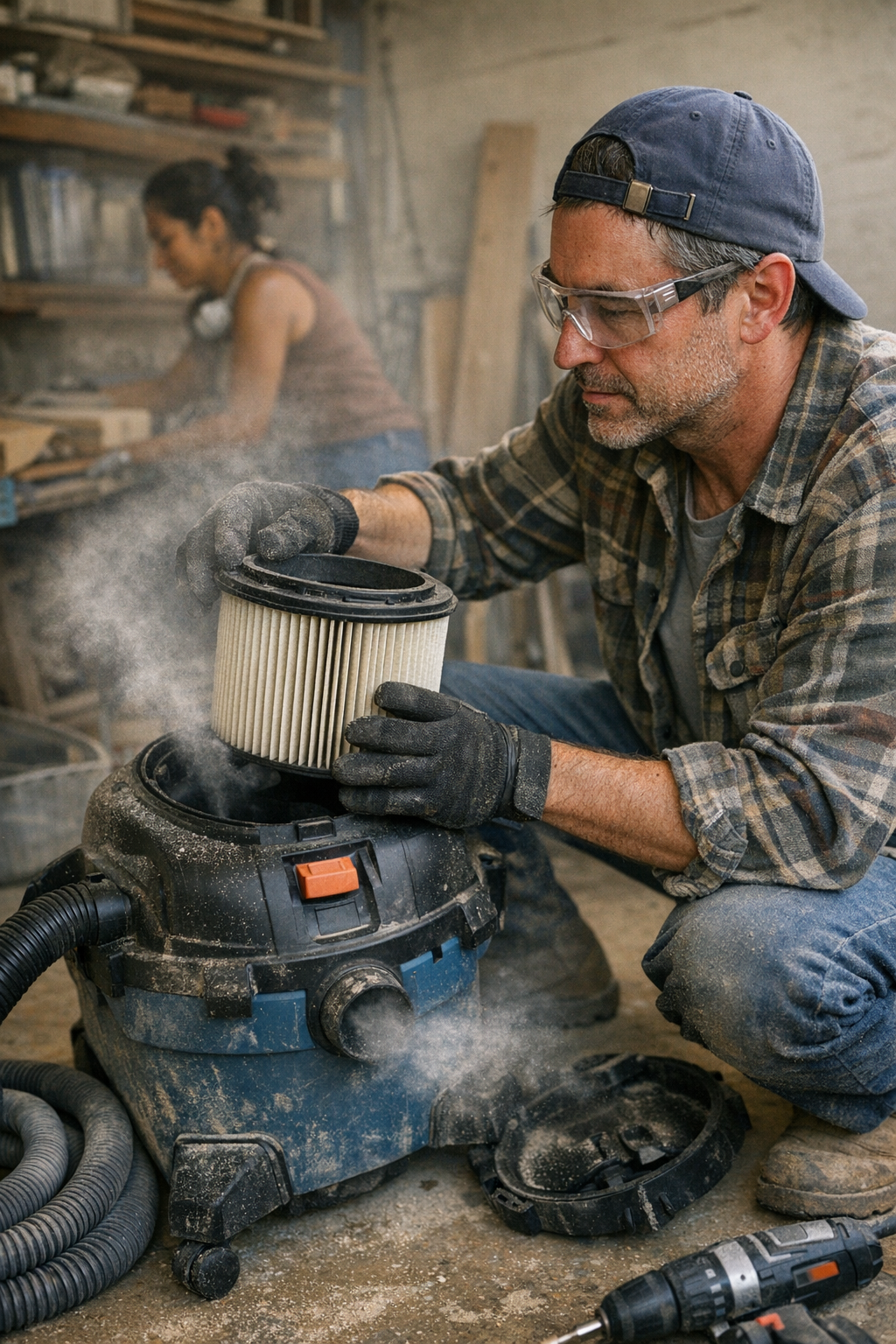
Every scar on a tool marks a job finished, an hour saved—or lost—when performance matters most. If you’ve grabbed an air-based power cleaner after a brutal sanding marathon, only to hear it wheeze and cough like it’s older than you are, you know it’s not just about dust in the corners. It’s about trust on the job. Because sawdust and drywall grit don’t care about your schedule, and a cleaner that fails in crunch time can turn a quick sweep before dinner into a scramble for fixes and backup gear you didn’t budget for.
Where Airflow Fails You—And Your Schedule
Every worksite veteran knows trouble rarely announces itself up front. You end a day saturated with dust and plaster chips, tuck the cleaner away, and assume the next shift will be a breeze. But come Monday, that familiar machine rattles, stalls, and blows more debris than it traps. Suddenly you’re behind, blaming your tools—or yourself.
This isn’t some freak hardware failure. It’s the slow, silent toll from little lapses: dust caking tight channels, condensation trapped beneath a neglected filter, and soft gaskets set into odd angles from last night’s rushed shutdown. Before you know it, your post-job routine—the moments you swear will be faster next time—has ballooned into an afternoon spent scrubbing vents, prying apart sticky buttons, and piecing together a cleaner that should have been ready to run.
Shutdown Shortcuts: When a Five-Minute Skip Becomes Tomorrow’s Headache
It’s easy to treat shutdown as an afterthought: blast the main surfaces, coil the cord, slide it beside the miter saw, and forget it. But while you’re moving on, residue settles in. In cramped van bins or on concrete garage shelves, humidity and dust sneak into every joint. If you’ve run your cleaner hard—maybe after back-to-back drilling for cabinet handles or marathon belt sanding—every shortcut compounds. The airflow you’ll desperately need next time gets choked off, and tools that once purged a room in five minutes now limp through a half hour’s work, eating into the next task on your list.
The difference isn’t subtle. One crew member vents his cleaner, another doesn’t. The next morning? One machine hums, pulling in offcuts and flakes from the first drill plunge. The other spits dust, jams on startup, and leaves you fiddling while everyone else gets back to work. That’s the moment lost prep comes back to bite—right when you need control, precision, and speed from your gear.
The Real Cost of Saving a Minute
Every time you rush that end-of-day routine, you push reliability off a little farther. A clump of grit in the intake isn’t cosmetic—it means more push, less pull, and that sinking frustration when you’re halfway through a tricky trim cut and the cleaner shrieks or stalls. That “five-minute save” surfaces as an unplanned hour later, eating your work momentum and testing your patience.
On the Job: How One Skipped Step Snowballs
Imagine: It’s 6pm, light fading, you’re wrapping up a kitchen remodel after a day of drilling shelf pins and beveling edges. Floors are a haze of sawdust, your gloves are lined with grit, and you want out. But tomorrow means finishing fast—fastening trim, dialing saws back in, not nursing a tool back to health. That veteran instinct kicks in: give the air cleaner a minute or two on low, filter loosened, just enough to burn off the hidden moisture and bits lodged deep inside.
It doesn’t feel heroic. But the next shift, when you flip the switch and everything fires without complaint, you dodge the staggered, rough startup that robs you of flow. No mystery blockages. No delay while your crew waits for suction. Just the smooth payoff of prepping right—and knowing your cleaner’s pulling its weight as you rip through a fresh round of work.
A Storage Routine You’ll Actually Keep
Practical moves—not perfection—make equipment last:
- Let the cleaner run on its lowest setting after major jobs. This blasts out stubborn fines, dries any trapped humidity, and prevents grime from hardening deep inside—especially after sanding MDF or punching through plasterboard.
- Loosen, don’t yank, the filter if it’s staying in. That small step vents the system, so seals don’t dry out misshapen and controls stay light to the touch.
- Give your tool a dry, cool, uncluttered nook—never jam hoses or clamps tight for storage. Keeping components aired out helps avoid brittle gaskets, seized clips, and those startup glitches that sideline the cleaner on heavy-use days.
Neglect it for a month and you’ll feel it: toggles stiff, buttons catch, and suction falters when you expect power on command. Smooth control, fast starts—these aren’t accidental. They’re built on small habits that are easiest to ditch when you’re tired and rushed.
Telltale Signs: Fix Friction Before It Kills Productivity
Watch for subtle warnings in everyday cleanup: a sluggish grind on startup, suction softer than usual, a button that sticks for just a second too long. Chances are, dust blockages are quietly building inside. That’s more than a minor nuisance—it’s lost rhythm, especially in projects that stretch over multiple days or demand fast tool swaps between sanding, cutting, and clean-up runs.
Make it routine every week or two: pull the filter, scan for color changes or airflow resistance—particularly after heavy drilling sprees, humid weather, or clouds of drywall debris. Catch friction early and you steer clear of the productivity spiral that comes from limping along with tool fatigue, not thinking about workflow until you’re already behind.
The Payoff: Tools Ready on Demand, Not on Luck
The point isn’t to win a prize for neat storage. It’s the confidence that when you’re bouncing from fine joinery to a burst of demolition—switching bits, blades, or batteries—your air cleaner is primed, not groaning through the basics. A few disciplined minutes at shutdown buys you freedom from headache starts, wasted mornings, and awkward workarounds. Build the habit now. In three months, when the schedule piles up and tools need to work, not whine, you’ll know it was worth every second spent doing things right.