
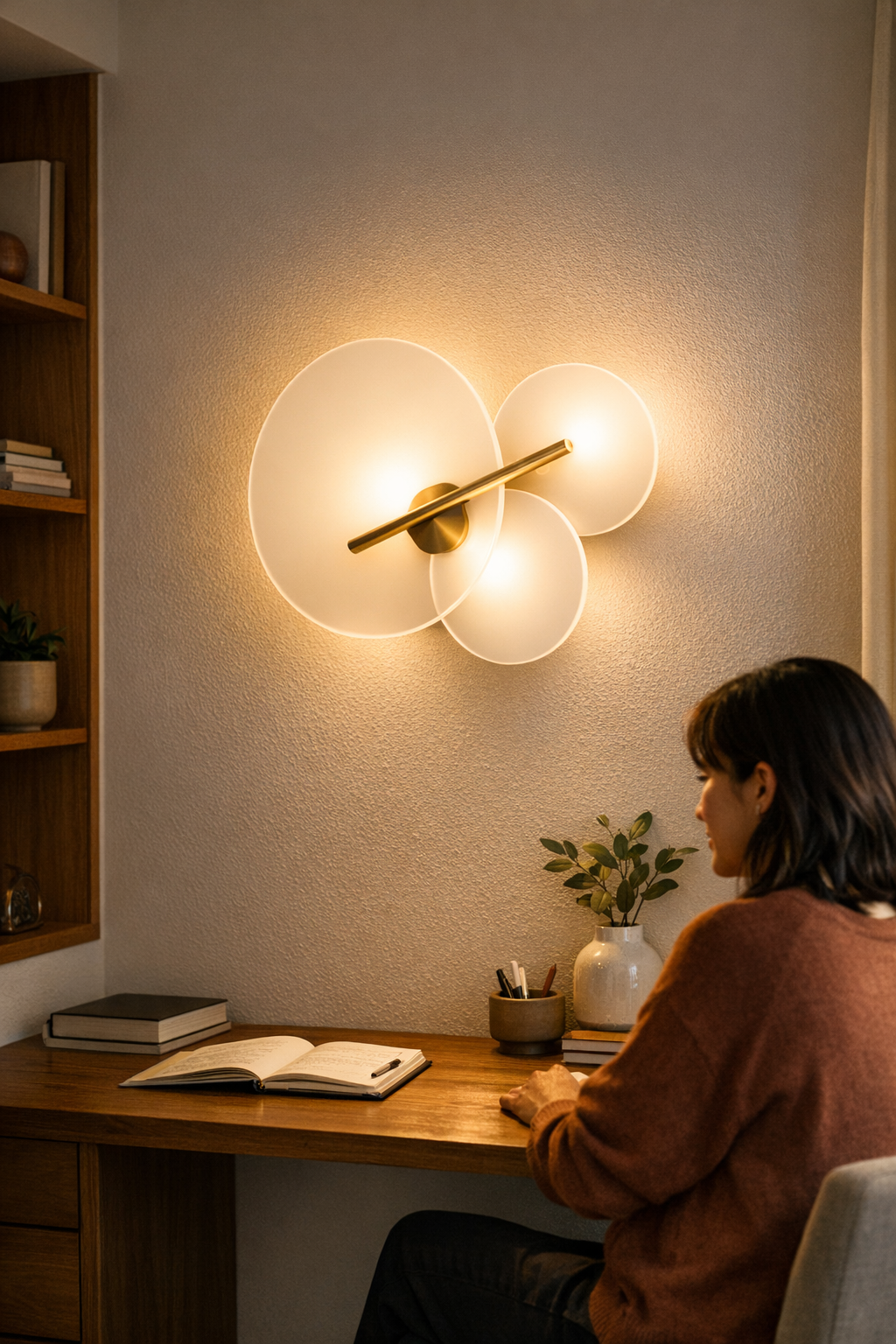
Wall lighting isn’t just about making a room look tidy—it’s supposed to make work and everyday routines feel easier. But the promise of a clutter-free workspace falls apart fast if you ignore bracket depth, cable route, and what happens once you actually start living with the fixture. What looks minimal for a week can turn frustrating as cables drift out of hiding, glare stripes cut your desk, or one support decision leaves half the work surface shaded and the rest just as interrupted as before.
When Clean Lines Fade Into Distraction
On Day One, mounting a slim wall light makes the workspace look almost resolved. Desk clear, wall sharp, everything feels aligned. But almost immediately, practical frictions surface: glare splashes across the work edge you actually use, the outer half of your desk lands in shadow, and the cable you thought was hidden becomes the feature your eyes find first. By the end of the first week, these details aren’t just visual—they change how the space is used. You start angling books toward the center, nudging chairs to escape dim corners, or storing panels to prop up a cord that refuses to stay put. The clean look decays into routine corrections you didn’t sign up for.
This is the visible difference between “looking organized” and “feeling comfortable long-term.” A bracket pressed flush to the wall can shrink the light’s reach, making you rely on backup lamps. A cord routed too loosely starts swinging out, interrupting your sightline with every movement. Every fix—moving a lamp, re-angling the fixture, tuck after tuck of cable—adds low-level distraction. Over time, the setup starts to feel like a series of failed shortcuts, not the simple upgrade you imagined.
Where Wall Lights Actually Make Sense
Wall lighting pays off in rooms where ceiling fixtures dominate or desk, shelf, or floor space is tight. Shared home offices, narrow passages, and odd corners near bookshelves or doorways are prime candidates. The best setups use wall-mounts to open the view and keep surfaces flexible. But even in these spots, daily use exposes shortcuts. If the beam doesn’t reach the work edge, dusk means leaning into unlit patches. A shallow bracket stops the light short, leaving the far end of your workspace permanently dim. And any exposed cable—especially across a blank wall—will hijack the look and make the install feel busy, not clear.
Routine Use: Where Friction Shows Up
The real tension surfaces in repetition. Notebooks shift, calls start, and you repeatedly avoid the dim edge. You end up relying on clamp lamps pitched just out of the frame. Each time you walk in, the cable is the route your eye traces—never the light. That ‘invisible’ support becomes a permanent variable, interrupting the supposed order. A wall setup chosen for looks alone breaks down as soon as habits meet reality.
How Support Choices Shape Comfort—Not Just Appearances
Mounting a light flush for aesthetics can quietly shrink usability. Pulling a fixture too close to the wall will throw the working surface into half-shade, making you hunt for add-ons—a backward step from the first goal of wall mounting. Let a cable snake loosely down the open wall and each day brings more visible friction, with your focus shifting to exposed plastic instead of the surface below. “Minimal” setups that ignore support and cable logic start to require extra work just to hold the illusion.
True calm comes from support that fits real movement and use—not just a tidy photo. Even a bracket only 10 or 12 centimeters deeper can pull light fully across the desk or reading edge, finally making those areas usable again. Cable channels, conduit that blends to wall color, and thoughtful cable routes—especially behind shelves—cut visual noise before it starts. These are small choices that prevent the entire setup from slipping back into disorder.
Small Adjustments That Make a Lasting Difference
Consider a typical snag: a shared workspace with an unlit desk edge that stays stubbornly dim. Swapping a shallow bracket for a deeper one brought the fixture out just far enough to send light where hands, pens, and displays actually go—no backup lamp needed. Redirecting the cord behind a row of bookshelves and hiding it inside a wall-toned channel cleared the sightline. These tweaks didn’t deliver a sudden transformation, but routines stopped grinding. Tasks stopped being interrupted by setup awareness. Lighting worked, and attention moved back to the work surface instead of cable anxiety.
Practical Cable Management—What Actually Works
Cable details, if left exposed, don’t just clutter—they can undermine the fixture itself. The most reliable approaches are direct:
- Paint-matched cord covers: Run the cable inside casing finished to fade against the wall. Visibility drops, attention resets to the lighting, not the wiring.
- Behind-furniture routing: If shelving lines or bookcases are nearby, route cables hard against, or behind, these blocks. Your major sightlines stay undisturbed.
- Built-in or surface cable channels: Some wall lights arrive ready-made for integral routing. If not, adhesive cable tracks set the lines where you need—out of view and under control.
None of these solutions feels ornamental; all require slightly more upfront intent. The difference is immediate: a day-to-day work zone that truly stays clean, not just staged once for a photo.
The Pattern You Want to Avoid
Setup regret almost always traces back to shortcuts—fixtures chosen for appearance, not for beam reach or cable path. Once uneven light or a stray cord enters the routine, the whole room starts performing for the wrong reasons: dark zones, harsh spots near monitors, and cords creeping back into view. These aren’t one-off annoyances. They become the new “normal” until your supposed upgrade simply repeats the old desk clutter—in another form.
What Makes a Wall Light “Liveable” Over Time?
Everyday support is the test, not first-day neatness. The most workable wall fixtures are the ones where bracket choice, cable management, and beam direction match how you occupy the space:
- Light coverage reaches all the key surfaces—no shadowy edges, no dead zones under shelves or next to walls
- Wiring stays out of main sight lines—either hidden or genuinely backgrounded by color and placement
- Bracket depth is chosen for practical use, not just wall geometry
- The system stays visually quiet even as you rearrange or add new routines
The Real Payoff: Lighting That Stops Needing Attention
Rooms with order that holds up for months—where light and support choices stand up to daily friction—didn’t get there by luck. The difference is design and bracket placement that pre-empt distraction, plus cable management that vanishes in daily experience. The result isn’t showroom perfection, but a background you stop noticing because nothing tugs at your routine anymore.
If your wall lighting still pulls you into setup tweaks, or you keep fighting small points of glare, cable drift, and uneven light, check the bracket, the beam’s landing zone, and especially how cables shape what you see and do. Those practical changes will outlast any fixture style or finish, and make more difference than two hours spent on décor.
Find lighting setups, mounting accessories, and support solutions designed to make these changes easier at LightSupport.