
Hang an organizer over your entryway door and things look handled—until daily use exposes the cracks. Bags start stacking, shoes crowd pockets, and every extra coat adds weight you barely notice until the hinge sags, the door sticks, or the rack slumps sideways. These aren’t just minor annoyances: each pass-through increases the pressure, turning a quick fix into a chronic clog at your most-used threshold.
Where Over-the-Door Storage Falls Short
On paper, over-the-door racks promise a slim, vertical answer to chaos. But the load doesn’t stay vertical or tidy for long. The real weak link is the door itself: every backpack and muddy boot you stack hangs off fragile hardware not designed for this shifting weight. Soon, the edges catch, the door scrapes, and racks shift or slip. The zone that once looked clean doubles back into problem mode, often without you seeing it happen.
Most people discover the failure mid-rush. A child dumps a heavy bag in a stretched pouch, a wet umbrella plugs the far side, and the door jams halfway open. The “quick fix” morphs into constant resets—slide the rack back, unstuck the hinge, gather fallen shoes. Every effort to restore order just adds to the underlying tension. What began as vertical, accessible storage now doubles as a slow-motion breakdown that blocks your entry, spreads bags across the floor, or forces you to adjust the rack every other day.
Real-World Threshold Friction: The Rapid Breakdown
Entryways aren’t galleries—they’re collision zones for gear, shoes, and daily returns. Real use means rushed exits and hurried drop-offs: two bags trade places with slippers, lunch boxes and mail mix in the same pocket. An over-the-door rack absorbs all that, but with each load shift, the moving door gets heavier, less stable, and more likely to warp or jam. You notice it in stiff swings or a door that suddenly never closes flush. Over weeks, hardware loosens, fabric stretches, and the limited floor space beneath the rack fills with overflow that edges back into your pathway.
Unlike wall hooks or a stable bench, these racks force you into a loop of quick drops, immediate errors, and awkward resets. Shoes slide out after a rushed swing; bags droop lower as slots stretch beyond spec. The “organized” look survives a day or two before you’re shuffling bags off the threshold, picking up dropped sneakers, or nudging a jammed door while heading out. The more you use it, the more it interrupts the exact flow it’s supposed to support.
Why Hardware Fatigue Often Wins
Entry doors swing open and shut hundreds of times a week—enough for even a few extra pounds to do damage. Heavy racks weigh on hinges that aren’t built for it; every layer of gear amplifies how much stress gets transferred to screws, pins, and joints. Creaky movement, doors that hang off-axis, or the need to pull hard just to get in signal that something’s gone wrong already. Cold, wet seasons—fresh with boots and dripping coats—only accelerate this wear. Shared spaces and older doors show these breakdowns fastest: racks walk down the door, screws loosen, and before long, you’re trying to unjam an overloaded threshold just to walk in with groceries.
Once the rack starts to slip or tilt, access shrinks, bags catch on the frame, and daily use means constant correction. The repair cycle—readjust, retighten, pick shoes off the floor—becomes part of your routine, not a rare fix. That’s not a storage solution; it’s a source of ongoing friction occupying your main in-and-out lane.
Comparing Lifespans: Over-the-Door vs. Anchored Storage
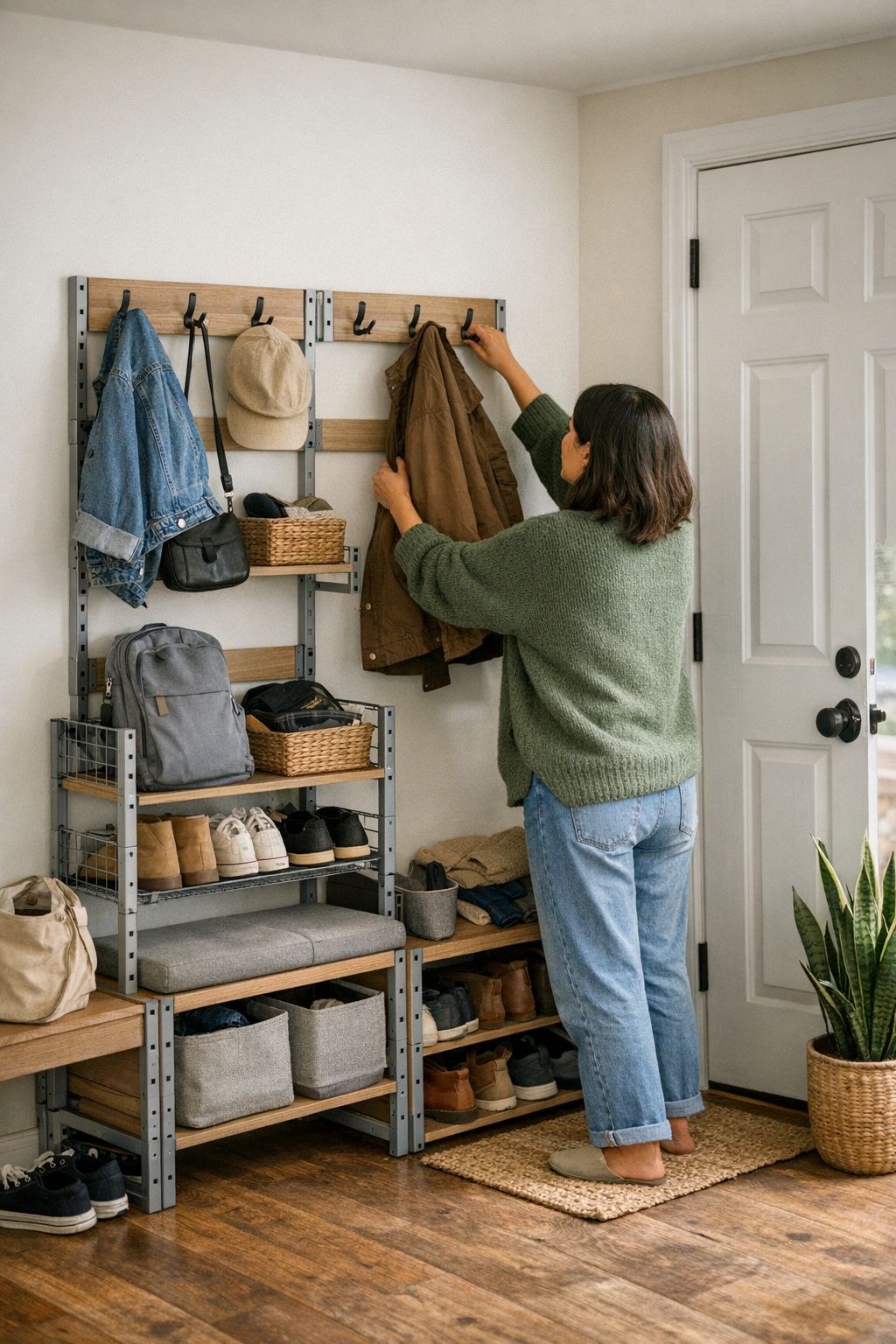
When you compare the aging curve, anchored setups win. Wall hooks, slim cabinets, or utility benches ground the load—bags and shoes get their place, but the door stays unburdened. Resetting is faster, with items going straight to their proper zone instead of dangling and drifting. If guests arrive, if winter gear takes over, or if kids start leaving sports bags daily, the wall absorbs the chaos, not your main passageway.
Anchored storage isn’t just neater; it keeps movement through the entry clear and cuts the reset process down. Shoes slide under a bench without clogging the path. A wall-mounted rack absorbs bags without pulling on moving parts. When the layout shifts—more gear, surprise weather, weekend visitors—the fix holds, and the domino effect of pileups and repairs never gets rolling. You go from rerouting every return to a threshold that invites gear drop-off without betraying you an hour later.
Reality in Motion: Resetting vs. Reshuffling
Real mornings pile on small interruptions: shoes dropped where the row ends, bags half returned, a backup of umbrellas left swinging in the way. With an overloaded door rack, a simple return—like stashing a single scarf—means finding a free slot, untangling something, or pausing to jostle pockets back into line. The more gear, the less stable everything feels—and the more likely you are to drop items back onto the floor “just for now.” That “for now” quickly becomes a new normal of blocked passage, with clutter creeping from the door to the surrounding floor.
Switching to a wall anchor or slim cabinet changes the pattern. Drop-offs become direct: shoes go under the bench, bags slide onto a hook, and nothing’s dangling in the way. Resetting takes seconds, not a series of nudges and corrections. The flow between dropping gear and moving on feels natural, reducing the daily buildup of friction and making the pileup at the threshold a problem of the past.
Small Tweaks for Stronger Entryways
Try these realistic changes to cut down on threshold chaos:
- Stop loading the moving door. Wall-mounted racks, sturdy hooks, or a compact cabinet near the entry shift bags and boots onto solid structure, keeping walkways open and hardware stress-free.
- Reserve over-the-door storage for light, low-friction items. Scarves and hats won’t warp a door, but backpacks, boots, or sports gear will shorten hardware life and turn resets into repairs.
- Watch for early warning signals. A sticking latch, a door that hangs wider, racks slipping lower—use these as cues to rework placement before a small issue blocks your only path in or out.
- Make returns frictionless. The easier it is to drop off shoes or bags in their place, the less likely piles will settle by the door. This keeps your pathway open for real movement, not storage overflow.
Structure Over Surface: Lasting Setup Wins
The best entryway isn’t the tidiest at first glance but the one that holds up under repeated, busy use. Durable setups—like anchored benches, wall-mounted shelves, and vertical cabinets—make movement easier and clear buffer space for drop-offs and pickups in real motion, not just on organizing day. Surface neatness fades fast if it’s packed into a moving part; true order comes from choosing layouts that leave the routine unblocked and shrug off both daily gear and the next reset.
The goal isn’t just order—it’s a threshold that absorbs chaos and bounces back, day in and day out.