
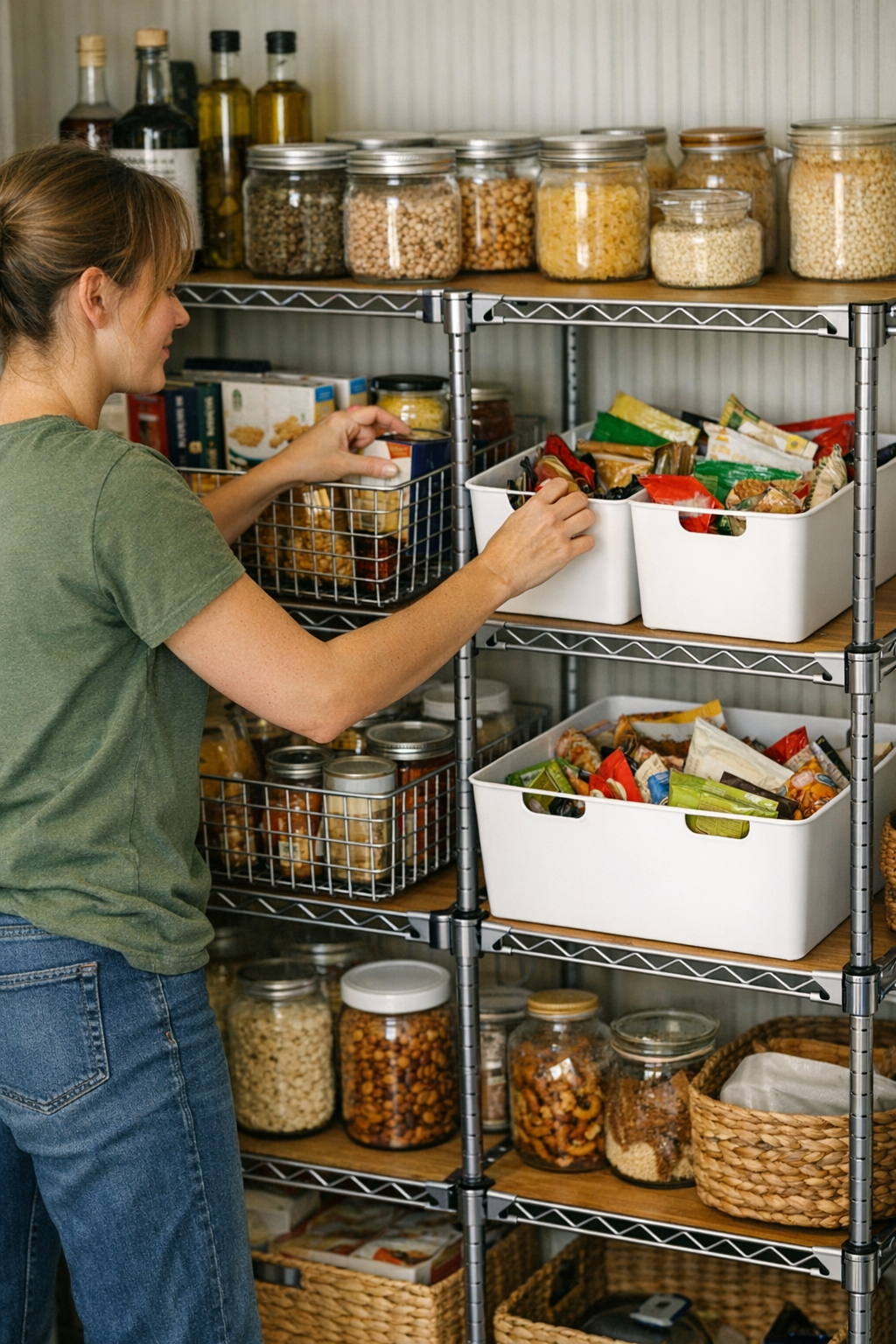
A pantry shelf rarely fails on day one. It unravels on busy mornings when you’re reaching blindly for breakfast bars, or on grocery day, when new snacks force old ones deeper into the shadows. A shelf system that looks sharp after a weekend reset quickly shows its cracks as real life drags baskets and bins out of order—fast. It’s not just about starting organized; it’s about whether your setup survives the third restock, the daily grab-and-go, the inevitable snack raid when nobody wants to cook.
Wire Baskets vs. Solid Bins: Holding Up Under Daily Pressure
At first glance, wire shelf baskets and solid bins both offer promise. Wire baskets seem perfect for keeping cans and tall packages upright and visible. Solid bins, by contrast, promise to corral the flood of snack bags and small packets that would otherwise drift everywhere.
But the friction starts almost immediately—
- Wire baskets put everything on display, but loose packets slip through gaps or tip sideways, falling into a puddle at the bottom or even onto the floor.
- Solid bins trap the chaos, but quickly become a mixed bag of forgotten food—old snacks hiding under newer ones, with no easy way to see what you have without digging.
That promise of neatly drawn lines and controlled categories fades as soon as family routines hit. By midweek, containers meant to bring order end up reshuffled, overloaded, or hiding more than they reveal.
Where Storage Fights Back: The Subtle Ways Shelves Undermine You
The surprises pile up. You reach for rice, but end up shifting three cereal boxes aside. You hunt for fruit snacks, only to find the pouch slipped through the basket wire and disappeared behind the pasta. Solid bins, meant to prevent these escapes, turn into a hiding place where a single lost tortilla or energy bar resurfaces weeks later—if at all.
Resets don’t last unless the container matches the contents: The urge to just toss stray packets in wherever there’s room creates disguised clutter—a bag sticking out above a bin lid, overflow snacks lined up in front, a row so tightly packed you can’t see what’s behind. Overstuffed bins turn category clarity into a guessing game. Before you realize, a five-minute shelf reset becomes a frustrating ordeal of pulling out entire drawers just to find Tuesday’s lunch snacks.
The Real Signs of a Failing Storage Setup
You can spot the failures by late in the week:
- Shelves still look neat from a distance, but actually grabbing what you need takes two, three, even four steps or shuffles.
- Overflow starts to stack up at the edges—loose chip bags perched on top of bins, rarely used items stuffed into corners “just for now.”
- What was supposed to help you move quickly now slows you down. Each reset reveals new “surprises” buried since the last one.
This isn’t just a problem for pantries. It’s laundry shelves packed so tight you need to move detergent to get to the dryer sheets, or closet baskets where folded shirts sprawl into piles after a few pulls. The false calm of an organized shelf only lasts as long as your routine doesn’t test it.
Making a System That Survives Real Life
The solution isn’t more containers—it’s the right container, with a clear purpose, in the right spot. The sweet spot? Combining wire baskets and solid bins, but giving each a strict job:
- Wire baskets for sturdy, upright packages—things that stand on their own and don’t slip through cracks. Group by type: cans together, cereal together, baking goods on their own shelf.
- Solid bins for loose, small items that otherwise scatter or collapse. Assign each bin a single category and resist the temptation to mix. The snack bin holds only snacks. If it stops fitting, snacks go elsewhere—not jammed in and forgotten.
This isn’t about matching a magazine photo. It’s practical: categories stay obvious, items remain visible, and putting away groceries—especially for someone who isn’t you—becomes a no-thinking routine instead of a guessing game.
When Mixed Storage Actually Works
After a few weeks, the upgrade is clear. No more grabbing a bin and finding last month’s lunch bars at the bottom; no more watching half your snack supply migrate behind the baskets. The shelf edge still looks straight, but the real win is inside: you reach for something, and it’s right where it should be. Resets happen fast because you’re not re-sorting a lost-and-found—just putting each thing back in a spot that still makes sense.
Small rules make big impact: Don’t let any container overflow. Leave enough room to see everything at a glance. If you start stacking bags on top or in front, it’s time to thin out or split the category. The difference in speed and clarity piles up, week after week.
Adaptable Shelves, Everyday Routines
Pantry friction reveals a wider lesson: Your shelf setup only works if it stands up to your actual habits. Bins and baskets are tools, not magic. What matters is how clearly they serve a single role, how easy it is to return something without thinking, and whether you can tell—within seconds—what’s missing or about to run out.
Check back in on your setup a few weeks after resetting it—not for the staged look, but for honest traffic patterns and growing piles. The best containers are the ones your routine doesn’t defeat.
Discover storage solutions that work with your routine—not against it—at ClosetWorks.