
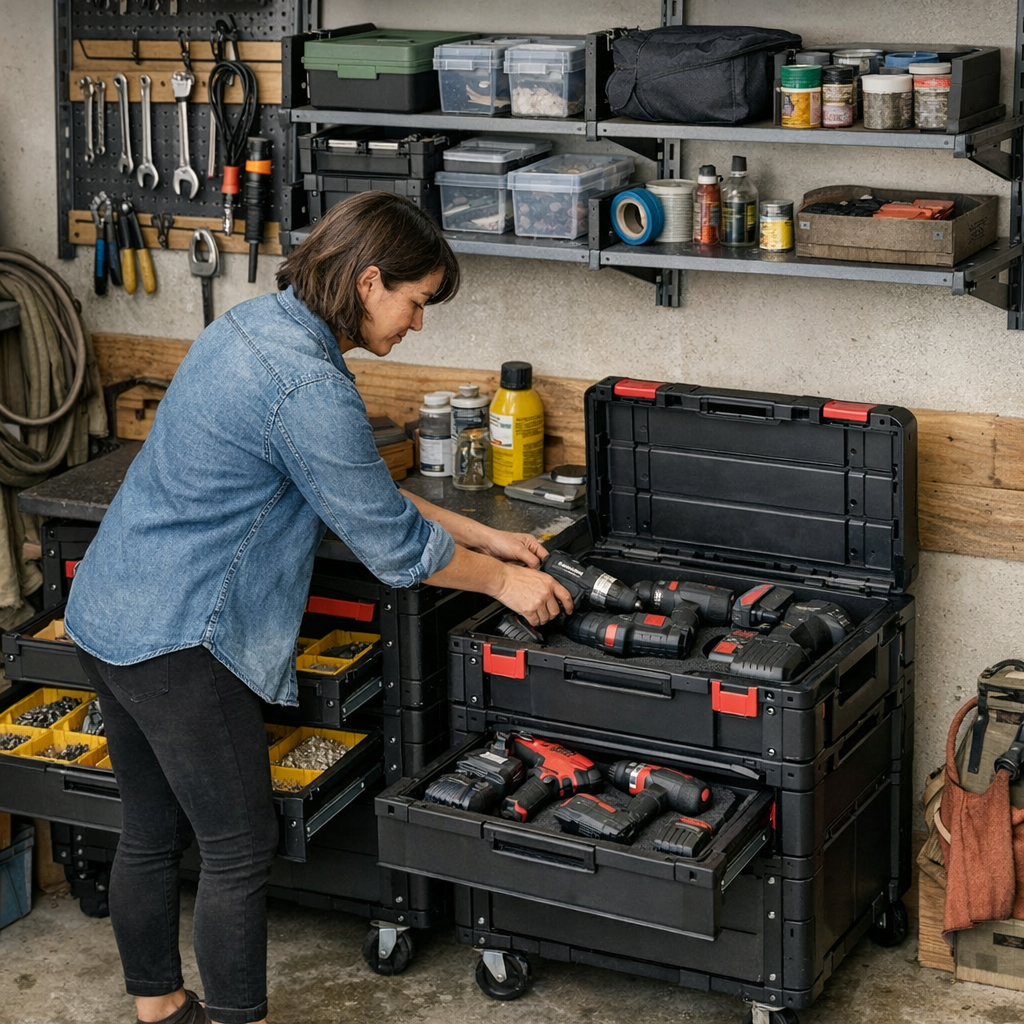
Most garage and workspace setups look “sorted” for about five minutes. The bins line up, lids are flush, and drawers snap closed—the whole area polished for a weekend photo. But walk back in three days later, after a week of real, rapid-fire use. Screwdrivers missing, random cords wedged in where they don’t belong, overflow building up on any available flat surface. What started out organized turns into a mess of blocked paths and reshuffling routines—not because the storage is too small, but because the layout just can’t keep up with how the space is actually used.
Surface Order vs. Everyday Chaos
Most new chests and modular bins deliver a quick hit of order. Stuff fits, the workbench clears, and everything has a spot—temporarily. But as soon as you start peeling tools out for real projects, old friction creeps in: pulling one sparking a domino effect, each return feeling more like a puzzle than a reset. You close the lid, relieved for now. By next week, categories blur. “Put away” is no longer simple. What’s left is surface neatness masking the creeping sprawl underneath.
These setups have a secret flaw—they make you the sorter, again and again. That seemingly versatile chest becomes its own recurring job. Every quick return is a mini negotiation: rearrange a wrench for the sake of the extension cord, move a tape roll out of the way of the bits. One awkward return, and the cycle of clutter builds up under the clean surface. The more general-purpose a storage chest gets, the more of your time it quietly eats.
Lock In Purpose: Stop the Overflow Spiral
The setups that actually work don’t just hold more—they work harder at keeping zones dedicated. Assigning only one job to each chest (fasteners, hand tools, garden hardware, project parts) blocks the slow re-mix of categories that turns every return into a headache. Suddenly, the question isn’t “what drawer did I use last time?” but “is this the battery bin or isn’t it?”
This setup eliminates the most grinding friction: no more sifting for pliers under leftover zip ties, or batteries slipped into ducts of painter’s tape. You can walk in, reach for what you need, finish the job, and return it without hesitation—week after week. There’s no fancy subdividing required. This is about boundary lines, not intricate compartments.
Recognizable Scene: Where Reset Breaks Down
Picture weeknights in your own garage. On Monday, sections feel zoned—power tools here, clamps there. By Wednesday, you’re cramming in bike tools or a roll of tape “just for now,” desperate to clear the bench before dinner. Next, you’re sliding a whole drawer’s contents just to make room for one garden glove. The moment “put away” stops being a drop-off and turns into a slow shuffle, the system is working against you.
The Creep of Overflow and Blocked Paths
Chests seem perfect when they’re only half-filled and everything’s fresh. But force them to do multiple jobs, and tiny daily annoyances pile up. One drawer blocks another. You nudge a cart six inches down the aisle every week to get at the battery charger—until one day, you simply stop. The shelf above becomes a random drop spot. Corners fill up with boxes you meant to deal with “eventually.”
This is the trap: storing things is not the same as streamlining your moves. A chest “fits” more, but afternoon after afternoon, you find yourself holding open the lid with your elbow, digging for what you need. You organize. You reshuffle. But the friction keeps leaking back in, slowing resets and making every job take just a little longer. Surface order survives, but workflow breaks down.
How One-Job Zones Change the Whole Flow
This shift only clicked for me once I dedicated a rolling chest just for power tools and chargers. No more pushing aside garden pruners just to reach a drill. No stacks to move or corners to juggle. After a few weeks, it was clear: everything went back in seconds, and the shelves above stopped becoming “temporary” clutter landings. Movement through the garage got easier—no dead corners, no zigzagging around mystery bins. The space actually felt bigger, not just neater.
The Patterns You’ll Feel Shift
- No more shifting a cart just to plug in the charger, or reaching around the edge of one cabinet yet again.
- Grabbing the right chest immediately, knowing the wall zone now means “gardening”—not “gardening plus whatever overflow fits today.”
- The dead corner by the door stops collecting half-finished projects because the main layout never blocks movement or hides tools in overflow bins.
This kind of clarity is quiet: less obvious than a freshly organized worktop, but far more valuable after ten resets and two months of real-world chaos. Suddenly, returning a tool doesn’t feel like another tiny project. It’s just—done.
Questions That Pop Up Once You Try It
Isn’t it overkill to have more than one chest?
Not if you want lasting flow. Letting each chest own a category makes navigation automatic, not a guessing game. Two or three single-purpose chests—even small ones—beat a jumbo “do-everything” bin every time. Fewer collisions, fewer blocked drawers, fewer confused returns.
How often do you need to fix a chest?
The honest answer? A little, often. Drift shows up the third or fourth work session—sometimes after one weekend. As soon as overflow starts or drawers stick, do a five-minute reset. Don’t let the mess build. Small, frequent course corrections keep resets quick and the system intact.
How do you spot when your setup’s failing?
Blocked movement is your canary. Needing to move a stack or hold the lid open to rearrange? Batching returns because “it’s easier tomorrow”? That’s your signal: zones blurred, friction’s back. Get harsh with purpose, and reset the boundaries immediately.
Real-Use Function: When Setup Finally Keeps Up
Declaring victory after a deep clean is easy—that’s just tidying. The real test comes weeks in: Can you grab, use, and return without creating new clutter or blocking your own path? When repeated use is effortless, returns automatic, and there’s no hidden sprawl behind lids or under shelves, you’ve moved from looking organized to actually working organized.
It’ll never be flawless. The best arrangements won’t eliminate every stray screw, but they’ll absorb chaos without collapsing. They make the routine simpler, not fancier. Adopting the “one chest, one job” mindset isn’t flashy—but after a dozen projects, it’s the difference between a garage that gives you momentum and one that’s always asking you to pause, rearrange, or start over.
Find storage solutions suited for real setups and persistent use at StackNest.