
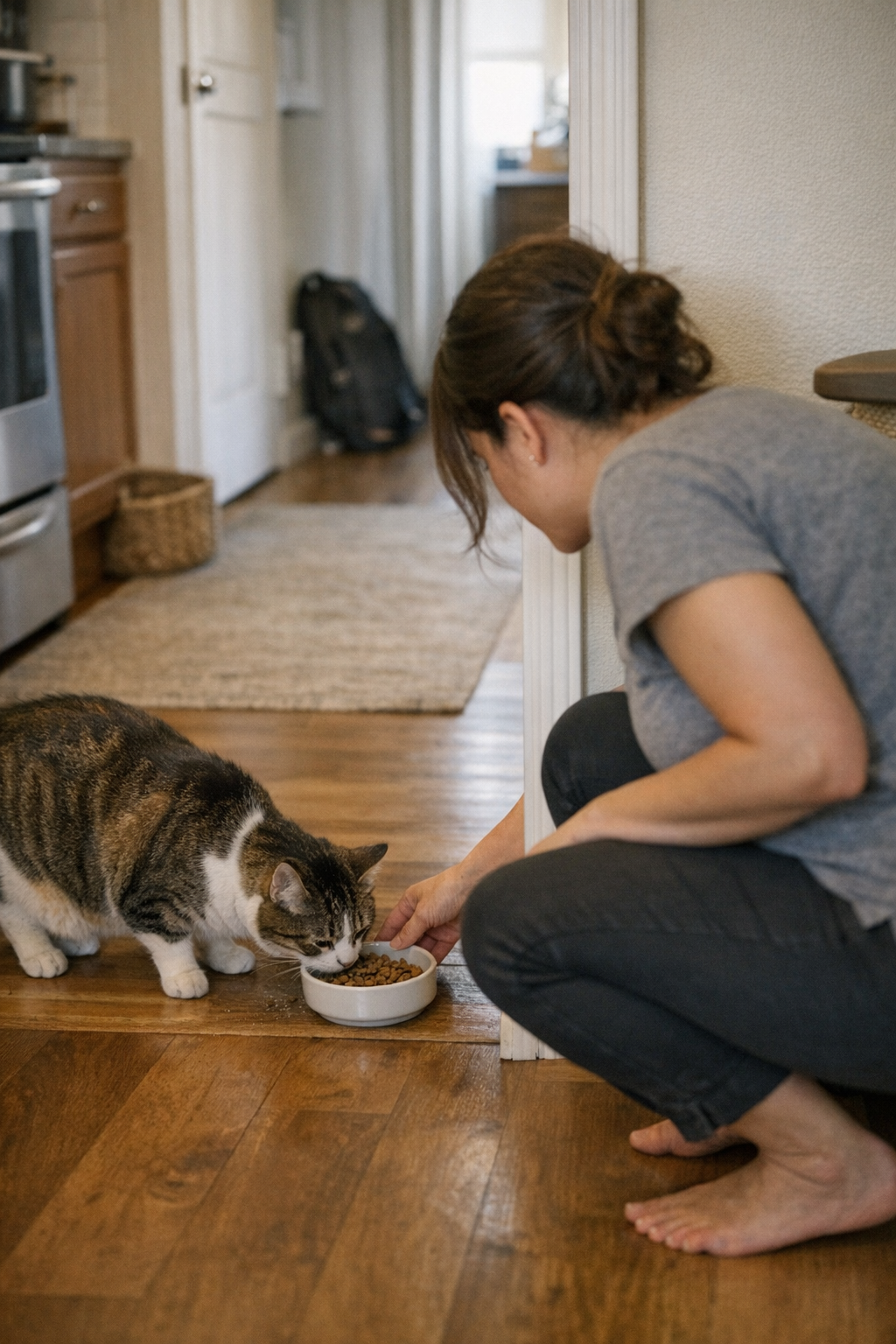
The cleanest-looking cat feeding setup rarely holds up to indoor life that actually interrupts itself—one late snack, one missed refill, and suddenly the whole “tidy corner” starts unraveling in real time. It’s not about the initial look: bowls aligned, mat swept, the area staged for a photo. In regular use, what actually shows up first is friction—your cat pacing at the empty space, crumbs sneaking past the edge, a puddle forming just as you’re trying to get out the door. That neat setup you trusted stops holding the line when routines slip, no matter how ready it looked yesterday. The StillWhisker world starts with the question: what happens when your feeding zone is forced to absorb a real-life miss?
The Problem Behind the “Tidy” Feeding Space
The illusion is simple to build: wipe down, realign, admire. But every “perfect” zone is tested by what interrupts it, not by how it looks after you clean. Skip a midday snack for a work call or forget a refill during a long commute, and weak points surface quickly. The cat doesn’t wait politely—circling turns to anxious tracking, crumbs invade hallway lines, water forms a slick just where you don’t want to step. Suddenly, the system isn’t just untidy; it’s physically in your way, and the crack shows up on your next trip past.
- Visible pacing: Your cat begins looping between feeding and rest spots, waiting in plain sight, making you more aware every time you step over the mat.
- Scattered crumbs: Even after a fresh wipe, dry food escapes—the next pass reveals a new crumb trail spreading toward shared space.
- Spilled water: A puddle slips just past the mat. Miss it once while rushing, and the sticky feeling lingers until you get back to mop up what your earlier cleanup missed.
The feeding setup stops being a background comfort and becomes a source of interruption—requiring more handling, more double-backs, and more quick—but never fully satisfying—fixes.
How a “Perfect” Setup Breaks Under Real Life
Home setups that look frictionless can’t handle unpredictability. Maybe you refill on schedule for days—but the first stray work emergency, the bag drop after a late trip, or even a lazy weekend morning is enough to let the cracks widen. Feeding zones built just for looks start costing you: repeated wipe-downs, more shifting of mats, extra meows and more complicated resets—none of which show up in a neat, “after” photo.
The Disappearing Snack Spot
Main bowls remain staged, but every missed routine clutters up the snack edges. Heavy-use hours bring new crumbs, water lines, and bowls that migrate into walkway dead zones—usually just where you don’t want them. “Quick” resets turn tedious: lift the mat, dodge the edge mess, sweep new debris, then listen to your cat’s growing impatience as you juggle cleanup tools that never seem to be at arm’s reach.
Cleanup Chasing Refill—Again and Again
No matter how well you stock supplies, the cycle returns: missed refill, fast wipe that leaves a smear, then doubling back because the crumbs already spread. If your backup stash or mat-cleaning cloth is blocked behind a stack or lost among toys, the “simple” setup exposes exactly where convenience failed. Each mishap compounds—especially when cat and human clutter meets in one shared spot.
Patterns That Signal a Struggling Routine
Truly useful feeding setups show their weakness in patterns, not incidents. Notice any of these, and it’s less about aesthetics and more about structure under pressure:
- Repeated bowl checks: Your cat circles back three times to stare at the bowl you just topped up, sniffing, waiting, then retreating to another high-traffic floor patch.
- Extra crumbs or water marks: After a missed refill, the edge gets messier, not cleaner—even though you scrubbed the mat and wiped the floor just last night.
- Cat lingering at empty spots: Fresh paw prints in places you never intended suggest your cat’s spending more anxious minutes hovering rather than relaxing.
Each is a quiet feedback loop warning that your setup isn’t absorbing gaps as your day demands.
What Actually Stabilizes Snack Routines for Indoor Cats?
It’s not about an extra dish or flashier décor. It’s about structuring feeding so that when timing is off, the reset is minimal—and doesn’t add to your work. A practical StillWhisker routine means predicting routine interruption, not pretending you’ll always have time for a full reset. Backup isn’t overkill: it’s the difference between a feeding zone that creates new friction and one that holds together under strain.
Strategic Placement Makes All the Difference
Backup bowls work—if they’re placed to be helpful, not just extra. One secondary bowl tucked by a hallway, away from zones overloaded with litter or lounging, absorbs the miss without begging for a full cleaning rescue. It doesn’t take over the space or crash into the room’s calm. Instead, it’s there exactly when you need a lifeline but don’t want to open a new mess front—mopping up owner slip-ups without multiplying the effort.
The Measured Backup—¼ Cup of Convenience
It’s the opposite of free-pouring: keep a sealed container with a pre-measured ¼-cup dry snack, within reach of wherever you most likely need it. The goal isn’t overfeeding; it’s cutting panic resets. You skip the run for spare bags, dodging the drawer stuck behind cleaning supplies—your cat gets a fast, routine-saving snack, and the pathway stays uncluttered. Predictable, limited, and immediately on hand: the anxiety and mess both drop, and the feeding corner stops triggering rework all night.
How the Right Structure Changes Daily Cat Life
Once you trade in convenience for repeat-wipe tedium, the difference doesn’t just show up in mood—it lands in every home routine. You see fewer random crumbs tracking past the mat. The snack-wait loop shrinks, and cleanup drops from a full session to a three-second check. The worst-night scramble—where all you can manage is one refill—now means you land a win, not a mess, before you even take off your shoes.
- No more chasing scattered food: The auxiliary bowl localizes off-schedule feeding, sidestepping new spill points in high-traffic areas.
- Cleanup feels lighter: Fewer emergency dumps mean mats and floors stay manageable, even during the week’s most chaotic hours.
- Comfort stays steady: Instead of standing guard at an empty station, your cat flows through the room—or settles—without the same anxious lingering, making guilt-fueled hurry a rarer event.
Scenes From Real-World Home Use
The missed midday refill: Grocery bags in the way, a cat already circling, your primary bowl out of step. The backup—within reach—means it takes seconds to reset; skip the kitchen reshuffle, pour the measured snack, and nothing else moves.
The post-workday scramble: One sticky water track, a dry-food drift along the hallway. Instead of a teardown cleaning, a handy wipe and clear backup bowl get things temporarily stable. The major reset can wait; your cat doesn’t.
An unplanned phone call: Routine’s off, and focus is gone. But when you pass through the hallway, the snack station is still working, because you built for this precise disruption. Both you and your cat skip the usual stress spiral.
Designing for Both Order and Usability
The right feeding setup isn’t about multiplying dishes or crowding every corner. It’s about deliberate structure: backups near pass-through routes, not blocking main living zones; bowls distant from litter drag or nap mats; a routine slim enough to flex but strong enough to function without a reset at every minor gap. The aim is a corner that still looks calm—but now works far faster when life goes off script.
Recognizing When It’s Time to Reset Your Setup
If every week you’re repeating wipe-downs, tripping over food scatter, or dodging mats and toys en route to the refill, your zone is asking too much. Audit the flow: is there a reachable backup? Can you grab a measured snack in seconds, one-handed, without dragging out extra supplies? If the answer involves moving clutter to get to basics, switching a minor physical struggle for a cleaner look is probably overdue.
Less Fragile, More Livable: The Real Goal
The right structure is what makes routines reliable—not how everything looks after a deep clean. Attractive feeding corners break first under real pressure if they can’t handle a missed refill or routine detour. Upkeep shouldn’t mean sprinting for towels, over-managing snacks, or negotiating empty bowls every time you walk in late