
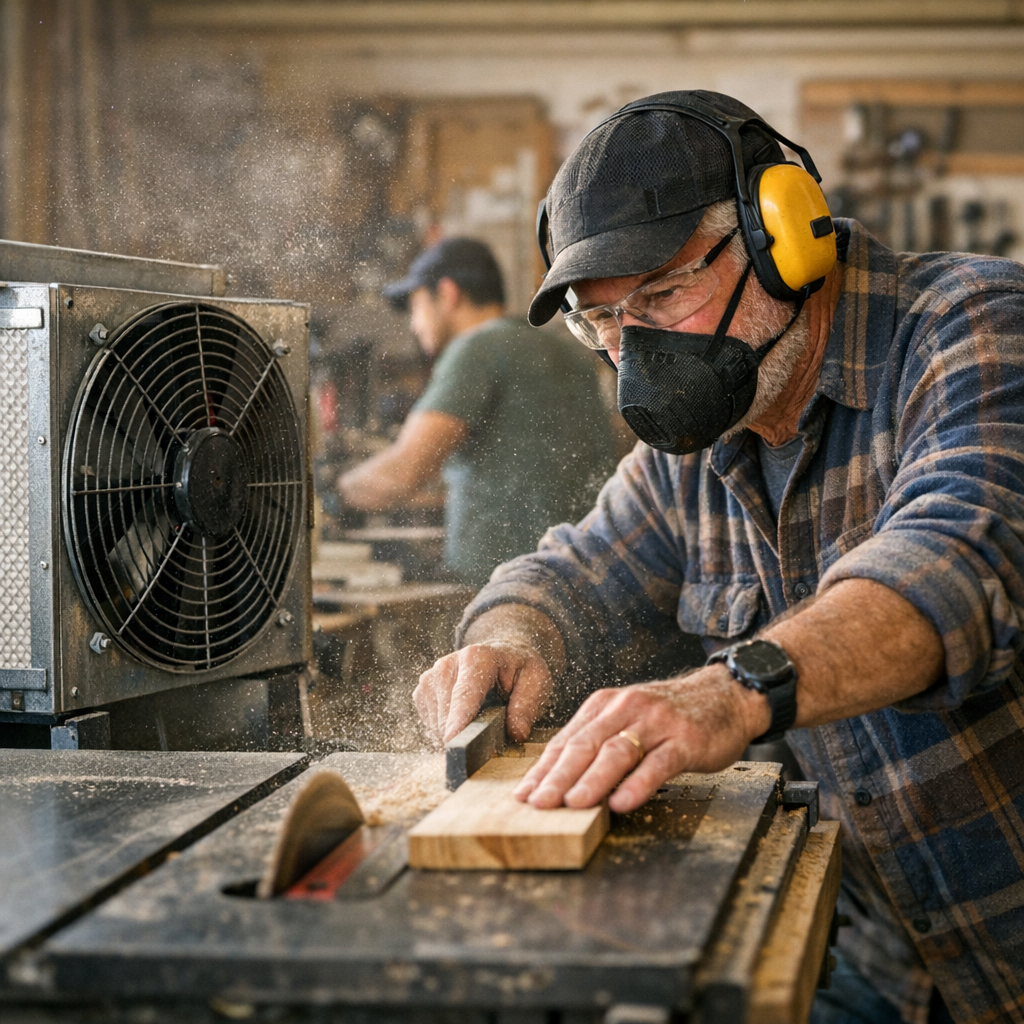
If you’ve spent more than a day in a windowless shop, you know the moment when air quality turns from afterthought to obstacle. What starts as a clean, sharp morning—run the saw, tap a clean mark, drill a precise hole—slowly blurs as invisible dust builds up in corners, clings to every tool grip, and creeps inside your mask. By midday, hand planes feel tacky, clamps drag across the bench, and even a fresh drill bit feels dull as grit collects in collets and pockets. This isn’t just a matter of comfort—it’s about whether your tools perform at their best as the real work piles up, cut after cut, clamp after clamp.
Where Standard Shop Fans Start Failing
We’ve all been there: prop up a discount box fan, flick it on, and hope for the best. At first, it stirs just enough air to keep dust moving. But layer in a couple hours of back-to-back drilling, an uninterrupted run on the sander, or a batch of plywood crosscuts, and that bargain airflow flatlines. Soon, dust starts pooling on your ankles, infiltrates tool housings, and settles inside blade guards and drill chucks—right where precision matters most.
As the hours pass, cleanup time grows: you’re wiping hands after every cut, scraping glue haze that reappears on newly jointed edges, and pausing every 10 minutes to clear a view through your safety glasses. If your respirator is clogging before lunch and you’re spending more time brushing off tools than using them, you’re feeling the slow sabotage that underpowered fans deliver—every action gets grittier and less controlled.
How a Workshop-Rated Fan Changes Your Workflow
Real workshop fans aren’t just bigger—they’re built for nonstop cycles: sawing, sanding, glue-ups, and assembly runs without the air turning dense or sticky. When the dust extractor can’t catch everything, the right overhead or cross-bench fan sweeps out what’s left, keeping your handles dry, your cuts visible, and your bench clear even three hours deep into a build. Suddenly, clamp pads no longer grab at glue, and fresh glue lines dry crisp instead of cloudy.
What a Weak Fan Costs You in Practice
Take a run of birch shelf sides: With only a consumer-grade fan, the bench looked tidy for the first hour. By the second, switch tools—and every grip left fingers coated. On clamp-up, the tool faces left smears of sawdust, and the fine dust floated just enough to blur scribed lines. Each tool switch meant a full wipe-down and a lost minute, just to keep edges and slots crisp. Instead of getting into a rhythm, momentum stalls—control drops, bit changes get hesitant, and by the end, fatigue hits long before the work is done.
Switching to a Real Shop Fan: What Actually Improves
When I swapped in a 600 CFM, continuous-duty shop fan with a fitted filter—pointed to push directly across the main assembly zone—the upgrade was immediate. Dust dropped where it should: into the vacuum, not across the bench. The burnt-motor smell disappeared. There was no cold draft or racket, just a steady hum, and for the first time, glue-ups stayed bright and clean late into the day. The difference wasn’t flashy: it was in predictable control. Drill bits didn’t seize up from grit, battery contact points stayed clean, and after hours of sanding, the respirator didn’t clog before the job was done. Less dust meant fewer mistakes and more confidence every time I grabbed for the next tool.
Beyond CFM: Timing and Coverage Really Matter
In a real jam-packed workday—shift from drilling pilot holes to routing edges, then run a random orbital sander across joinery—there’s never a pause for a full cleanup between jobs. If dust lingers between workstations, you’ll fight it from one operation to the next: rough cuts muddy your sanding, glue-ups stick to unexpected spots, and delicate measurement becomes guesswork as debris clouds your markings. A real shop fan keeps pace with you, reaching into shelf recesses and under benches, not just blowing air above eye level. Strategic airflow means you control the timeline—not the cleanup.
How to Spot Subpar Ventilation Before It Kills Your Day
Your shop’s air is probably holding you back if you notice any of these by midday:
- Fine dust building up in router collets or along the rim of bench vises, hours after you started
- Tool handles and chucks feeling rough or slippery, even with regular wipes
- Lingering glue or burn odors that grow more pungent with each new process
- Power tool batteries and bits picking up debris, leading to slow installs or connection issues
- Energy dips and heavy breathing, even in full PPE—because stale, dust-heavy air catches up to you fast
If this is familiar, you’re losing precision, comfort, and stamina every shift. Each pause to clear off a gauge or shake out a clogged mask is time and momentum lost—especially as jobs get longer and tool changes get faster.
Bigger Impact: Sizing and Aiming Your Shop Fan for Real Jobs
Start with the right capacity: calculate your workspace cubic footage, multiply by recommended air changes (usually 6-8 per hour for woodworking), and aim high if your air usually hangs heavy. But numbers alone aren’t enough if the airflow misses your real work zones.
Positioning changes everything. Direct your strongest air across the active workbench, saw station, or sanding area—it’s wasted if it just whips past a storage wall. For L-shaped shops or odd corners, test adjustments midway through the job: sometimes, shifting the fan three feet is all it takes to keep glue areas or drill presses dust-free. If dust is still coating hardware or your tools feel slow by afternoon, rethink both position and power before doubling down on cleaning routines.
Cut Time Off Cleanups With This Combo
Pair a workshop-rated fan with a portable table-top dust extractor on high-dust jobs—sanding, routed dadoes, or quick hole runs. It’s not just about cutting visible mess; it means attachments, collets, and batteries come off cleaner, so next-tool switching doesn’t grind grit into moving parts or fresh finishes. Cleaner air equals fewer pauses and more solid tool performance, station to station.
Consistency Over the Whole Shift—Not Just the First Hour
The difference between “good enough” ventilation and real shop airflow is clear by day’s end: tools still grip right, clamps release clean, and your workflow doesn’t grind to a halt as dust builds up. Your second session starts with a workspace you trust, not a slog through sticky, leftover debris. Watch how your tool habits change when you stop constantly wiping, shaking, or bracing for mid-shift cleanup. In woodworking, as in every craft that stacks job after job, true ventilation keeps attention on the cut—not the cleanup.
Find tools and gear to keep your workshop performing at its best at Gumboll.