
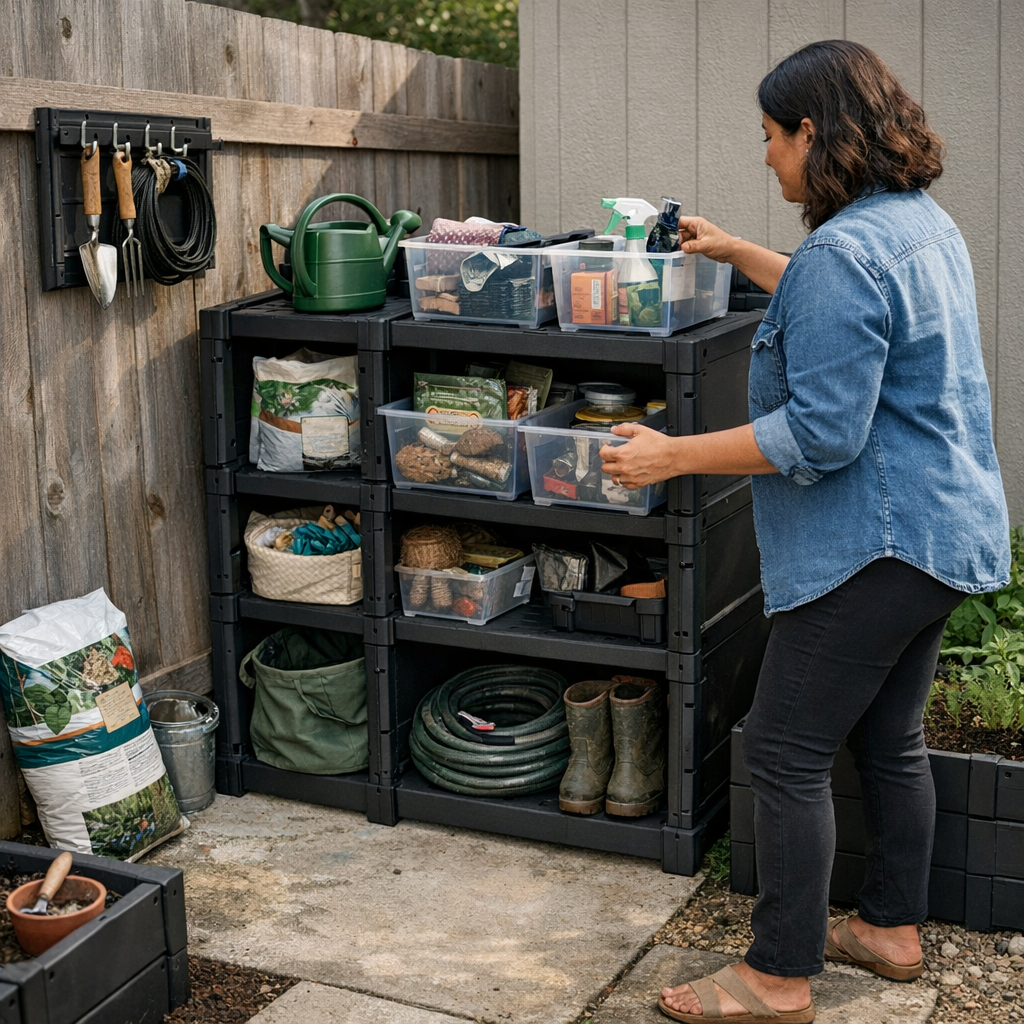
Stackable pantry bins look like an answer—until daily routines start pulling them apart. The first setup feels almost surgical: snacks sorted in neat blocks, labels staring forward, shelf space suddenly squared away. But one week later, as kids grab quick breakfasts, someone hunts for the last granola bar at midnight, and new groceries squeeze onto crowded shelves, the old system shows its cracks. Bins inch forward, stacks lean, and what started as clear borders between categories blurs into a tangle. The promise of order turns into a tug-of-war between easy access and actual organization—right where you need storage to just work, not slow you down.
When Early Order Meets Everyday Reality
Those first stacked rows of snacks, crackers, and breakfast bars create a satisfying illusion of control—until real life scrambles the logic. A bin is pulled for popcorn and never slides perfectly back. Someone, hands full, shoves chips wherever there’s a gap. Return flow breaks down. By Friday, bins have migrated, categories drift, and the lowest shelf is blocked behind a stack leaning toward the aisle. At a glance, the pantry still looks “organized” to visitors, but inside, the route to the right snack is confusing, crowded, and slow. Reaching twice for the same item—or yanking out a front bin just to check what’s slipped behind—becomes normal, not rare.
The Subtle Friction of Stack and Access
Stacking bins deep isn’t just about storage capacity—it’s about what happens every time you grab or return something. Most households don’t return things in the same perfect order. Every new hand multiplies the chance of a bin left angled, categories blended, or a “blocked” snack that’s technically stored but now buried. The more traffic, the quicker the breakdown: bins covering each other, with a growing pile at the front—a row you keep reshuffling just to see what’s left at the back. This starts slowly but adds up. Missed snacks go stale. Restocking takes longer because you have to fix the system before you can use it. Reset burden creeps in, quietly pushing the space from quick-access to reset-required.
One sign things aren’t working: your midweek grocery run turns into a puzzle of where to fit new snacks, since old bins have shifted or filled out of sequence. The grocery restock that once took a few easy moves now drags out, and snacks get lost or doubled up. This isn’t just an annoyance. It’s a signal your storage system isn’t matching the way your household actually moves through the space.
The Hidden Cost of a Slow Reset
When bins no longer return to reliable positions, what started as a two-minute shelf reset after groceries turns into a mini-overhaul. Stacks lean, labels disappear, and fishing for buried snacks means pulling out half your system. You start to work around the storage—leaving overflow in random zones, finding expired food in bins you haven’t touched for weeks, and giving up on returning things exactly. High-traffic shelves become friction points, not flow points. The “organized” look hides a growing mismatch between the system as designed and the pantry as lived-in.
Pushing Back Against Overflow and Drift
Burst shelves, bins hovering half off the edge, and snack piles mixing in the front row: these are everyday signals of “storage creep”—the natural slip from order into entropy. One zone packs tight while another sits empty, and return flow turns into guesswork. Ask who’s really sticking to the old categories. Usually, it’s no one. The cost? Extra time rearranging, more overlap, and a system you quietly dread resetting.
The fix isn’t more discipline—it’s adaptation. After trying the classic column-stacking, a deliberate stagger made more difference than any strict rule. By leaving each bin offset—a thumb’s width forward—every front edge stayed visible and reachable. Snacks could go straight in or out without moving other bins, and restocks started flowing again. The shelf absorbed small misalignments without losing overall clarity; maintenance dropped back to seconds, and the dreaded all-bin resort faded away.
Seeing Small Trouble Before It Turns Big
Don’t wait for the perfectly collapsed stack before acting. Notice when bins drift forward, categories start to bleed together, or stacks block each other—these are small invitations to fix flow before real mess sets in. A five-minute midweek correction—nudging bins, clearing spillover, or sorting a single row—can spare you the headache of full resets and lost snacks. Letting tiny drift build up only guarantees rediscovering last month’s crackers or abandoning the system until the next deep clean.
Matching Storage to Real Routines
It’s not about looking organized on day one—it’s about the setup staying usable when the household is busy or plans change. Storage systems that allow visible, independent access (staggered bins, clear fronts, or non-slip bases) keep retrieval quick and returns frictionless, even as snack stock and hands shift every week. Find yourself able to grab what you want without a full-bin shuffle? That’s a real improvement. When categories still mostly make sense and resets are rare or easy, the pantry space holds up against daily pressure.
For single-person pantries or strictly monitored snacks, traditional stacking might survive. But most shared kitchens see shifting stock, different routines, and hands that blur the original order. Here, the difference is measurable: spaces that look fine but feel slow, versus setups that stay quick on the busiest days. A workable pantry is not just sorted, but resistant to quiet category-drift and hidden clutter build-up.
Small Shifts That Keep the System Moving
Try offset stacking—just enough so each bin’s front is clear to grab. Or pick bins that won’t slip or tilt, even if they get nudged out of line during a rush. Use labels where you need them, but keep shelf lines flexible enough to absorb overflow without trapping snacks for weeks. Don’t wait until the back row is out of sight and out of mind; clear it while things are fresh. Practical adjustments protect your setup from the slow breakdowns that block retrieval, crowd the path, or force a total reset in the middle of the week.
Stackable pantry bins can be the backbone of a reliable storage system—if you let the setup shift with your real use, not just the neatest photo. The payoff is a pantry that looks organized and actually makes daily access faster, not harder. When storage meets your routine, order has a way of holding its line—and the friction of daily living finally gets out of your way.