
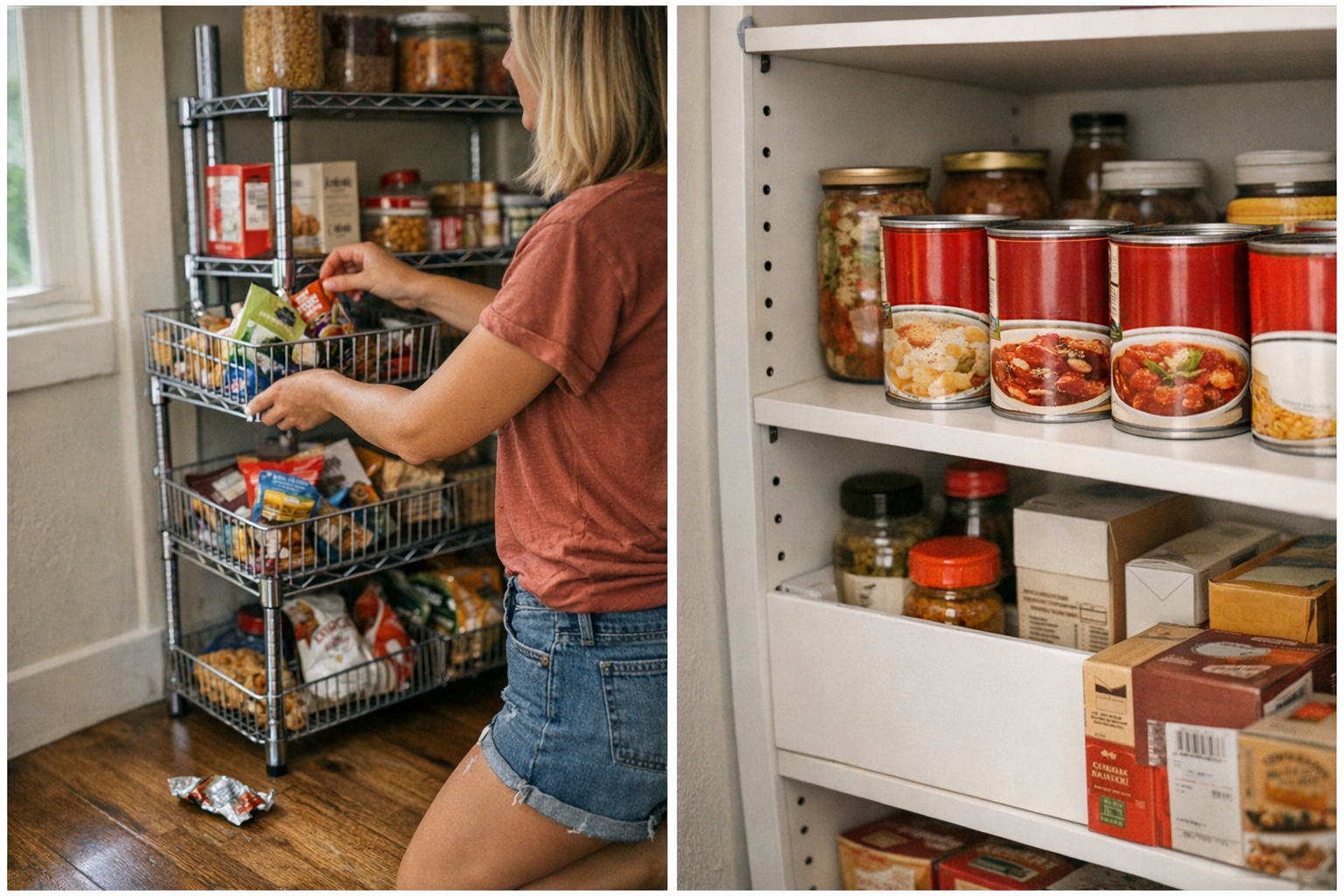
The real test of pantry shelving isn’t on installation day—it’s after a few grocery runs, when your morning routines collide with quick dinners, surprise guests, and last-minute snack raids. What began as a picture-perfect setup now reveals the friction points that make you rethink every shelf. Suddenly, the difference between wire and solid shelving isn’t cosmetic—it’s the quiet line between a space that works with your life and one that works against it.
Where Frustration Builds: The Daily Use Test
Your pantry starts off orderly enough: each shelf lined with boxes and jars, every item visible. Fast-forward a week. Now the oatmeal is hidden behind snack bars, one soup can teeters near the edge, and half-open chip bags slump in a lopsided pile. The slip between “organized” and “usable” is subtle but real, fueled by normal—sometimes messy—daily grabs and quick shoves out of sight.
This is where shelving choices suddenly become glaring: reaching behind a stack of canned beans for one spice, fishing a packet out of a collapsed heap, or watching a sleeve of crackers wedge itself somewhere it doesn’t belong. These aren’t dramatic disasters—they’re the micro-annoyances that chip away at any sense of pantry control.
Wire Pantry Shelving: Exposed, Breezy—and Restlessly Shifty
Wire shelves sell the dream of breathability and easy scan-ability. You see every label. Air circulates. But here’s the inevitable reality: gravity is not your friend. Spice jars tilt and rattle. Biscuit packets droop through gaps. Flour and sugar bags lose their battle against the wire grid, toppling into ragged stacks or, worse, dropping through with a thud to the floor below.
Breakfast Rush, Guaranteed Spill
Picture a familiar scene: you’re in the weekday rush, aiming for a quick oatmeal packet. Instead, three pouches tumble through the wire, and a granola bar gets trapped at an angle you can’t quite reach. The shelf is technically “open”—but your food isn’t accessible when everything small migrates downward, hiding or mixing up with whatever’s last in line.
Solid Shelving: Steady Surface, Subtle Hideaway
Solid shelves end the drop-and-dangle problem. Every jar, can, or teabag stands firm; no more mystery items wedged between rails. But a new issue creeps in: the slow migration of items toward invisible depths. As shelves fill, cans retreat behind cereal boxes, baking mixes disappear into the gloom at the back—and before you know it, you’re double-buying peanut butter you already own.
The Pile-Up Problem
Stability comes with a tradeoff: out-of-sight means out-of-mind. Every restock pushes less-favored items further back, and soon the shelf’s back row becomes a zone of forgotten goods with expiration dates you haven’t checked in months. The space looks organized, but real access slips away behind those neat front rows.
The Real Reset: When “Tidy” Fights “Functional”
This all comes to a head during a reset—after a grocery run, or after a burst of heavy use. Wire shelves spark the hunt for dropped snacks and sideways spice jars, as you gather up what’s slipped through the cracks. Solid shelves keep uprights upright, but the reset is slower if you have to unload the entire front just to recover a single baking supply from the back.
Grab-and-Go vs. Lost-and-Found
Two fast realities:
- On a wire shelf, a snack bag catches and falls—again—during one rushed grab.
- On a solid shelf, you hesitate and squint, wondering if your favorite sauce is lurking behind those pasta boxes, lost to pantry limbo.
Both frustrations stem from design, not your effort. One leads to sprawl, the other to deep confusion—the shelf determines the pain.
Fast Fixes: Making Shelves Work Harder
Here’s where simple upgrades bend reality: shallow bins or baskets on wire shelves corral those rogue packets, preventing messy pile-ups. Shelf liners instantly transform wire grids into a stable platform, keeping jars where you put them. Even a roll of grippy liner can save a week’s worth of annoyance by anchoring lightweight items in place.
For solid shelves, clear slide-out bins rescue those lost items from the back—now you can pull forward the entire zone instead of reshuffling by hand. Labeling bins with clear, bold tags cuts down on blind rummaging and keeps categories intact, no matter how fast you need to reset.
Micro-Adjustments, Macro Relief
One easy move—a simple basket per shelf—means you’re reaching once, not digging three times. Small upgrades reclaim minutes from your week: no more chasing pouches that slid through, no more forgetting what’s buried behind a pasta barricade. Instead of accepting chaos, you shape your shelf to fit your rhythm, not the other way around.
Staying Functional: Every Shelf Needs a Checkup
No shelf style is invincible. Routines keep changing; grocery loads vary; family members treat shelves as a free-for-all. What works brilliantly one month can unravel the next. The trick is recognizing where your system loses discipline—where goods collect, categories drift, or resets slow down—and layering in small fixes as you go.
Wire shelves reward you with visibility and air circulation, but they rely on good bins and liners as backup. Solid shelves offer sturdiness but demand a system: labeled bins, regular purging, and maybe a pull-out or two. The only real “solution”? Keep adjusting. Shelves aren’t set-and-forget—they’re an evolving backdrop to your routines. Give them a nudge, and you’ll reclaim not just storage, but usable, reliable space that fits how you actually live.
Find more everyday storage solutions built for real daily life at ClosetWorks.