
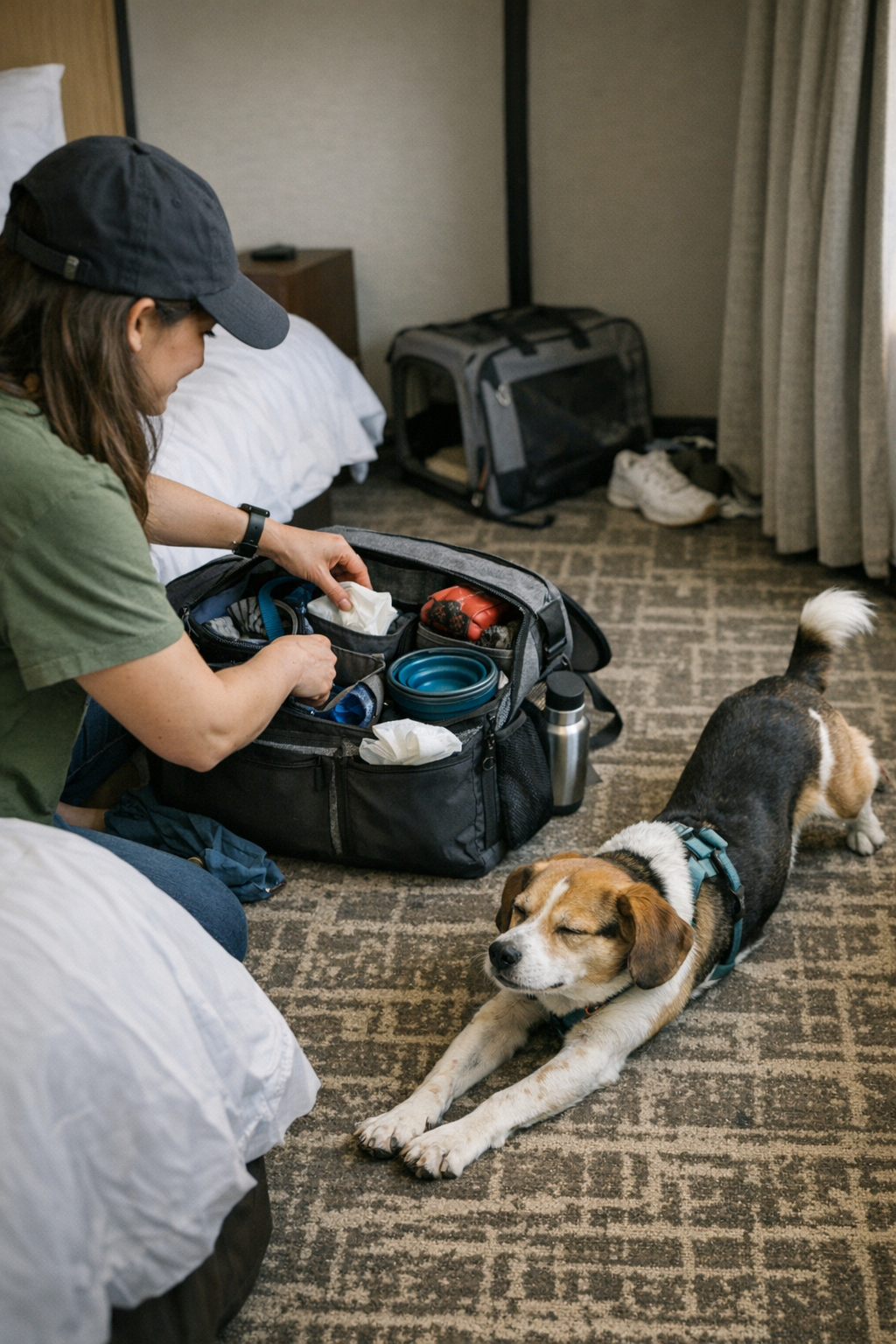
The difference between a travel bag that looks ready and one that actually works appears the moment real movement starts: Your pet is eager to step into a new hotel room. Bags look tidy on the floor, but within minutes, a hidden mess surfaces. You reach for wipes—blocked by treats. Bowls shift into the walkway. The leash? Buried under yesterday’s rearrangement. Whether you’re heading out or resetting from another stop, order unravels as soon as you need fast access. The friction’s not in the first impression—it’s in every rushed pickup, blocked reach, or slow restart that interrupts what should be simple routine. PawGoTravel’s world exists to solve exactly this gap between “organized” and actually usable on the go.
When “Ready” Falls Short in Real Travel
What passes as “travel-ready” on your kitchen counter can’t always handle a real day’s pace. Short stops expose weak spots: the wipes you stacked at the bottom, the bowl rolling loose again, the leash tangled with a charger you meant to keep separate. Suddenly, your pet is waiting at the door while you reshuffle gear, one-handed, in a parking lot. The setup works great until it matters—and every small delay costs not just time, but patience. Travel routine doesn’t reward neatness; it reveals structure that only pretends to help when movement starts crowding the day.
By lunch, you’ve repeated the same fumble three times. Hand busy with your pet, you reach for cleanup or comfort items and hit the same wall: the “organized” setup blocks you instead of backing you up. That gap—between looking sorted and moving effortlessly—shows up over and over.
How Small Friction Builds Up Stop After Stop
The first pack always feels hopeful. Everything fits, every compartment is zipped, each accessory placed just so. But by your second stop, separated sections have started to blend—a bowl sliding over wipes, squeaky toys cushioned into cleanup pouches, leashes twisting around your own wallet. Deep bags that store everything become bottomless pits when speed matters. “Easy access” is lost to hunt-and-peck as you fish out what should be on standby.
Patterns repeat whether you notice or not. If you keep moving bedding aside for the leash, or always wrestle the wipes free, the structure’s not keeping up. It’s a design that wins at home but falters in motion, chipping away at calm and making each stop a little heavier. Your pet senses it before you do—the lost rhythm, the hesitation, the stall instead of go.
Real Travel: Reach, Reset, and Restart
By hotel number three, your pet’s ready to rush in, but you’re stuck untangling—again. A bowl blocks the zipper, wipes are now under toys, and the leash is jammed on the other side. Even after repacking, the weak points return. This is where tidy looks fade and practical function matters. Each stop is a test of whether your setup supports fast reach, quick cleanups, and a restart that doesn’t drag.
If you’re tripping over the same access points—quietly losing time on what should be grab-and-go—the setup isn’t actually working for how travel really flows.
Where Overlap Sabotages the Flow
Bringing every “essential” won’t save you from structure that sabotages itself. Blended sections force you to dig for the leash past your phone charger or untangle snack pouches from wipes just as your pet pulls ahead. When comfort items pile into the same space as cleaning supplies, you lose speed on both fronts—never quite ready for cleanup, never quite fast on comfort. Overlap isn’t a sign of messy packing; it’s a setup that doesn’t defend quick reach or return. That repeat disruption is what turns “good enough” into travel drag you feel with every pause or scramble.
As trips stack up, one small overlap becomes routine frustration—a pocket you end up avoiding, a section that slows emergency cleanup, a repeated pause during what should be smooth returns to movement. By the end, you’re not just tired; you’re wary of your own bag.
The Quiet Power of Dedicated Structure
What finally untangles travel friction? A setup with clear separation—wipes claim their pouch beside the opening, leash gets its own lane (no need to push past bowls), and bowls sit in fixed slots. With structure built for motion, these small design shifts remove mini-fumbles. What used to be a pause is now a half-second move.
This difference only grows over time: The third, fourth, or tenth stop stays as clean as the first. Fewer slowdowns, less reshuffling, and your pet is back in comfort—fast. Most bags look organized once; only a few prove it trip after trip.
Warning Signs Your Structure Is Slowing You Down
- You end up digging for the same item on every stop—never in the spot you expect it.
- The first reach is blocked or mis-aimed every time you need speed.
- Your pet waits—shifting, antsy—as the shuffle repeats, even though “everything fits.”
- Your wallet or charger gets tangled with pet gear, making both slower to access or repack.
- By trip’s end, pockets get ignored or dreaded because recovery is always awkward.
These aren’t just annoyances—they’re proof the layout isn’t supporting real travel. The most organized look won’t make up for access that fails routine checks in motion.
Choosing Structure That Keeps Up with Movement
The right travel bag or organizer isn’t about adding more compartments—it’s about separating the right items for movement. Key pouches for wipes always at hand, leash slots that slide free without untangling, bowls held where they can’t roll across the opening. This isn’t organizational theater but structure for everyday travel stress.
A setup that lets you grab, handle, and reset in seconds—no digging, no stopping the flow—wins back actual time and patience for you and your pet. The test isn’t a photo. It’s how the gear works after the fifth stop and the next restart, when routine should be frictionless and neither of you has to wait on the bag.
Real Travel, Real Calm, Real Flow
The real payoff isn’t visible in a packed bag—it’s in the moments when hands land on the right item, reach stays instant, and your pet isn’t left waiting. Order isn’t just about looking neat; it’s about how quietly and quickly you can move, clean up, and reset, stop after stop. When a bag really works, your pet’s first stretch in a new room isn’t delayed by another round of sorting—and your routine finally matches what you hoped travel would be.
Find the travel gear that earns its place after every stop, not just the first one. http://www.pawgotravel.myshopify.com