
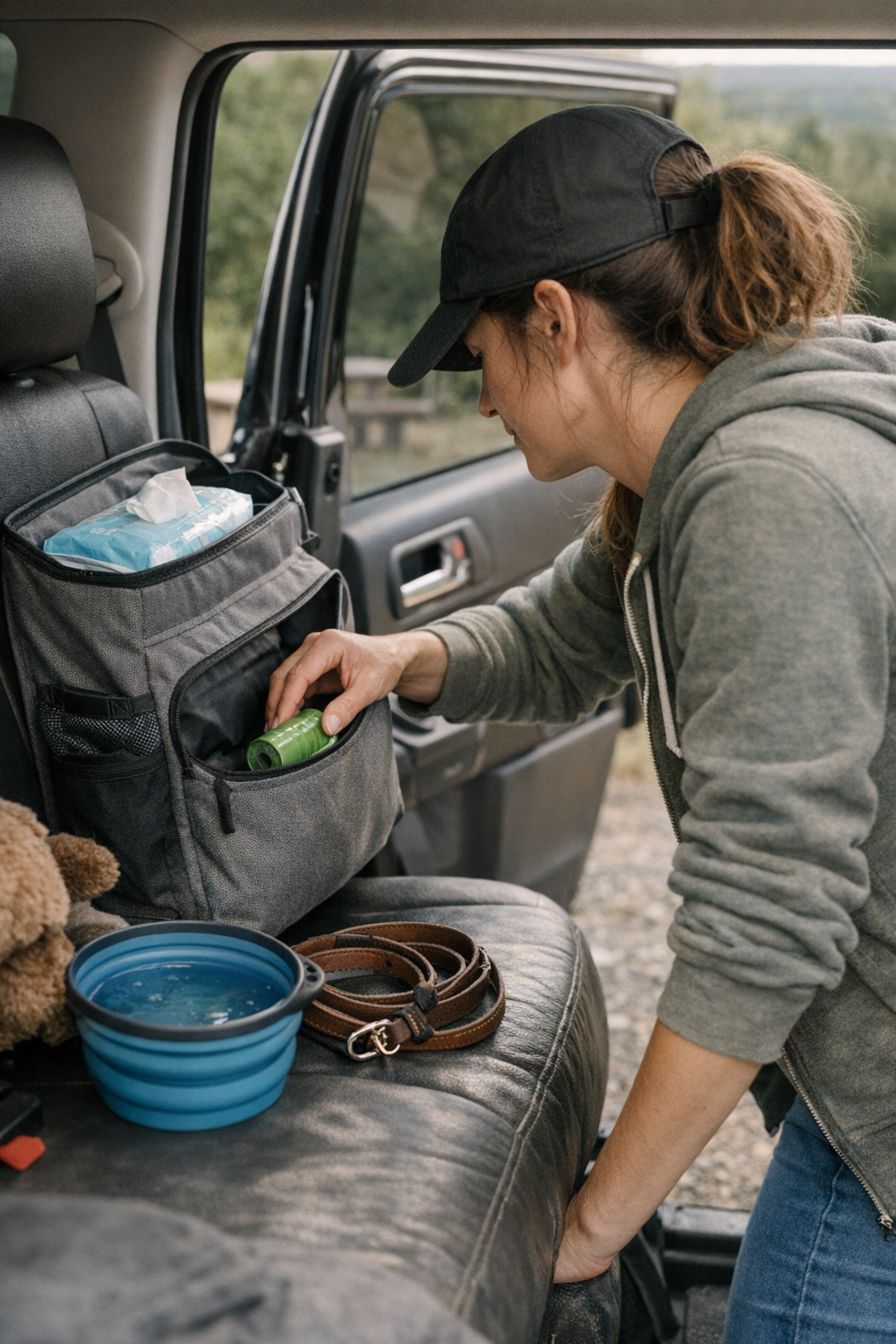
Packing your pet-travel bag feels like you’ve solved the chaos before it starts—everything zipped, stacked, looking ready for anything. But that tidy setup rarely survives an ordinary trip. The first time your dog is pawing at the car door and you’re fumbling for wipes—trapped beneath a blanket, blocked by your own keys—you realize: organized doesn’t always mean usable. Every necessary item is there, yet the second you need fast access, the bag’s “order” becomes the problem. What starts as small delays—digging for a leash that’s slipped under a bowl, hunting wipes buried in a central pocket—quickly piles up stop after stop, grinding the promise of a calm travel routine into a loop of minor, repeated friction.
Setups That Look Ready—But Stall When You Move
Consider a normal travel pause. You pull up, bag by your feet, dog ready to leap. The moment you try to grab the leash, you’re blocked: one zip, then a shuffle because the leash handle is caught under the fleece. The wipes are now under a tangle of treats you stacked “neatly” before leaving. Your dog is already impatient—so you grab handles, toss packets aside, slam compartments closed—losing time and, often, dropping something in the rush. That’s the price of a setup built for stillness, not for movement: as soon as the trip goes beyond a single opening, each restart demands more reshuffling, sidestepping calm for pure scramble.
Most travel setups stall during the “just get going” moments. Layered pockets or tight compartments slow you down. Every time the outer pouch fills with less-urgent gear, essentials sink deeper—forcing double-handling, awkward reach, and a stream of small, mood-breaking bottlenecks. The rhythm of travel—stop, handle, resume—breaks down into irritation, with both owner and pet absorbing the cost.
The Quiet Burden of Repeated Friction
The pauses compound. First rest stop: you nudge a treat tub aside for the water bowl. Second: towels are messily thrown back on top, wiping muddy paws but leaving organization behind. By the third or fourth pause, you’re no longer just “reaching”—you’re actively hunting, pushing aside bags, keeping the car door wedged open, feeling your setup jam at the same pressure points every time. Quick errands or longer drives start to resemble a cycle of shuffling, blocking, and mentally bracing for the same minor hassle.
The trouble is never a mystery: certain pockets become repeat traps. Each time you pause, you hesitate, already dreading the next dig for wipes or the leash. Your setup doesn’t match the rhythm of what real travel demands—fast hands, clear spaces, stop-and-go flexibility—so each round, things get incrementally messier and slower.
Missed Moments: When “Organized” Isn’t Enough
Travel exposes every setup flaw: muddy paws need cleaning now, but wipes slip further out of reach with each drive. Clip-in leashes wedge under supplies, pausing movement while you fish them out. Comfort items bulk up the inner space, layering over quick-grab tools. Outer order disguises the hidden cost—delayed access, forced reshuffling, repeated frustration. Even when nothing spills, the structure itself drains the ease out of the trip.
Why Do Access Delays Keep Happening?
It’s not carelessness—it’s design friction. Bags built with layered compartments or all-zipper access seem smart standing still, but force three steps for every grab in real use. Shared spaces for owner and pet gear create blockages that slow you down when every second counts. Add travel pressure—restless dog, crowded parking, rain coming on—and the bag becomes a bottleneck you can’t ignore. The more stops you make, the clearer it is: good looks and packed supplies can’t make up for a layout that bottlenecks every common task.
A bag that “photographs well” but keeps burying essentials leads to improvisation: holding your dog with one hand, digging with the other, tossing items into the footwell just to keep pace. The result isn’t a minor slowdown—it’s a steady grind. Trips become about handling the bag, not the actual pet care or travel itself.
The Shift: Direct-Access Beats Layered Storage
The fix isn’t adding more organization—it’s removing steps between you and what you actually grab, every single time. Think outer pockets for wipes and baggies, a single flap for bowls, an uncluttered sleeve for the leash. When your hand’s movement matches your intent—no digging, no rearranging—the time spent stopped drops dramatically. Direct-access design doesn’t just feel faster; it eliminates the chained delays that quietly sap every stop’s momentum.
Over a full trip, one small change—positioning wipes and bags in a fast-reach section—removes a whole category of micro-frustrations. After tying my own wipes and cleanup bags to an outside loop instead of burying them, cleanup pauses shrank to seconds. Instead of hovering outside the car, tossing packs and restacking, I was back in motion quickly, and every outing felt one notch smoother. The physical relief was immediate—movement, not management, at the center of every pause.
Examples From the Road: Noticing the Difference
A short drive with your dog: you stop for a coffee, wet paws, minor mess. If wipes are buried, you lose time, fumble keys, risk a tracking paw slipping onto upholstery. But with wipes and cleanup bags at hand—side pocket, quick loop—every action is one step, not a chain. Or when hunger hits mid-trip, a bowl at the bottom under toys means extra digging, extra delay. Shift “first-grab” gear to their own fast-access spot, and suddenly even tired, distracted mornings run cleanly—no unpacking, no searching, just movement.
Choosing Practical Calm Over Perfect Order
Smoother travel comes from setups that work with movement, not just survive it. True calm isn’t about more storage or tidy stacks, but about not having to think about your next reach. Outer sleeves, single-flap pouches, and direct-access spots mean you’re not pausing, blocking, or restacking just to get on the road again. Less handling equals more control, and after a handful of trips, the value isn’t in how the bag looks packed—it’s in every time you don’t have to fight it. Notice if you keep tripping over the same bottleneck: if the bag forces you to block aisles, reshuffle every break, or slow down for the same repeated reason, it’s a sign the setup values appearance over repeated function. Travel is about movement; the only order that matters is the kind you barely notice—because it supports your routine, instead of interrupting it.
Explore practical, travel-tested pet gear focused on smoother movement and less friction at PawGoTravel.