
If you work a jobsite long enough, you see it: perfect cuts that suddenly go sideways, slowing workflow and sapping energy when there’s no room for error. Circular saws are the muscle behind framing, decking, and trim day after day. But in the real world, it takes just a single invisible chip, a dab of sap, or a blade with a hair too much wobble to turn easy rips into headaches. That early morning hum—with the saw gliding through plywood without a hitch—doesn’t last. By mid-morning, you’re forcing the saw through dense pine, the line starts drifting, and you’re wrestling burnt edges. You can check your stance and your technique, but the real villain is often the same: a blade you trusted without really checking, costing you speed, finish, and patience before lunch.
The Small Faults That Steal Time—and Precision
You don’t need missing teeth or a bent plate to ruin a cut. The real trouble comes from hairline damage: a chipped carbide barely big enough to catch a fingernail, or a smear of pitch that gums just one gullet. Stack two supposedly identical framing blades, and you’d swear either is fine. But send the wrong one through yellow pine on a chilly morning and you get telltale slowing, ragged breaks at the kerf, and that split-second shift from a steady hum to a thin, protesting whine. Nothing sours momentum faster than realizing too late that your lumber’s fine—it’s your blade that’s dragging the job.
When a Single Tooth Throws You Off Course
Picture breaking down twenty-some 2x6s for a floor, deadlines close behind. Layout is crisp. Blade’s set square. But mid-rip, the saw tugs just enough to jolt your control. The motor note sours, tiny scorches appear, and the cut edges start to splinter. Fingers instinctively blame the lumber, or maybe the tool. Nine times out of ten, you push through—only to discover, under shop lights, that one tooth’s bent, chipped, or gummed enough to send every board off-kilter.
Payoff? Extra sanding, slower feed rates, more sawdust, aching wrists—possibly tossing good lumber when the damage goes too deep for a cleanup cut.
Early Warning: The Telltale Signs of Blade Trouble
Blade problems rarely declare themselves from the start. Instead, the warnings creep in:
- Resistance builds up: Cuts feel heavier, pushing takes more effort than you expect.
- The saw won’t track: Try to follow a chalk line, and the blade walks by the end of the cut—especially when ripping longer stock.
- Unexpected burns or smoke: Clean hands but the wood still blackens? The issue is almost always blade-related.
- Splintered or ragged kerfs: Smooth faces turn rough, even on good plywood or clear pine.
- Odd whines, buzzes, or new vibration: A healthy saw runs smooth—a nagging chatter or odd resonance nearly always means blade trouble.
These problems usually show up after the first handful of boards, when you figure your setup’s fine, and the real work starts. That’s why they’re so easy to miss—until your stack of bad cuts is too big to ignore.
The One-Minute Inspection That Saves Your Day
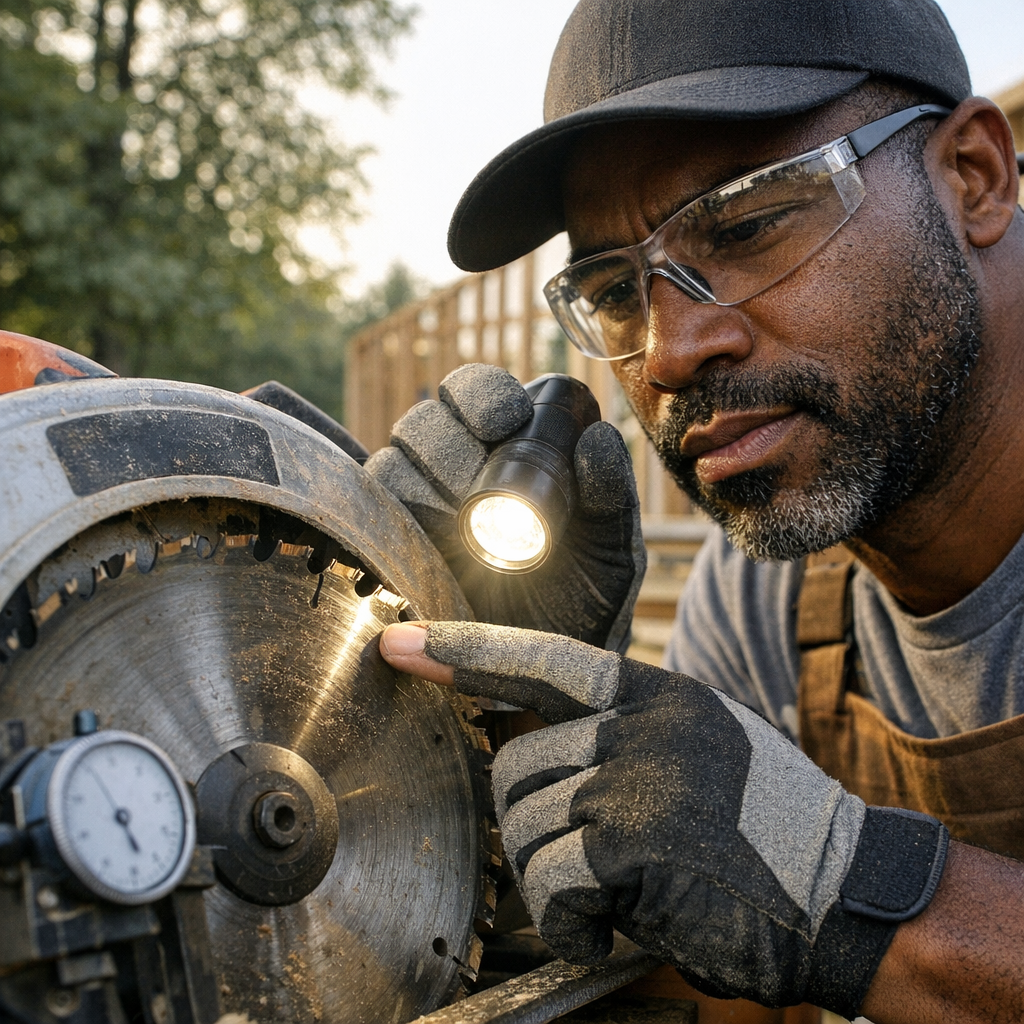
Most pros glance at the blade and move on, but a real check takes sixty seconds: flashlight in hand, run a fingertip gently along the teeth. What you miss by eye pops under a raking light—a chip, some dried pitch, a wobble you wouldn’t spot otherwise. Check for:
- Bent, chipped, or cracked teeth—especially near the lead side
- Glossy streaks of sap or pitch that catch light at the edge
- Runout (is the blade wobbling?)—spin it by hand and watch from the edge for even a tiny shimmy
This isn’t babying your gear—it’s about keeping momentum. There are days a one-dollar blade swap saves hours spent sanding, adjusting, or even recutting finished work. Toss a blade that “almost cuts” and you dodge the cost of wasted time, wasted boards, and frayed nerves.
Don’t Trust Yesterday’s Blade
Blades that felt brand-new at the end of one shift can foul up overnight—pitch you missed, micro-damage from a brush with hidden metal, warping from a hard drop. No matter how clean yesterday’s cuts looked, start each job with a check: a minute now saves a half-hour and a half-dozen ruined boards later.
Jobsite Reality: The Morning Routine That Pays Off
The real world isn’t a catalog photo. Plates clang as trucks unload, stands go up, and the noise rises fast. Before the first cut, our crew runs blade checks as automatically as plugging in the saws. Case in point: last week a guy wasted an hour fighting drift. The culprit? A tooth that looked fine until you traced your finger across it—there was the chip, left over from nailing the end of a board the day before. Swapping a blade and cleaning the housing? Ten minutes. Problem solved. One lesson, learned for good.
Shop Habits With Real Payoff
- Keep a flashlight on your belt. Don’t trust shop lighting—angle a beam across the teeth and every flaw jumps out.
- Use your thumbnail. Eyes miss what skin catches. Run it around the rim for roughness or tiny chips before you mount up.
- Track blade changes on big jobs. Mark the date or the cut count. Fresh pressure-treated lumber or long rips eat carbide fast—a two-day-old blade isn’t always a good blade anymore.
Blade Condition: The Overlooked Difference Maker
In basements, garages, and backyard decks, the gap between a sharp blade and a dragging one is clarity itself: clean, fast cuts give you control, let you move on to joinery or layout while energy’s still high. Sloppy blades force you into rework and endless dust—cutting accuracy turns into correction work, and hands fatigue twice as fast.
Build the blade-check habit as you set up and everything runs sharper. Snag problems before they cascade. Jobs move cleaner, frustration stays low, and the only thing working harder is the saw—not you compensating for a dull edge you never bothered to inspect.