
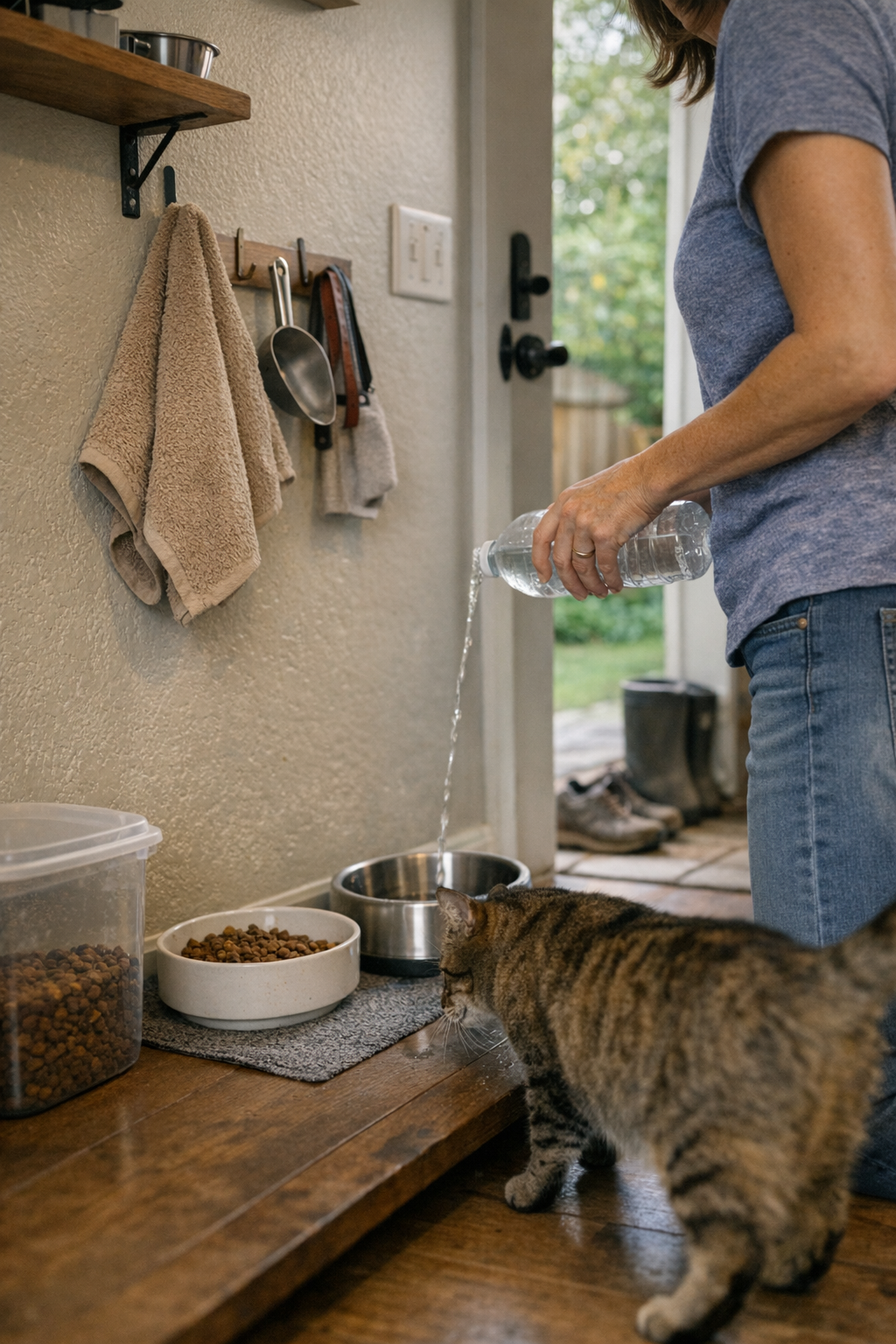
Daily pet care routines can look functional on the surface—until that one small gap turns every reset into a hassle. You reach for the bowl, but the matching scoop is missing. The towel you counted on is balled up in another room. Before you’ve restocked water, your cat’s circling the feeding spot, tracking in crumbs and distraction. These interruptions aren’t just background noise; they quietly multiply, turning feeding, water refills, or quick cleanup into drawn-out chores that drag across the day. If the system looks tidy yet can’t handle repeated use, it isn’t working for you—or for your pet.
Recognizing Feedback in Small Interruptions
When your cat or dog reappears before you’re even done resetting, it’s not random—it’s a live reminder that your routine’s structure doesn’t match real use. Especially in high-traffic moments like busy mornings or the after-dinner rush, the smallest lag can unravel everything: water gets spilled as your pet nudges for their dish, a half-wiped mat picks up new stains, the space never fully resets. Even if you manage a reset, a towel stashed too far means wiping gets skipped, and the “clean” space is always a step behind the next spill.
Where Routines Start to Slip
The cracks aren’t usually dramatic. Supplies are technically present, just parked one step too far, or always under, behind, or mixed in with other household stuff. Maybe the brush for bowls gets hidden behind a cleaner, or you leave a towel out awkwardly because your pet needed space and now it lingers, cluttering countertops. Food bowls drift out of feeding areas and take up space in hallways. Toys, wipes, stray lids cluster on surfaces you share—and suddenly every pet reset overlaps with another part of your day, never quite clear or frictionless.
Scenes From Real-World Daily Use
Mornings are the worst for friction. You try to power through: refill water, grab food, snag the mat for a quick wipe—except the lid’s blocked behind yesterday’s mop, or the scoop’s stranded by the backyard door. Meanwhile, your cat strolls back, stepping onto a wet patch you just cleaned, scattering fur or crumbs mid-reset. The pet area looks fine in a static photo but forces double-backs and missed steps in motion—so you run late and the routine’s still not done.
Fast-forward to night: you’re trying to close out with one last check, but a damp towel hasn’t dried or the scoop’s gone missing (again). Every delay—for one simple item—requires backtracking. Instead of a smooth reset, you get a string of stop-gaps, with cleanup and supplies always half a step out of sync. Over a week, this starts to bleed into the rest of your living space, with pet gear trailing into rooms where it doesn’t belong, and “cleanup” never quite sticking.
The Difference Between Tidy and Truly Smooth
A tidy pet area can hide how many steps aren’t working. Visible order looks good for guests or quick photos, but if your wipes are buried, bowls take two trips to gather, or towel hooks are across the room, you pay in repeat effort. So-called “organized” feeding setups can start shedding wet spots, stray crumbs, or used towels in every cycle. The sign you’re falling behind isn’t a big mess—it’s the recurring pause, double-check, or slow frustration that keeps coming back with each reset.
Solving the Weakest Link in the Care Cycle
The routine breaks exactly where the reach-for-it moment goes wrong—an awkward drawer, a supply lost in clutter, one must-have item never where you need it. Mounting a microfiber towel on a wall hook beside your feeding zone puts it in easy view. Keeping a scoop or bottle on an open shelf means you can wipe, refill, and reset before your pet disrupts the flow. The contrast is immediate: the cleanup finishes in real time, instead of waiting for you to retrace steps or search for essentials left too far away.
Sudden interruptions stop scattering your attention, and “pet cleanup” doesn’t leak into the rest of your day. Even one small item, positioned better, flips the routine from scattered to streamlined—a background job you finish by reflex, not as a series of stops and starts that never really end.
Routine Resets: From Cluttered to Manageable
What makes pet care wear you down isn’t one glaring mistake—it’s dozens of tiny, unresolved frictions: lids never at hand, towels draped and forgotten, wipes in another room, that last bowl not clean at the right moment. Most so-called problems are just patterns that never get fixed. Move the weak point—hook, shelf, bin, bottle—where you can always reach it, and let reset tasks finish before your pet interrupts. The goal isn’t spotless “for show” organization but a reset you don’t have to fight through each time.
The most reliable comfort doesn’t come from appearance, but from a setup able to handle your pet’s real pace and your daily speed. The right shifts—switching out one shelf, catching which item always breaks your flow—keep your setup flexible even on messy days. When pet care fits your actual movements, not just an organized look, each routine runs lighter and less likely to slip behind.
See what shifts when supplies actually live where you move, not just where they fit neatly: CalmPetSupply.