
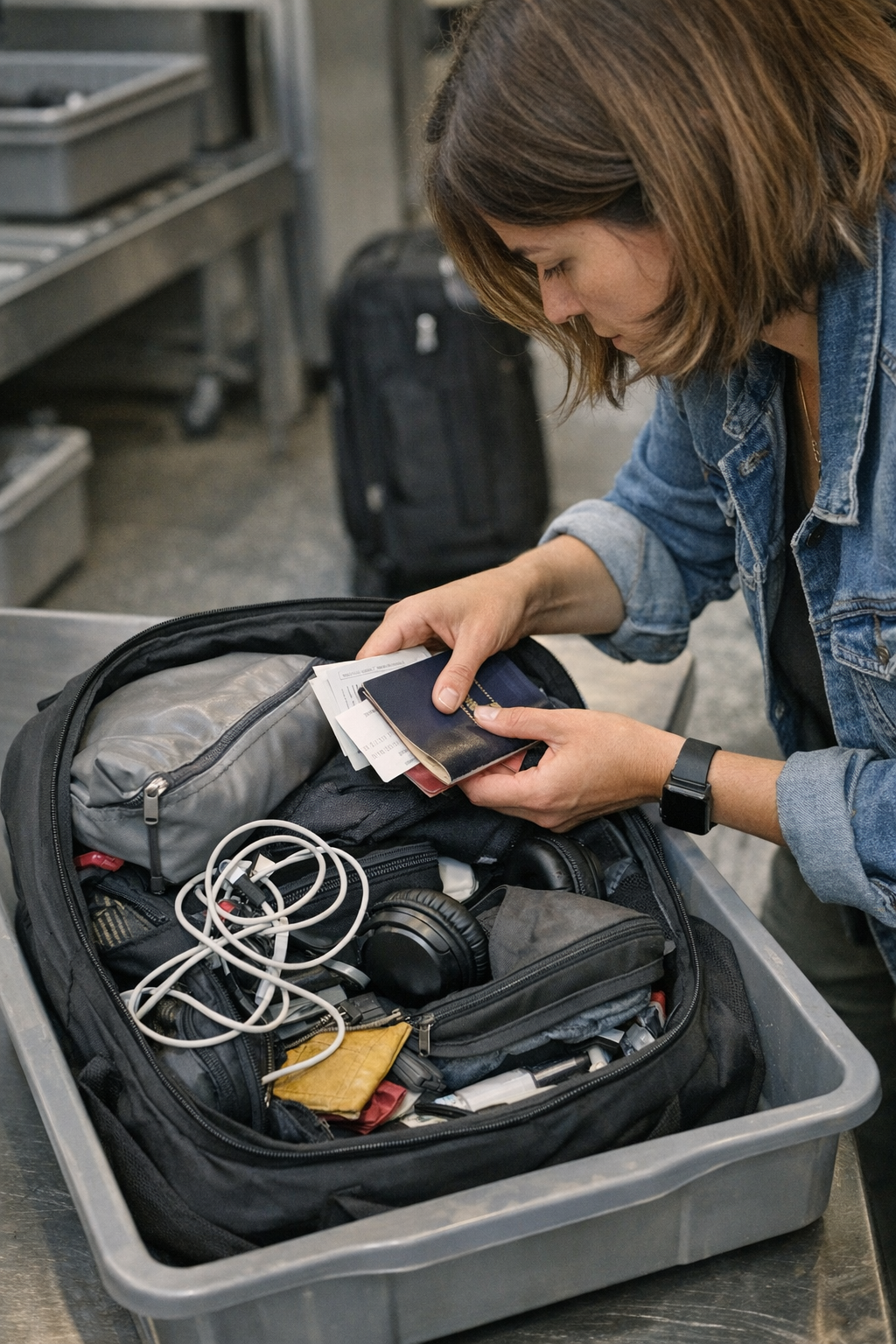
The carry-on bag that stays neat during home packing almost never stays friction-free once you’re actually moving through airports. What looks precise in your living room—a row of tidy pouches, chargers looped and tucked—starts breaking down with real-world use. The small annoyances don’t explode at once; instead, the flow grinds slower with every checkpoint grab, gate shuffle, or seat entry. Documents that were perfectly filed get buried after one rushed search. That quick-access pocket you trusted for your passport is now blocked by tangled headphones. Suddenly, a carry-on that seemed ready for anything loads you with seconds of interruption in the moments you can least afford them. This is the repeated-use friction CarryOnSupply is built to reduce.
Order Fades by Day Two (and Shows Itself by Day Four)
At home, your system looks untouchable: cables with their chargers, passport slotted, toiletries zipped away, every organizer snapped into place. That barely survives one cycle of airport reality. By your second or third major reach—digging out electronics for security, handing over a passport at a crowded checkpoint, folding away headphones before takeoff—the entire setup starts shifting. Cords wedge themselves under jackets; documents drift beneath a charger pouch; that ultra-thin organizer slides just enough to block something else. These aren’t dramatic errors—just an accumulation of micro-shifts you only notice under pressure.
Repeated Reaching Is What Breaks “Home Order”
Picture this: between flights, you dive for your boarding pass. The zipper glides open, but now you have to push aside a cable pouch that’s pinched the passport sleeve, and headphones have slid over toiletries. Instead of a simple reach, you’re using both hands, blocking the aisle, the tempo of travel slowing down while a line grows behind you. Visually, it still passes the “organized” test. Functionally, the cracks show whenever you’re forced to reach one step further than expected.
Why “Perfect” Packing Falls Apart With Real Use
At home, packing is calm. Compartments slot in and out, every item mapped to a pocket, every zipper running smooth. But try running this system through five real repackings—once in a cramped bathroom stall, again on the terminal floor, and maybe in a hurry at your gate. Tightly stacked pouches jam instead of sliding. The document sleeve you depended on gets pushed down by one stray cable. That impromptu charger drop means now it’s sandwiched between two bigger pouches and throws every reach-after out of sync. The difference between organized-at-rest and organized-in-motion starts showing up with every repack in a real travel setting.
The Real Cost: Interrupted Flow, Not Visual Mess
Most travel organization fails by barely-noticed degrees: slowdowns, repeated searches, two zippers instead of one, or your essentials drifting one pocket too far. You open an outer pocket for headphones but find a charger blocking the way; documents hide under the tech pouch you stuffed in hurriedly. Each “quick fix”—shoving a pouch back into place or switching documents to a more reachable spot—pushes something else out of alignment. The more often you need something, the slower it is to pull, until you’re pausing on routine grabs. These seconds multiply—especially on the day you actually need speed.
Pressure Points: Where Travel Rhythm Stalls
The difference between tidy and actually usable shows up fast on real airport floors:
- Security trays: Items intended for smooth retrieval come out clumped. Three objects jam together, and you repack worse than before under pressure.
- Seat entry: Once-slim organizers now bulge wide, catching on armrests as you try not to block the aisle—especially awkward on full flights.
- Overhead-bin search: A charger for headphones or a stick of gum migrates just out of easy reach; what was a quick pull now requires taking out half your bag.
Every one of these moments exposes the gap between organized storage and in-motion access. What survived the initial pack loses reliability under real pressure—just where an orderly carry-on was supposed to help.
Learning From Mid-Trip Disarray
Frustration builds quietly: high-frequency items—passport, charger, sanitizer—don’t stay in their assigned slots. Every boarding or security stop, you’re reaching, finding a pouch drifted, second-guessing quick-reaches, pausing to figure out which zip-path leads to what. When frequent-use essentials cross over into deeper pockets or merge with tech gear, every movement feels heavier and duller. The flow of travel is interrupted not by chaos, but by repeated minor blockages—the exact thing most customers try to cure with better organizers and quick-access gear from CarryOnSupply.
One immediate shift: Instead of organizing by category, switch to packing by actual retrieval sequence. Group on-the-go items—passport, tickets, headphones, sanitizer—into a flat, shallow compartment, not stacked in a deep section. Slot key documents into a dedicated back panel, never buried with tech pouches or toiletries. This cuts down on multi-zip hunts and second-guessing—on your next rushed checkpoint, you’ll spend fewer motions on retrieval, and less time worrying what slipped out of order.
One Change That Eases the Cycle
After enough real-world reaching, most travelers end up dividing by use: everything needed at security in its own space, boarding items together, long-haul items sealed away. For example, transitioning essentials to one zipped top section (flat, with nothing overlapping) drops retrieval time whether you’re in line, finding a seat, or halfway through a layover. Keep travel documents away from swelling charging kits and headphones packed separately from toiletries. This isn’t some magical fix—but the pressure relief is noticeable. On day four, you open a section and still find your essentials within easy grab range—not lost or merged into stretched-out compartments.
Adapt for Movement, Not Just Order
Flawless starting setup fades fast—especially if you need to access, repack, and move multiple times in a day. Loose chargers, too-large toiletry kits, layered document sleeves: all are common friction points, blocking zippers, drifting across compartments, interrupting the grab-and-go flow. “Good organization” without repeated correction simply hides the creeping misalignment that blocks you at each checkpoint or boarding call.
The fix isn’t dumping everything for a full reset at every stop. Instead, target the drift-prone gear—your quick-access core—before it slows you down. Nudge back what’s slipped. Streamline your top and outer sections for what truly needs to be reached in the rhythm of real travel, not just for a packing photo. Expect shifting, and learn what items always break the flow so you can prevent blockages before they start costing you time and attention when lines or pressure rise.
Less Reset, More Fluid Use
The reason to rethink your setup isn’t competing for the “most organized bag”—it’s to build a carry-on that flexes under real repeated movement. You’ll know you’ve nailed it when the bag stays usable on day four, through unexpected security lines and tight boarding windows—when you can grab what you need without pausing or scrambling under pressure. That is the difference between a setup that just looks neat and one you actually depend on, even through repeated trip legs and airport routines.
Shop practical solutions and in-transit carry-on tools at CarryOnSupply.