
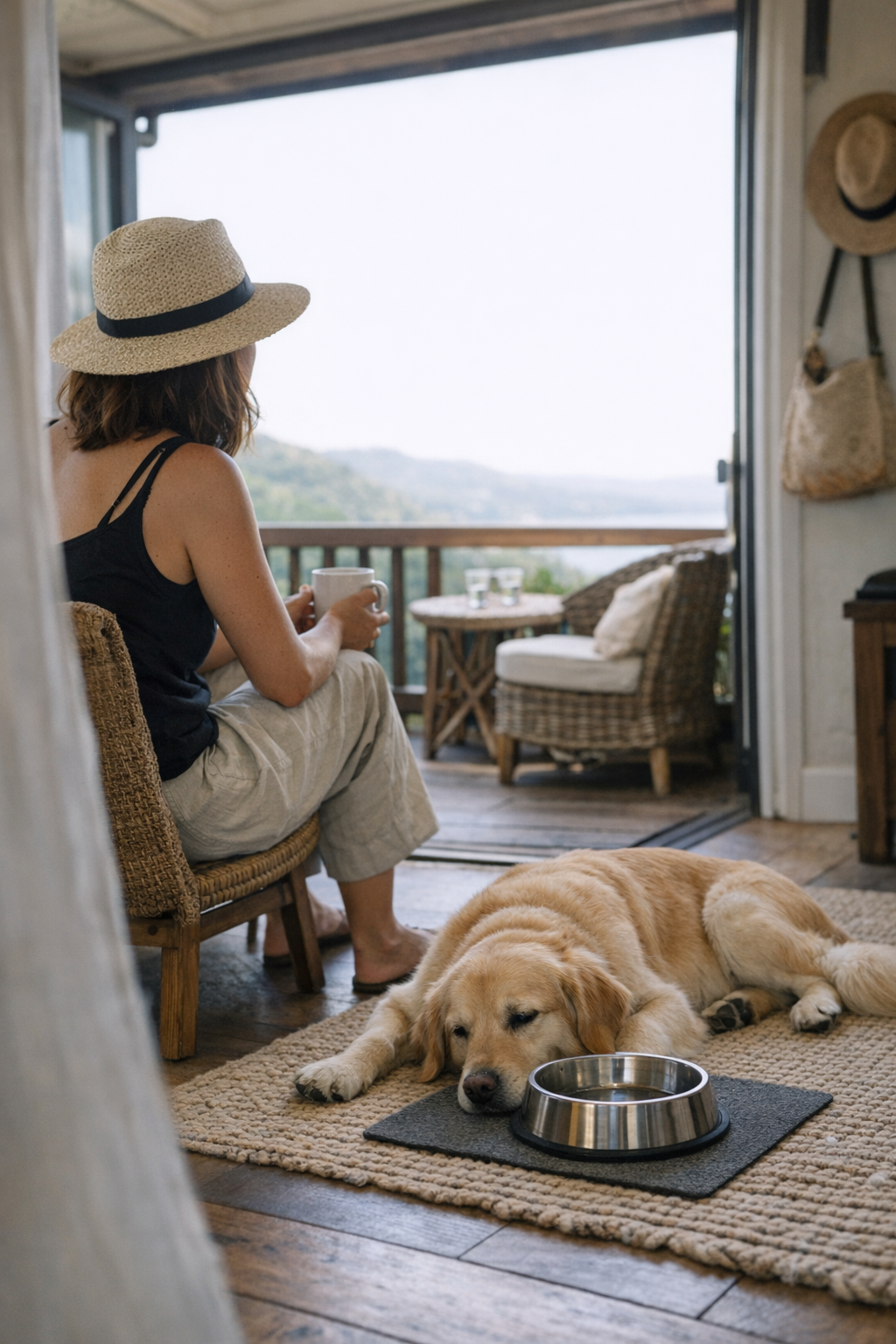
After breakfast, the kitchen usually looks quiet—but a “still” dog doesn’t always mean a routine that works. Is your dog sprawled on the mat, or just pausing until the next minor interruption? It’s easy to assume one deep sigh or a gentle flop means all is well. Yet, right after breakfast, problems begin to creep in: the food bowl slides out of place, the leash isn’t where you need it, or you catch your dog pacing the same corner—signals that the day’s routine is already losing momentum. To the eye, everything seems tidy. But under the surface, small frictions repeat: misplaced bowls, off-center mats, delayed wipe grabs. Every one slows what should be a smooth transition and bends the morning toward the inconvenient.
What Looks Calm Isn’t Always Comfortable
Most mornings start the same—kibble poured, water wiped up, expectation set that your dog will settle nearby as you finish coffee or pack a bag. Sometimes the pause is genuine. Other times, the signs start immediately:
- The dog never really stretches out, shifting position again just when you think they’ll rest.
- Eyes flick quietly to the hallway, timing the next moment you step away or the leash comes out.
- A bowl nudges off the mat, inch by inch, trailing small puddles or crumbs through your path.
This low-level agitation isn’t loud or dramatic. Instead, it gradually builds—the dog’s routine never fully “lands,” leaving you to pick up slack with each pass-through. That makes the next transition (heading out, prepping gear, or starting clean-up) feel less like a fresh start and more like working around unfinished business.
The Repeating Little Friction That Adds Up
The real trouble isn’t chaos; it’s the pileup of minor annoyances. Over a single week, you find yourself putting the bowl back in the center every morning—or shoving toys away from the door before a walk. The feeding mat drifts, cleanup towels vanish to the wrong spot, or you detour around “just tidied” obstacles. One or even two of these isn’t a problem. But on repeat, these small detours fatigue your flow, nudging every routine into something you manage rather than trust. By Friday, you’re making two or three micro-adjustments for every single transition—stalling momentum, dragging down both your energy and your dog’s mood.
Recognizing Early Warning Signs
A truly settled routine shows in the dog, not the decor. After breakfast, the right signs are a loose posture, slow breathing, and little to no movement after the meal. If you see your dog constantly shifting, glancing toward exits, poking the bowl, or looping along a rug edge, those aren’t quirks—they’re signals the setup is off, and both you and your dog will be paying for it later in the day.
Real-Life Example: The Subtle Bowl Drift
Imagine this: after feeding, you sit down, only to find—again—the bowl halfway off its mat twenty minutes later, a perfect trail of crumbs behind. The first time it happens, you move it back without thinking. By midweek, you realize it’s a cycle—bowl, mat, water dish, every one out of place. Maybe your dog circles from the rest area to the kitchen looking for something solved yesterday. By the time you want to go out, there’s hesitation—your walk is stuck in limbo while you adjust, redirect, or coax the dog back into focus. The pattern repeats: tidy in the morning, off-kilter by ten, resetting again before noon.
Surface Order Isn’t Enough
It’s easy to fall for the look of a clean routine—scrubbed mats, wiped bowls, bins closed, nothing visible out of line. The real test comes not on the first pass, but the eighth: when a leash is buried behind a bowl, the towel you need is across the house, or the food dish drifts so you have to step around it to grab your shoes.
- Leash hooks mounted out of reach mean two extra steps in and out, every single walk.
- Cleanup towels that always land at the wrong end of the hall leave you wiping muddy paws only after tracking prints inside.
- Bowls that can’t stay put tumble into your morning path, so you dodge them while handling your own breakfast.
No matter how clean it looks, a routine that interrupts itself isn’t set up for daily life—it just keeps demanding micro-resets from you.
The Reset That Actually Changes the Routine
The most telling change isn’t big or expensive—it’s a deliberate reposition after use. Try re-centering the food bowl on the mat right after feeding; no slid corners, no backward tilt. Suddenly, your dog stops circling, the resting stretches last longer, and the leash unhooks without a second thought. That tiny, predictable act cuts friction before it multiplies—no more making up for tense transitions five times before lunch. The difference isn’t perfection; it’s that your space stops knocking you off balance over and over.
Why the Little Details Make a Big Difference
Daily setups aren’t about picture-perfect arrangement—they’re about taking pressure off both you and your dog during the actual, messy flow of living. Key details:
- Routine stickiness: A clear, consistent arrangement helps the dog truly relax—no need to check, shift, or search.
- Less “searching” behavior: When bowls and beds land in the same place every time, your dog isn’t nudging, pacing, or looking over their shoulder every five minutes.
- Fewer daily interruptions: Setups built for reach mean wipes, leashes, and toys appear right when you need them, not after three circles of the room.
Friction That Hides in the Routine
A routine that looks calm often hides its real snags under neat surfaces. Ask yourself:
- Are you stepping over a food bowl to grab a leash?
- Returning from a walk and scrambling for a towel—not finding it until dirt is already everywhere?
- Finding toys near the entryway again by lunchtime, despite a morning clean-up?
- Pushing a bed or mat aside just to start some other part of your day?
These aren’t random inconveniences—they’re routine design flaws replayed, turning simple transitions into repeated work. Let them ride, and the day shifts from living together to managing constant interruption—energy drains you don’t notice until they’re stacked too high to ignore.
How to Spot and Fix Your Own Routine Weak Points
Smoother routines start with noticing what breaks first—not what looks messy, but what repeatedly makes the next action slower or less direct. Use these checkpoints:
- Monitor repeated shifting: If your dog moves more than twice after breakfast before settling, they may be nudging at the setup itself—so change the bowl’s alignment, widen the mat, or slightly adjust rest areas and see what improves.
- Watch your own corrections: If you’re re-centering bowls, re-hanging leashes, or re-folding towels more than once a morning, tally those resets. If a week goes by and you’re still repeating them, the routine—not your attention—is faulty.
- Streamline “at reach” access: If a cleanup or walk item is never exactly where your hand goes first, move it. Arrange wipes, leashes, small brushes, or extra towels so you don’t step around clutter or double back.
When Setup Outpaces Visual Order
What wins over time isn’t a tidy picture after cleaning—it’s setups that un-burden each step of daily use. That means:
- Every core item returns to its zone after use. Bowls stop blocking walkways, mats stay put, beds hold their corner—nothing migrates back into your path hour after hour.
- Supplies are truly reachable at need. Leashes, wipes, and fresh toys live where hands (and paws) reach naturally, not just where they look best.
- Your dog’s main space stays open even when you’re busiest. No leaking toys, stranded towels, or bowl detours break the flow between “done” and “on to the next thing.”
The payoff isn’t instant perfection but a steady drop in repeated drag, strain, and half-finished resets. You don’t fix the same glitch over and over. The day starts to flow—clean, reset, and set to repeat—without all the invisible tension points slowing you down.
The Takeaway: Reset Routines Before They Reset You
The routines that actually work aren’t the tidiest—they’re the ones that stop making you fix the same thing ten times before noon. In the DogPile world