
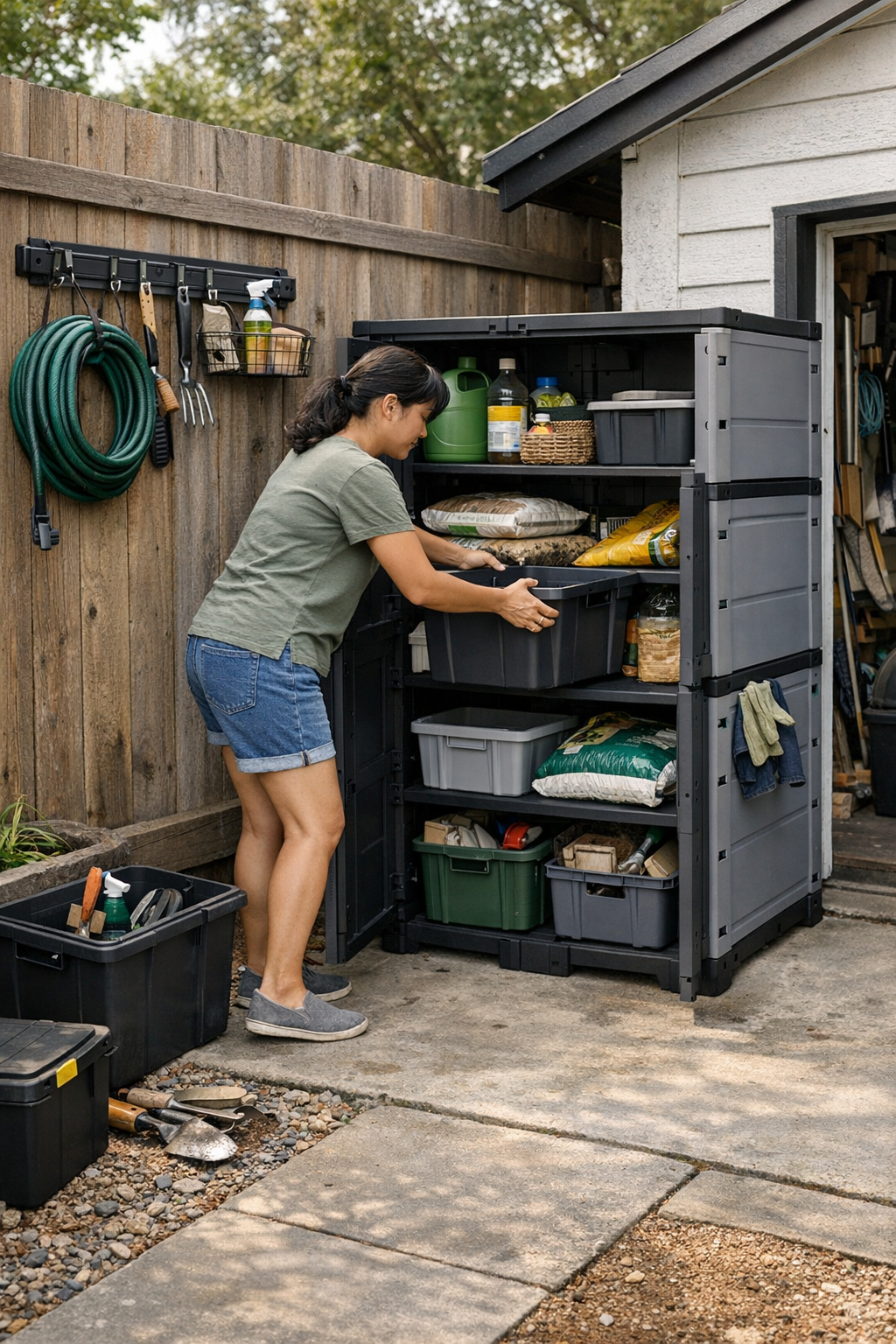
No outdoor storage system hides its flaws for long. Give it six weeks. That neat shed, deck box, or wall rack that looked dialed-in at first? It becomes a maze of “just for now” drop-offs—folding chairs wedged in back corners, soccer balls rolling under benches, tools exiled to random spots when their hooks are buried. What seems organized on setup day gets crowded, clumsy, and unpredictable after a dozen returns and rushed cleanups. That’s when you notice: is this setup helping you move through the space, or is it quietly tripping you up again and again?
Blocked Paths and Awkward Returns: Where Tidy Turns Tangled
An outdoor storage system seems fine—until your normal routine starts to push its limits. Picture the back gate or side-yard squeeze: after using the hedge trimmer, you try to put it away but a ladder is now blocking the shed door, so you lean the trimmer behind a planter “just until tomorrow.” Or you grab a soccer net for Saturday practice, only to bump bikes and bags that migrated into the path. Each workaround leaves behind new clutter, shrinking walkways and stacking frustration, until the whole area feels like an obstacle course built one compromise at a time.
How Storage Styles Play Out in Real Yard Traffic
Wall Systems: The Vertical Trap
Going vertical sounds like a clean fix—until real routines wear grooves in your system. Wall hooks and rails keep gear off the ground at first, but by midseason one hook ends up supporting a tangled hose, two rakes, and a sunhat nobody’s claimed. A kid’s backpack dangles where you need the loppers. Someone raises a row of hooks a few inches “to fit more,” making it just out of reach for everyone else. Getting one thing usually means shuffling three, and the zone closest to the door turns into a clutter magnet or, worse, a dead patch no one uses because the wall is too loaded to approach.
Standalone Units: The Front-Row Pileup
Deck boxes and petite sheds promise weatherproof organization, but their “easy access” masks a deeper friction. Soon, the most-used bats, spray bottles, and bike helmets migrate to the top and front. Want a shovel? First move the air pump, then a bag of mulch, then rescue the gloves buried at the bottom. Items used less often drop layers below or vanish to the back wall. The more you cram in, the less you want to reopen the lid—until a storm or party forces a total empty-and-reset session that never lasts as long as you hope.
Modular and Mobile: Useful Until Everything Drifts
Bins on wheels, lightweight racks, and stackable crates sound clever—until they lose their home. A rolling bin starts near the sandbox for toys, but by June it’s blocking the barbecue. Tool caddies end up halfway across the patio, waiting for someone to remember where they belong. Over time, mobile pieces blur their boundaries and become obstacles in their own right, snaring feet and collecting whatever doesn’t have a real spot. The “flexible” layout turns into a wandering scatter of storage that interrupts the very routines it was meant to support.
The Slow Slide: When Clear Zones Turn Complicated
Real clutter doesn’t appear with a bang—it creeps. A wall system gets overloaded, so someone leans a broom against a stair rail instead. The deck box can’t open all the way for weeks because a folding chair was wedged in fast after a rainstorm. You find yourself stepping around drop-offs that were definitely “temporary” three weekends ago. By the height of summer, what started as tidy zones and walkable paths morphs into a network of workarounds that no one wants to untangle after a long day.
Is Your Yard Easy to Move Through—or Is It Closing In?
Every outdoor space shows its true flow in the pinch points. Maybe it’s the skinny side path you use daily, the project corner where supplies build up, or the patio edge where bins and hoses compete for elbow room. How often does someone move something out of the way just to use the grill, mow the edge, or grab a ball? In setups where cleaning up is a constant, small resets keep chaos at bay. But most yards run on project-based resets—an afternoon of order, then a slow collapse as life happens and the system doesn’t absorb the routine. Overflow crowds back in, making tight areas tighter, until it feels easier to dodge the mess than to fix it.
Real-World Fixes That Actually Help:
- Respect the ‘front row’ effect: Place bins and boxes so doors and lids still work—even if the bikes migrate up front or bags drop in the way.
- Anchor modular units: Choose a home base—mark it, edge it, or use ground cues—to stop rolling bins or racks from drifting into walkways.
- Adjust wall setups for actual reach: Hooks too high or too crowded break flow. Make sure what’s used most often is what’s easiest to grab—without needing a stool.
- Keep an eye on chronic pinch points: If one area always bottlenecks, rethink its role. Don’t add storage where it interrupts the natural pattern of movement.
When Storage Units Turn into Barriers
The real giveaway of a broken outdoor setup? Forced shuffling—moving a bin to open a door, untangling hoses for the hundredth time, or rerouting around gear with no home. Each awkward move cuts into your patience and willingness to keep the space in use. The system packs things away, but at the expense of turning your yard into a zone you avoid, reshuffling the same mess each week instead of moving easily through your day.
What Works: Storing for Actual Life, Not Just for Show
Forget showroom perfection—aim for setups that hold up to routines, not just first impressions. The winning systems let you put gear away without a complicated dance, even after a weekend’s worth of mess. They soak up patterns of use—overflow, tool swaps, kid returns—without pushing you into new bottlenecks or sidesteps. If you keep finding yourself half-stalling before you open the storage box or rearranging the same four things at the wall, it’s time to rethink the setup for movement, not just looks.