
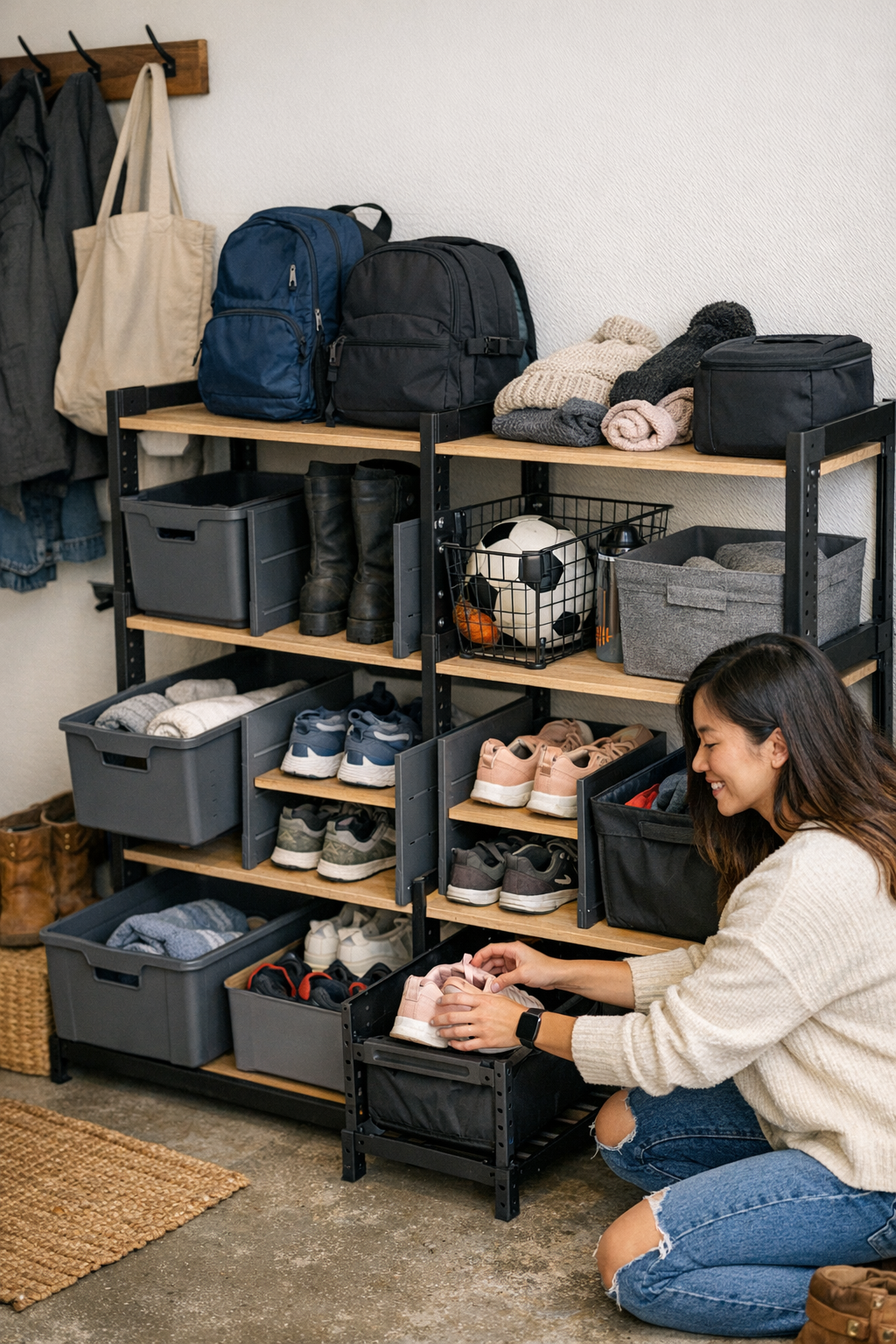
The morning after new shelves go up, it all lines up like a catalog shot—shoes sitting in a neat row, jackets spaced just so, sweaters folded into crisp stacks beside bins for gloves and hats. For a brief window, it feels like you’ve finally pulled ahead of the chaos. But two days later, real habits start to rub out that order. Shoes get pushed into the sweater pile by an early-morning grab. An extra bag ends up on the coat hooks. The basket for hats morphs into a dumping ground for keys, receipts, and last-minute breakfast bars. The beautifully defined zones buckle—fast—and what started as clarity morphs into yet another muddled maze.
When “Organized” Turns Into Just More Shuffling
Most so-called ‘systems’ unravel in just a week of actual use. You dig through three bins for gloves while boots topple forward. What was a clean shelf becomes a layered mess—backpacks pinning lunchboxes, shoes jammed behind a tangle of scarves. Rigid baskets or shelves might look like answers, but they demand the impossible: routines that never shift. When life barrels in—unexpected weather, late soccer practices, a muddy dog—structure devolves into friction. Instead of order, every day forces you to dig, stack, and reshuffle just to get dressed or out the door.
Fixed vs. Flexible: Where Real Storage Difference Emerges
The first weekend, fixed shelves and dividers give you the high of possibility. But by Thursday, the weaknesses are obvious. Want to put away gym gear and it doesn’t fit? Too bad—the compartments won’t budge. Scarves overflow their corner; shoes stack up where they don’t belong. Each time you move one thing, you push something else out of place. Suddenly, categories blur: chargers in the mitten bin, mail with the hats, boots squashed under backpacks. The promise of order melts into a constant low-level annoyance.
Modular shelving breaks this cycle where it counts—on the days you wish you could just nudge the space, right now. Movable dividers, adjustable shelves, and cubbies that reset in seconds give you the power to re-draw boundaries before frustration sets in. Cramped backpack zone? Drop the shelf a notch. Too many shoes? Slide a divider to reclaim room. Instead of living in permanent rearrangement mode, you spend less energy catching up and more time using the space as it’s needed.
The Build-Up: How Everyday Storage Friction Strains Your Space
No one actually resets shelves every night—real fixes get pushed off. That means a single misplaced bin quietly grows into daily hassle. Shoes kick mud up and multiply across the floor. The ‘hats and gloves’ basket swallows everything from receipts to lost earbuds. Lower shelves fill fast, while the upper ones stay barren just because they’re a stretch to reach. Quickly, even small messes become routine time sinks—digging for matching mittens, reaching behind a pile just to get a jacket, wrestling an umbrella free without dumping half a shelf on the floor.
Modular storage doesn’t eliminate all chaos—but it hands you simple, instant-tweak options that keep things from spiraling. As categories start to blend or anything gets cramped, a quick shelf slide or divider shift saves the day. Adjust one thing, and suddenly you get back clear zones and easier reach—with barely any thought or extra effort.
A Real Entry Closet: When Permanent Dividers Fail
Picture a family entryway: two shelves packed with shoes, an upper shelf for bags, and a few permanent dividers that looked smart on install day. By Thursday, lunch bags backed up on the shoe shelf so nothing is easy to grab. Wet winter boots invade the next zone, spreading puddles sideways until the fixed divider blocks cleanup. Before you know it, finding a glove means pushing aside backpacks, and the supposed gloves basket—now half-filled with isolated hats and receipts—loses any clarity. The lines between ‘zones’ vanish and resets become overwhelming chores, not quick fixes.
The frustration isn’t a lack of effort—it’s the rigidity. When dividers won’t move, it’s impossible to adapt without emptying half the closet. The idea of true organization is replaced by constant, draining reshuffling.
How Modular Adjustments Change the Game
Now swap out those fixed dividers for sliding shelf inserts or adjustable slots. The next time boots crowd the sneakers, the divider glides over—no cramming or creative stacking. Bags overload the shelf? Slide it up or down and reclaim space. Resets aren’t a dreaded, once-a-week event. They’re a few-second fix: nudge, adjust, move on. Everyone finds their things; everyone knows where to put them back. The space isn’t just tidy—it’s recoverable, stable, and obvious, even as family patterns shift from season to season.
This approach isn’t about keeping a space showroom-perfect—it’s about saving yourself from inherited messes and lost time with every simple reset. As routines change or clutter threatens, the layout flexes, and your sanity holds out longer.
Modular Shelves: Worth the Shift?
Do modular shelves really stay tidy?
Only if you use their flexibility. Categories drift? Reset a divider before the mess grows. Backpack bin filling with random mail? Move a shelf before it becomes a black hole. Small nudge now, not a dreaded overhaul later.
Who actually benefits from modular setups?
Anyone whose space feels perfectly organized, then falls apart as soon as routines change—families with school years and summer breaks, anyone with rotating sports or activities, or those facing surprise weather one week and totally different gear the next. If sections lose their job as soon as life shifts, modular fixes matter.
Are modular shelves better for tight spaces?
Absolutely—if you adapt before it’s an avalanche. Lower a shelf just as boots multiply, widen an area before backpack sprawl, and you protect both usable space and your own patience. Ignore it too long and you’re right back in the cycle.
Small Tweaks, Lasting Relief
Modular storage won’t turn a jumble into a showroom, and it won’t rewrite your habits overnight. What it gives you is power over small, daily headaches: a two-second adjustment instead of a half-hour overhaul. Breathe life back into your closet or entryway before the clutter rules again. Each minor tweak buys you an extra morning where finding what you need is fast and obvious—and resets never have to be all-or-nothing.
In the end, modular shelving means your storage works with your actual, evolving routine—instead of trapping you in endless sorting and frustration.