
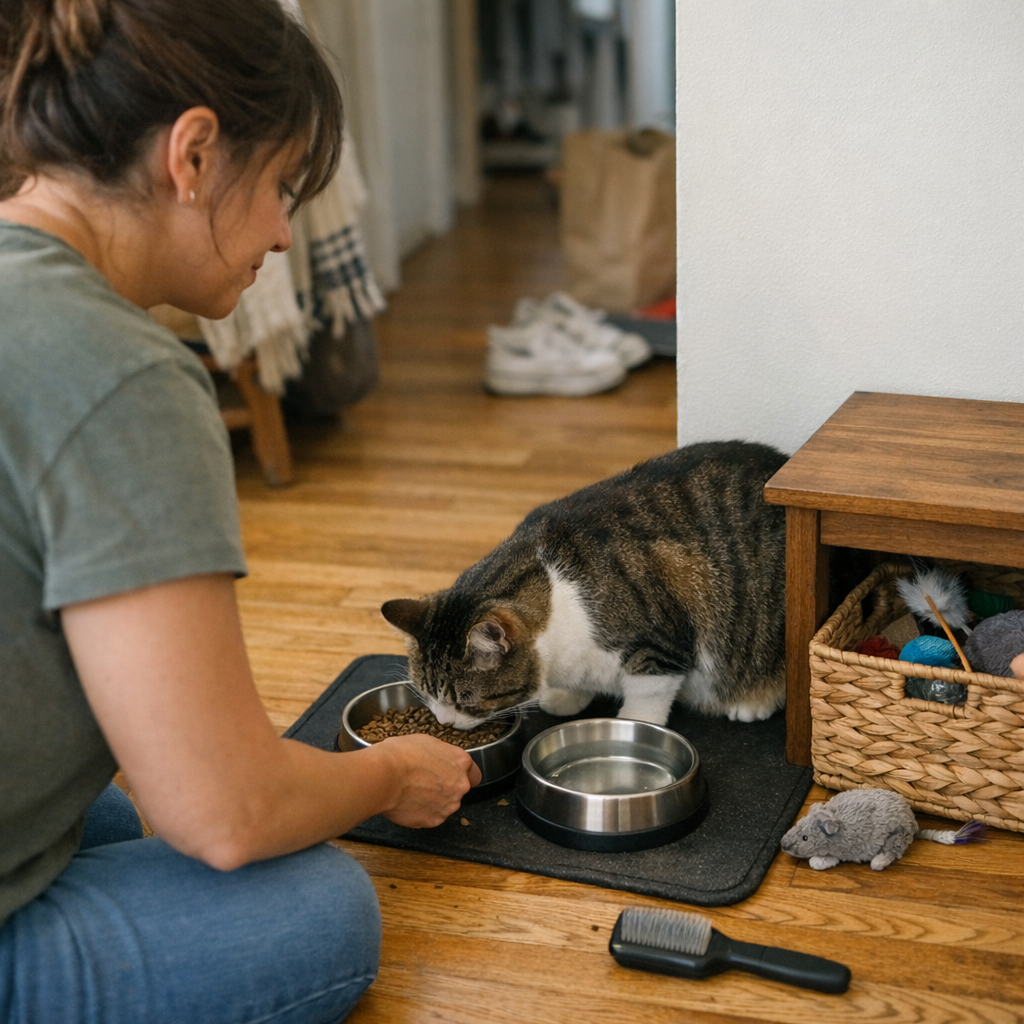
A cat space that looks tidy in the morning rarely survives a full weekday without showing its weak spots. When the water bowl is wedged by an abandoned toy, the mat curls up right where you step, or the grooming brush is just out of reach—what started as “clean and contained” grinds daily routines to a halt. The setup that once seemed settled quickly slows you down in the middle of dinner prep or a late dash for the door. That’s when the difference between looking tidy and functioning smoothly becomes impossible to ignore—and this is exactly where the right StillWhisker setup begins to matter.
Why ‘Neat Enough’ Cat Setups Break Down Fast
The real pain points show up mid-routine, not during Sunday resets. Maybe the bowls are perfectly aligned and toys sit untouched—until you juggle groceries at six, and your cat claims the feeding corner, cutting off your way through. Or the zone looks organized until you’re late, swipe for a brush that’s slid out of reach, and discover litter and crumbs scattering past the “cat area.” A setup that looked simple to maintain turns into clutter to dodge, finding you doing unplanned reset work every time pressure builds.
Visual order blurs fast when routines overlap. Life with an indoor cat means stacking micro-tasks: feeding, spot-wiping, toy returns, awkward water refills. Each layer exposes new reach problems, misplaced supplies, or mess creeping past its boundary. If your setup isn’t designed for actual routines, it starts to work against you—especially by the second or third reset of the day.
Moments When Friction Stacks Up Instead of Down
Bowl Refills Blocked by the Usual Clutter Creep
You want to refill water, only to stop short: a plush toy blocks the way, or there’s an unseen sticky patch curling the mat. Instead of a quick top-up, you’re kneeling awkwardly, moving clutter, and risking a spill. Each small annoyance adds up, making the reset slower and multiplying frustration across the week.
Cleanup That Spreads Beyond the “Cat Zone”
Mats bunch, bowls drift, and toys escape—letting water or crumbs wander out onto the main floor. Suddenly cleanup isn’t limited to the feeding corner: you’re wiping under the table, chasing litter, and retracing your steps after every pass. The edge between “cat mess” and “whole-room work” fades quickly.
Supplies Present, But Never Instantly Handy
Brushes and wipes are somewhere in the right area—just not right where you need them. You lean or stretch in the middle of cleaning, vowing to “fix it later,” but pressure always crowds out good intentions. Tools migrate inches from their base after every round, and that little gap always eats up valuable time on busy days.
Shared Spaces That Stop Feeling Shared
Your cat loves spreading out, but their comfort can scramble your traffic zones. Feeding mats nudge into hallways, toy baskets drift toward doorways, and sharp storage bins block the path with laundry in your arms. Human spaces shrink, friction increases, and containment lines mean less with every day lived in.
Why Most Setups Feel Good—Until Daily Life Starts
An organized zone feels fine at a distance, but real routines hit hard. Your cat drags things, pushes bowls, and expands territory as days go by. What felt manageable wakes up old frustrations every morning rush or evening reset—and those stress points only become obvious under repeat use, not in the first hour after a big cleanup.
Comfort That Quietly Increases Your Upkeep
Soft mats or cushy blankets may keep your cat napping, but if the mat can’t stay flat or the blanket collects fur that won’t shake off, resets get slower and more annoying. One comfort fix turns into another clean-up chore, especially once habits settle in and you can’t keep resetting from scratch.
An Area That Resists Rush Hour
The test isn’t about having “less stuff”; it’s whether the setup holds up under real overlap. If every toy or tool adds an extra pickup step, or if a single bowl out of line blocks the rest, resets get exhausting fast. Repetition reveals weak points no surface-level organization hides.
Moments That Expose Hidden Weak Points
Certain routines break the illusion of control, whether or not you notice every day. If you’ve lived with an indoor cat, these probably sound familiar:
- You reach for a bowl—only to knock into an old chew or treat buried just out of sight.
- Losing track of time until wet socks tell you water has crept under the mat again.
- Cleanup spray is close but not visible, so the sticky spot remains until it’s hardened in place.
- You tuck away toys, only to spot escapees back on the main walkway half an hour later.
- Running late, you realize grooming tools have drifted behind bowls or lamps, forcing another awkward shuffle.
Small Tweaks, Real Impact: Adjustments That Last
The simplest fixes aren’t about perfect tidiness—they’re about shielding your setup against collapse when real pressure hits. For example, sliding the food bowl a bowl’s width away from the mat edge creates a spot-clean zone that stops crumbs and water from wedging straight into seams. It’s a minor change with a big payoff for next-day upkeep.
Or, after play, sweeping toys fully under a table ledge—not just beside their basket—keeps them paw-accessible but stops toy sprawl from creeping into every high-traffic area. With repeated, low-cost adjustments like these, your area becomes not just set-and-forget, but actually able to survive daily repetition at real speed and pressure.
Set Boundaries, Cut Repeated Work
Clearing just enough space from clutter means fewer resets. Anchoring mats, giving zones a little extra width, and grouping tools by true reach—not just by category—lets resets shrink, not stack. The goal isn’t a showroom look, but a routine that doesn’t fall apart outside the rare quiet morning.
Containment That Still Moves When You Do
Stowing supplies out of the walkway—yet instantly grabbable—provides order without pushing work further away. Your cat’s zone stays open for them, but shared spaces stop being constant trip hazards. Daily maintenance gets smaller and more automatic, instead of turning upkeep into an everyday event.
What to Watch for After Each Use
Don’t trust last night’s tidy look to last. After each meal, play, or grooming session, take ten seconds to check the core trouble spots:
- Are bowls drifting off the mat or blocking paths?
- Did every toy make it back, or are some already on the move?
- Is the mat migrating or curling toward your shared space?
- Do brush and wipes sit where your hand expects—or where it has to dig?
Fast, specific checks halt drift and keep the little messes from growing—eliminating the need for yet another “big” reset.
The Payoff: Practical Trust in Your Setup
This isn’t about perfect containment or a static system. It’s about building trust that your cat’s area will keep up—through busy days, surprise visitors, and repeat pressure—without falling apart or adding hidden work. When a space absorbs repeated use instead of spreading out tasks, you get more than an area that’s clean: you get a setup that actually keeps your home easier to live in, even when nothing is going according to plan.
For setups and supplies that make everyday cat life genuinely easier, visit StillWhisker.