
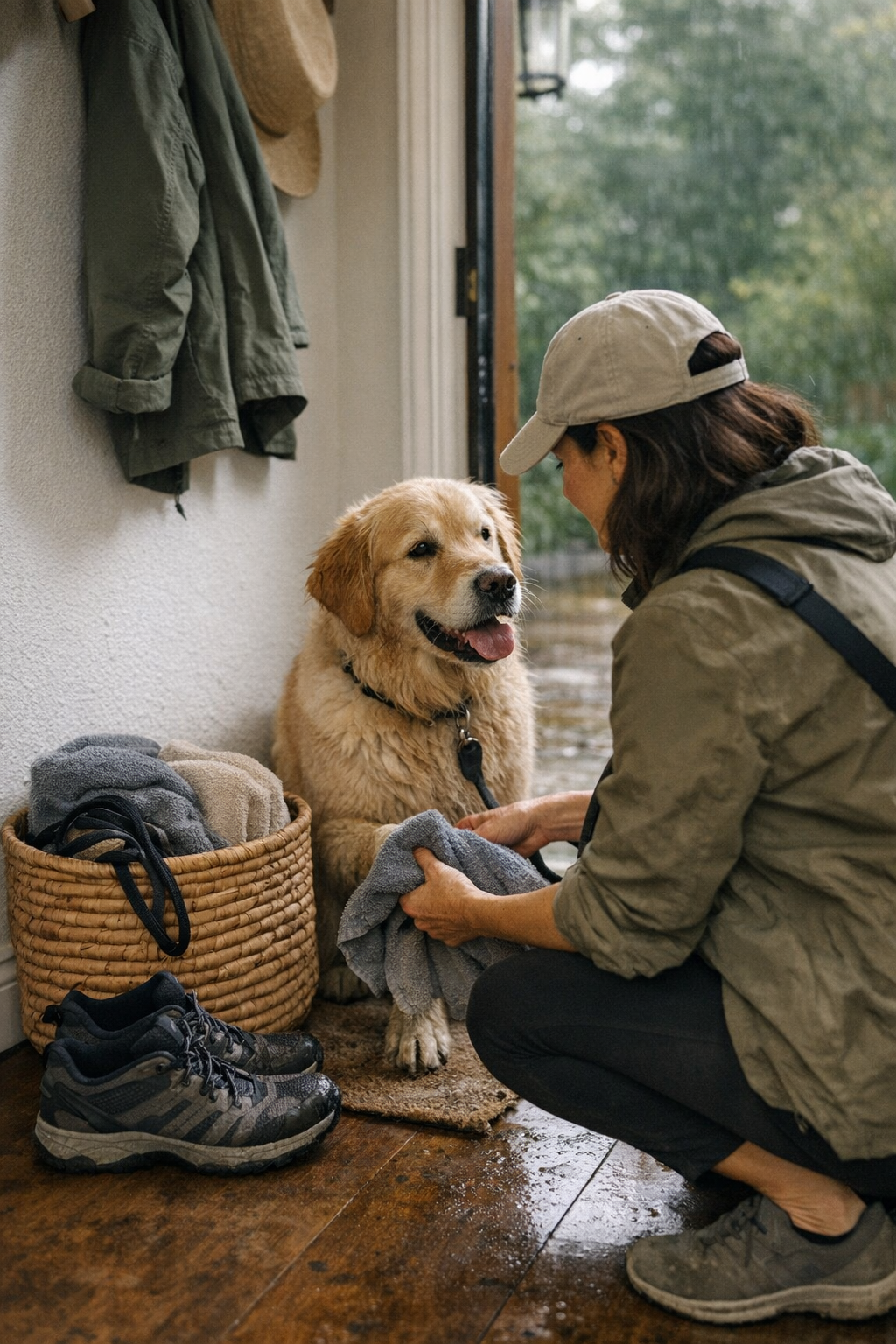
The stress point in your dog’s daily walk isn’t the walk itself—it’s the silent breakdown at your front door. You reach for your dog’s leash, but your shoes are buried halfway down the hall. The towel for muddy paws? Out of reach, folded somewhere “tidy,” but useless when you actually need it. Every day, this split layout doesn’t just slow you down; it multiplies frustration: juggling leash, dog, door, and missing essentials, all while muddy paws threaten the clean floor. If you’ve ever skidded across wet footprints or lost control as your dog zips into the house, you know the setup isn’t working. The ordinary friction—missed towel, delayed wipe, wrong shoes—builds up until you realize: daily comfort depends more on entryway reality than how organized it looks.
The Surprising Cost of a Split Setup
No one plans for the setup to fail—at first, separate storage feels like the ultimate in neatness. Shoes vanish into closets, towels fold smoothly in the linen stack, leashes dangle calmly by the door. But the moment real use hits, flaws appear. You gear up: shoes first, leash clipped, only to realize the towel’s missing. Shoes off, dash to fetch, leash tangles. After rain? Mud works its way across the threshold before you’ve even grabbed the right towel. The “tidy” system turns clumsy, and what should be a single fluid exit becomes a scattered, drawn-out hassle. The more demanding your walks—think muddy parks, sudden storms—the faster these splits take over your routine.
When Tidy Turns into Trouble
Visual order means little once a restless dog is waiting. Shoes tucked away, towels stacked with linens—all looks good until that first wet walk. You reach home with a damp, excited dog, only to fumble for a towel that’s nowhere close. Three or four wet walks in, and your entryway’s “calm” design exposes its flaws: you’re carrying the scramble from the door into the kitchen, every new streak a reminder that the routine isn’t keeping up. The time you “save” on tidying up is wasted three times over in post-walk resets, floor scrubbing, and untangling leash and limbs as your dog charges ahead. Tidy, in this case, becomes daily trouble—not a solution.
Morning Rush: When Efficiency Really Matters
In the morning, seconds count. Any block slows you down. Your coffee’s cooling, your dog’s bouncing, and you can’t find those shoes—or the right towel. Instead of one smooth motion, you freeze: backtracking across rooms, bumping into misplaced supplies, losing the leash as your dog coils around your legs. With misaligned storage, every morning is a rerun: grab, realize, reverse, wipe, wish it were simpler. The result? Tension rises before you even make it to the sidewalk, and muddy prints remind you all day exactly what didn’t work.
Why “Looks Organized” Isn’t the Same as “Feels Easy”
There’s a difference between organized and useful—a difference your dog surfaces immediately. Clean baskets and matching hooks solve nothing if gear is out of the way when you need it. The space can look peaceful but force constant crossing, searching, and one-handed juggling. What feels under control visually often leads to more daily movement, not less: standing with a searching pause at the exit, irritation flickering up every time a missing towel means letting dirt in. If it takes two trips and a silent curse to reset after a walk, that organization isn’t helping day-to-day flow. Every step that feels “just one more” is another signal that setup and real use are out of sync.
Recognizing the Routine Weak Points
Weakness shows up as soon as routines repeat. Shoes stored out of sight, but they end up by the door after one sloppy outing. Towel basket perched too high, so you’re balancing on one foot while muddy paws circle your ankles. You notice: backtracking becomes normal, and quick resets are never actually quick. These glitches aren’t rare—they’re signals. The more you find yourself reshuffling, returning, or improvising a workaround, the clearer it is that your current layout is fighting your daily routine, not helping it.
What Gets Better When Shoes and Towels Live Together
The difference isn’t subtle once you combine what you need where you need it. Placing dog-walk shoes and towels next to each other—right at the entry—turns chaos into a routine reset: leash reached, shoes on, towel grabbed, all with one stop. No more crossing rooms, no more rushing for last-minute wipes or slipping across the threshold with a leash in one hand and nothing in the other. Coming home, towel and gear are waiting: the dog pauses, you wipe, and everything lands in its spot—fast, repeatable, and no stray dirt left behind. Even backup gear—extra towels, a spare leash—finds a home in arm’s reach, shrinking that inevitable scramble when walks multiply or conditions turn messier.
Space Limits and Hallway Traffic
No entry can handle a heap of gear. This isn’t about front-door clutter—it’s about only keeping what works for your actual walk: the pair of shoes you always reach for, a clean towel or wipes, leash, and a backup if things get muddy twice in a row. Pick a bin that fits the spot, or wall hooks strong enough for daily grabs. If you’re squeezed for space, a slim basket or two hooks mean doorways stay clear of trip hazards, but nothing you need is out of reach. The balance: accessible without overflow, supportive without upending hallway flow. And if it’s done right, you can grab everything for two walks, complete a cleanup, and still have room to drop gear post-chase or rainy dash inside.
The Repeated-Use Reality Check
Any setup looks good on day one—real test comes when it’s been hit by bad weather and rushed mornings. A one-handed grab (leash, shoes, towel) while steadying your dog? That’s a system tuned for real-life demand. If you’re still circling back for towels or side-stepping blocked shoes, it’s a sign to shift things—fast. Notice what keeps sliding out of reach or what gear refuses to “stay put.” These repeated faults aren’t minor; they shape every walk and every cleanup. The longer the setup drags, the more the routine resists becoming easy muscle memory. Each walk is its own review—listen to where it drags and let your storage respond.
Entryway Setups: Avoiding Mess Without Slowing Down
A dog-adapted entry doesn’t look like gear piled high. It looks like the absence of frantic scrambles:
- The right towel within arm’s reach—even during a muddy paw disaster.
- Shoes, leash, and towel ready in the same stop—zero shuffling, zero sidestep.
- Dog shooting for the kitchen? Cleanup gear blocks the mess right at entry.
Every step clipped from the exit and return shortens recovery, shrinks reset stress, and stops the day from leaking chaos across the whole house. Even if it’s not perfect, a unified setup catches the worst moments—fast—before they can turn small friction into a full reset job.
The Emotional Reset: Smoother Walks, Calmer Returns
Remove those nagging pauses—dog waiting, leash slipping, owner scrambling—and a tense threshold melts away. The entryway becomes a launchpad: walk gear, wipe, go. On return, everything’s right where you’d want it, not drifting into another room. Routine syncs to repetition, your dog settles into “pause and wipe,” and your cleanup no longer feels like a daily punishment. You don’t have to overthink it—order follows function, and stress fades because the next action is always easier.
Real-World Adjustments: Making It Work in Your Space
Every home’s limitation shows up differently. Tight entryway? Pick the smallest workable bin and enforce the rule: only walking gear here. Share with others? Everyone uses the same spot—no wandering towels or shoes. Rotate supplies so you’re not left with only the still-damp towel at the key moment. If you notice items drifting away (shoes stray, towels vanish), it’s a prompt to tighten up your reset habit. The essentials can’t keep escaping—anchor them at the door, and routine follows.
The Quiet Payoff—And How to Keep It Going
Give it two weeks and the real difference isn’t just less mess—it’s less interruption. The daily walk no longer feels like you’re negotiating with your setup. It’s not about a flawless entry or a matching basket displayed just so; it’s about shrinking invisible stress and shifting focus back to your real routine. When the right pair of shoes and towel are actually in reach, you’ll feel it—in calmer exits, faster resets, and a house that stays under control even on the messiest of days.
See more practical setups at DogPile.