
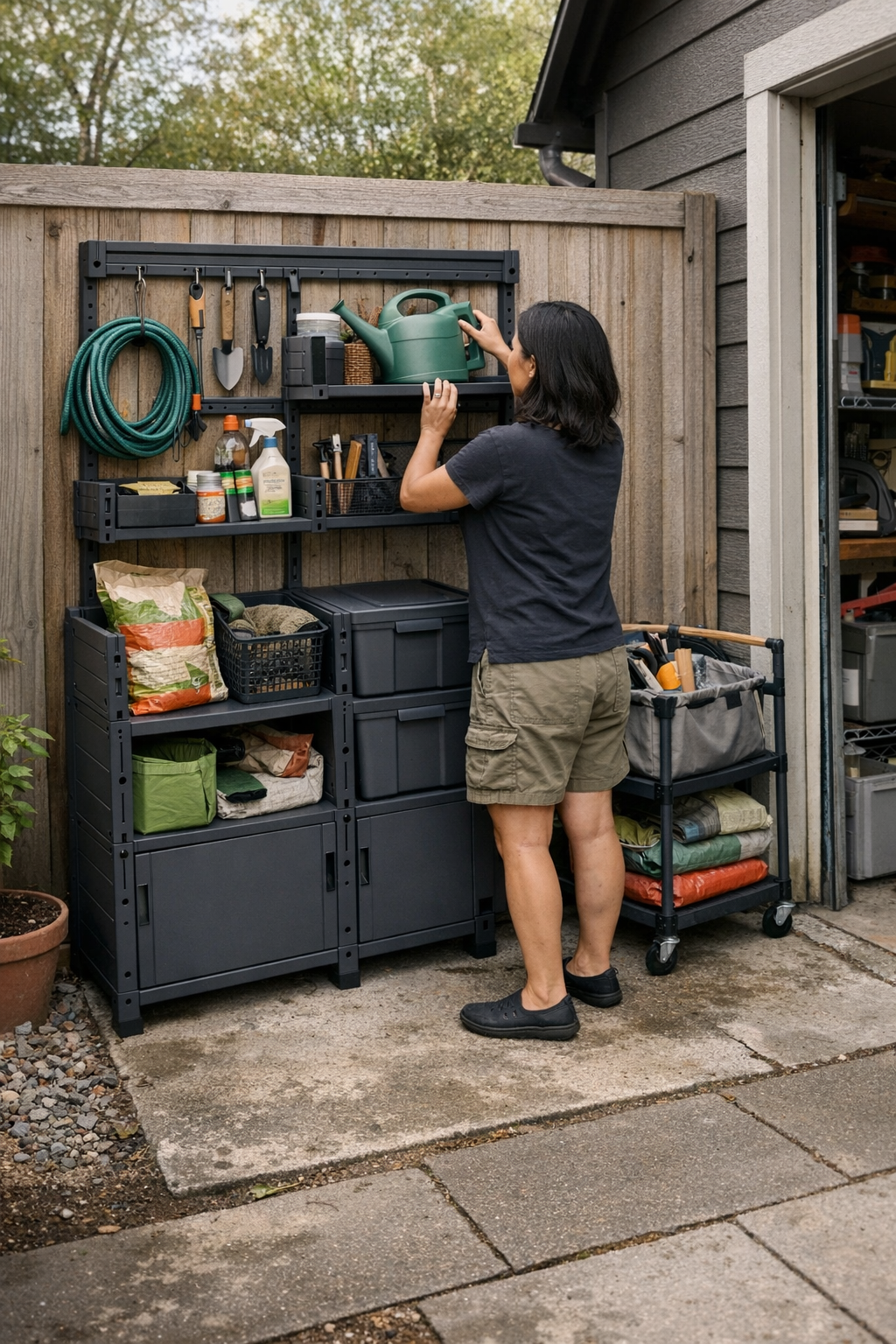
On the first day, backyard storage can look perfect. Everything lines up—tools on a rack, bins tucked away, walkways clear. But after a week or two of real use, the cracks show fast. The watering can ends up stranded behind stacked shovels, the kids dump soccer balls by the gate, and the “quick grab” garden gloves get buried under last night’s cleanup. Smooth movement is replaced by sidestepping tangled hoses or shuffling bins to get at the one thing you actually need. Most setups don’t fall apart because they’re missing storage—they fail because they don’t match the grind of everyday routines.
The Big Choices: Matching Setup to Routine
Slick wall hooks, tough sheds, smart bins, rolling carts—every outdoor storage idea looks organized when nothing’s been touched. But after even a few normal weekends, the difference between “storage” and “function” gets obvious.
Does your setup actually fit the way your yard lives? Nobody asks this when they’re staring at an empty system. You only notice when resets drag out—when you’re working around what was supposed to make things simpler. Even “organized” layouts can become the new source of friction if they’re out of sync with how people genuinely use the space.
Wall Storage: Vertical Hopes, Real Limits
Wall-mounted racks promise relief from chaotic floors. They’re great—briefly—at the garage edge or along a fence when tools pile up. Suddenly, a cluttered stretch feels under control.
But in practice, wall space isn’t always working for you:
- Interrupted Runs: That “free” wall almost always has something in the way—an outlet, a window, the corner of a gate—so racks land in fragments. Half the system sits empty. The other half turns into a swing hazard as long-handled tools jut into the walkway.
- Seasonal Buildup: Wall racks thrive until the gear changes. Off-season tools claim the back hooks, but when umbrellas and snow shovels rotate in, what looked like plenty of room now means piling three things on one hook, forcing a full reshuffle to get at anything buried.
- Overflow Creep: The “return” plan quickly unravels. Hoses droop, tarps sag off overcrowded hooks, and the side yard or garage threshold becomes an obstacle course of stuff “just put here for now.”
Scene: You return barbecue tongs after a cookout, only to shove them onto a crowded rail—trapping a rain jacket you needed to dry. By the next gathering, you’re halfway inside before you realize where things were left.
Freestanding Units: Clear Floor, Blocked Flow
Cabinets and sheds sell a vision: all mess sealed away, backyard path wide open, nothing to trip over. If you’ve got a genuinely unused nook or corner, a freestanding unit can finally bring order—but the “easy fix” is rarely that simple.
- Pinch Points: The shed that looks small in the catalog turns massive when its doors swing open—blocking half the patio and forcing sideways squeezes to get to the bins behind it.
- Permanent Obstacles: Drop a big unit into any active space, and it becomes a landmark you’re forced to move around. Storage needs change—your shed doesn’t, and the floor plan stops flexing.
- Broken Paths: Even a clean cabinet can turn a clear zone into a dead end, splitting up routes and leaving you circling around to retrieve just one ball or bag.
Tip: If you’re hoisting a half-full bin out just to crack a door wider, or dodging around open lids, the “storage solution” is now in your way just as much as the mess ever was.
Modular Systems: Flexible, Until They Freeze Up
Stackable bins and modular racks arrive with big promises: switch things up whenever you need, reclaim space for parties, adapt all year. For changing seasons or families with shifting hobbies, modular is a lifesaver—on paper.
- Awkward Sizing: Many systems look custom, but miss real-life needs. Long-handled tools flop out of shallow bins; hoses overflow baskets fitted for cushions; oversized boxes eat the path and shrink clear space.
- The Edge Effect: Resetting gets slower. Bins that once rotated now collect layers of “for now” gear—a broken bat this month, off-season gloves next. What should have been fast becomes a sorting exercise every time you clean up.
Scene: By mid-summer, you’ve divided pool toys from weeding buckets. Two months later, both bins spill out, and finding a single rake means pulling everything apart—again.
Mobile Options: Roll to Help, or Roll to Nowhere?
Rolling carts appeal when your outdoor life keeps changing. One day it’s a backyard game; the next it’s family repairs or garden planting. A mobile bin brings tools where you need them—so long as the ground cooperates.
- Stuck in Place: Hit a patch of gravel, a lifted paver, or an uneven stone path, and your loaded bin stalls. The “mobile” solution now lives off to the side, a chunky obstacle reblocking a route you fought to clear.
- Load Clash: High-use light items roll fine; awkward gear—hedgers, heavy planters—don’t. Most mobile storage ends up split: some things left behind, others forever stuck on a half-moved cart.
- The Forgotten Cart: A bin meant to free up space ends up parked against the house, full of mixed gear, not moving at all—creating as much new frustration as it was supposed to relieve.
Tip: If you’re dragging a cart backward to clear a bump, or splitting loads that never get recombined, rethink what actually needs to roll (and what should stay put).
Setup Scenes: Where the Friction Builds
Side Yards: From Shortcut to Choke Point
The side yard strip seems perfect for storage… until a few returns pile up. Wall racks help, briefly—then a surprise rain, a found bike, or a couple of new tools squeeze the path to shoulder-width. Suddenly you’re stepping around a daily pileup, or detouring onto the wet grass just to avoid a stuck-out handle.
Freestanding cabinets are no better when everyone wants “just one more thing” tucked away. The overflow jams up the narrow space, transforming the “smart storage” corner into a slow-motion obstacle course.
Under-Pressure Patios: Reset or Relapse?
Shared patio zones require flex. But a rolling bin left out after a gathering becomes a half-permanent fixture, killing square footage that was meant for relaxing. If nobody remembers to reset modular racks, that lounge spot quickly fills with abandoned returns—leaving everyone dancing around clutter that’s now just a part of the landscape.
Garage Edges: The Gateway Clog
Garage-side walls start efficient: a few hooks, a row of bins, easy access right at the threshold. But as soon as winter gear or extra sports supplies come home, the slim storage zone floods. Overflow leaks into the driveway, bins start stacking at awkward angles, and the “quick drop” turns into a 3-step process every time you pass through.
Small Yards: Where More Storage Means Less Flow
In tight spaces, one ambitious shed or stack of bins can kill the reset. If bins rise too high—beyond reach—or the shed blocks a narrow pass, old gear accumulates, and each reset gets heavier. A setup that stored everything now pins you into a loop of picking up what you just moved last weekend.
Pressure Check: Is Your Setup Helping, or Slowing You Down?
Ask yourself in the middle of any busy week:
- Do certain corners always sprout new clutter, no matter the plan?
- Are tools or supplies blocked behind unrelated bins—making every “quick grab” a multi-step shuffle?
- Does one side become a dumping ground, again and again?
- Is resetting the area truly quick, or does it now feel like undoing a slow collapse every time?
If you’re sidestepping “temporary” piles, hopping over hoses dropped after use, or dreading resets that require moving things twice, your storage is fighting your real routine—not helping it.
What Actually Works
Better outdoor setups clear the way for movement—without becoming their own obstacle. Signs your setup is working with you:
- Movement paths stay open, even right after heavy use
- Items