
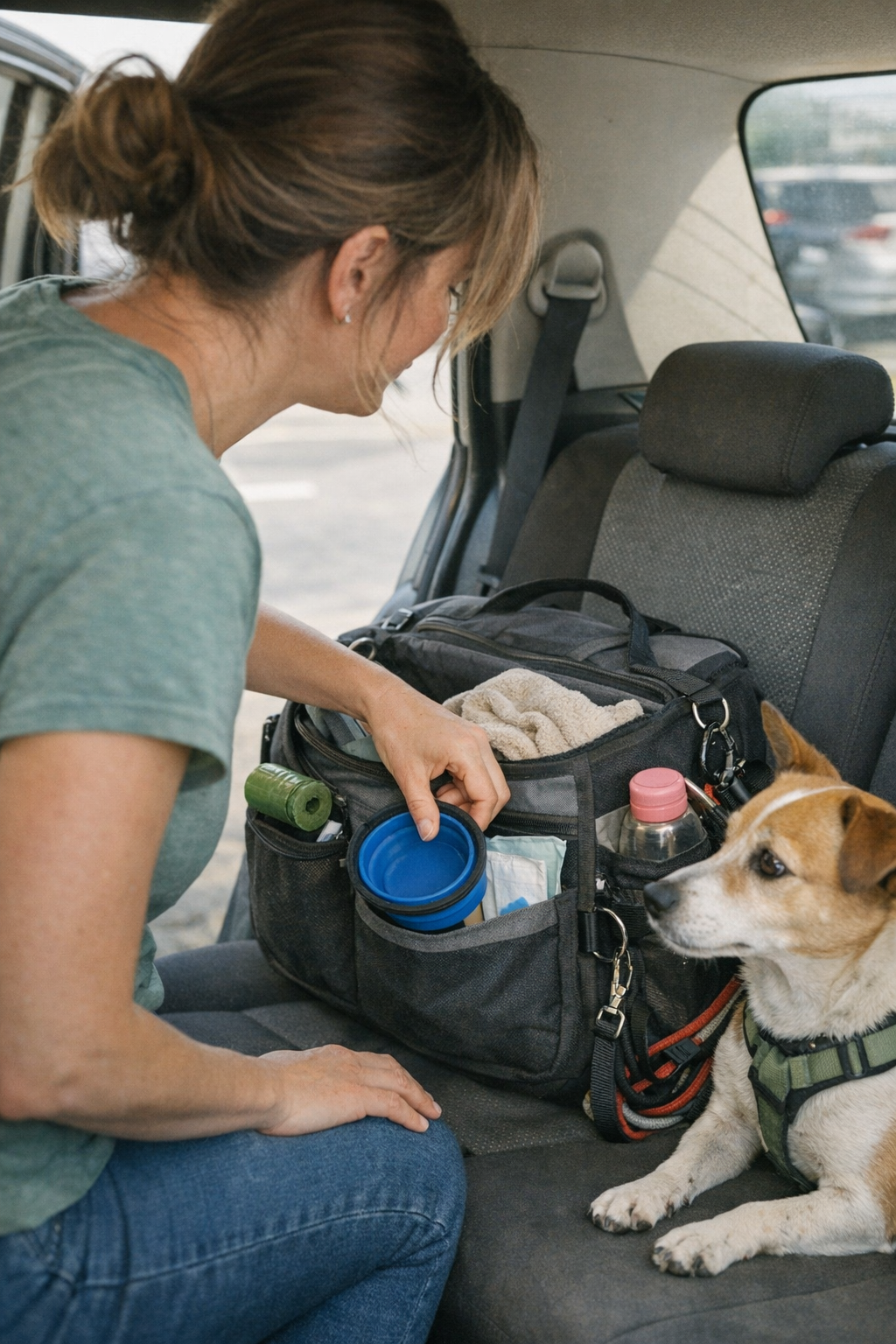
Most pet travel setups fall apart the moment your day starts moving. The look of a tidy carrier at home means little the second you pull into a busy parking lot or try to grab wipes at a muddy roadside stop. What actually matters isn’t how clean your kit appears before leaving—it’s how fast you can grab that water bowl, cleanup bag, or leash exactly when you need it, without blind rummaging or forced reshuffling while your pet squirms nearby.
The Hidden Weakness: Looks Ready, Feels Awkward
Many pet travel bags give off a false sense of readiness. Blankets folded, wipes zipped, bowl stacked. The problem is structural: by the first or second real stop—seat-side leash moments, curb unloads, quick pull-overs—the order that made sense at home becomes the reason you get slowed down. Actual friction shows immediately:
- Water bowls are buried under leash knots or tucked beneath comfort gear you don’t want to unpack yet
- Muddy paw wipes sit behind two other zippers, forcing you to fish through layers mid-mess
- A quick grab for waste bags leads to a spillover of everything else, turning a ten-second reach into a scattered re-pack
What’s missing isn’t equipment; it’s efficient access. Each stop, the order in your bag blocks the very speed you need—making even short pauses a hassle to get through.
One Problem Repeats: Reach, Pause, Reshuffle
Pet travel exposes the same structural flaw every cycle: move, stop, handle, move again. The real test isn’t a single long trip—it’s how quickly your setup cooperates after four or five stops, especially when you or your pet are impatient.
- You open the “right” zipper but hit the wrong pocket, hand landing on a comfort item instead of wipes
- Your dog pulls at the limits while you dig; the longer you fumble, the more restless the pet (and more obvious the scramble)
- Even when you finally fish out the bowl, the leash is wedged and you’re left rearranging half the bag just to serve water
Each of these moments translates into real tension—not just lost time. As the day continues, the friction rises for both you and your pet, revealing that it’s not the “missing item” that breaks travel flow, but the repeated disruption at every pause.
“More Organized” Doesn’t Always Mean “Easier”
No amount of internal pockets or nesting solves a broken grab-flow. On the move, order doesn’t equal speed if:
- Your most-used items—wipes, waste bags, and water bowls—sit deeper than things used maybe once per trip
- Stuffed pockets block seat-side access, and just pulling a bag out means shifting the layout every time
- Pet and owner items are stacked together, leading to overlap and confusion the second you need either without thinking
- That “easy” pouch at home becomes impossible to reach when the carrier sits awkwardly in the footwell or behind a seatbelt
The repeat problem: small friction grows as the trip goes on. What seems organized during packing slows everything down in real use. By the third stop, the urge to repack mid-trip becomes a quiet regret, not a solution. A tidy bag isn’t a fast one under real seat-side pressure.
The Real-Life Scenario: How It Unfolds
After an hour’s drive, you park in a shaded lot. Your dog shifts, ready to go. As you half-juggle a leash and flip open the bag, your hand finds a blanket first, then the water bowl jammed under it, then a tangle around the waste bags. The quick reset you pictured now turns into awkward shifting and a pet growing restless. Every second you spend rummaging in a tangle of your own organization, the “prepared” look of your carrier doesn’t matter; routine motion is gone, replaced by minor stress and a messier seat than you started with.
This isn’t a simple checklist issue—it’s what happens when the real movement of the trip breaks down. Every stop you make re-exposes bad structure, making the flow slower instead of smoother.
Why Some Setups Keep Getting in Their Own Way
Most travel kits start neat and end up layered in frustration. The warning signal isn’t always visible at the beginning—it’s how often you have to move something out of the way just to keep going. Over time, these reveal themselves:
- You’re close to being ready, but there’s always something blocking what’s needed most
- Cleanup is possible, but never quick—each muddy surprise means a scramble through half the kit
- Comfort items for your pet force you to unsettle essentials for yourself, disrupting both sides of the trip
The flaw is structural, not visual: real use exposes setups that only look prepared, not ones that truly allow you to move, reach, reset, and go again. When delays and annoyance stack up, the difference between “organized” and “actually easy” is hard to deny.
Recognizing True Access: Small Tweaks, Real Relief
Where does the daily cycle finally break? It’s when a travel setup stops just being organized and starts working with repeated action. Kits with dedicated seat-side access—leash anchor close-by, wipes unzipped and at the edge, quick-pull bowl location—make it possible to handle a pet with one hand and snag a cleanup bag with the other, without crawling into the back seat or dumping everything out. Bowls stay in outer pockets; essentials stay high, never under comfort gear. Routine reshuffles vanish. Water, wipes, and bags simply land where your hand expects, even mid-movement.
It’s not more features—it’s smarter order: cleanup on the outside, comfort items stable but never obstructing, owner and pet access points separated. That means:
- Seat-side pouches for waste bags and wipes, always at arm’s reach
- Leashes clipped or anchored to avoid tangling with anything else in the bag
- Soft items kept stable but never blocking high-use gear
The real payoff isn’t just a few seconds saved—it’s less agitation, smoother resets, and a pet who settles instead of squirming while you sort. Quick access means the whole trip moves, not just the bag’s contents.
Real Improvement Is About Ease, Not Perfection
No kit is flawless for every road and every stop. But the setups that win out aren’t the most complicated—they’re the ones that treat every repeated pause as the main event, not a background problem. When high-use items land in the right spots, and every reach matches a real moment in the routine, interruption turns into flow. The trick isn’t hoping for less mess; it’s building in less friction, so the trip’s rhythm survives every short stop and reset.
Explore practical, rhythm-tested pet travel setups at PawGoTravel.