
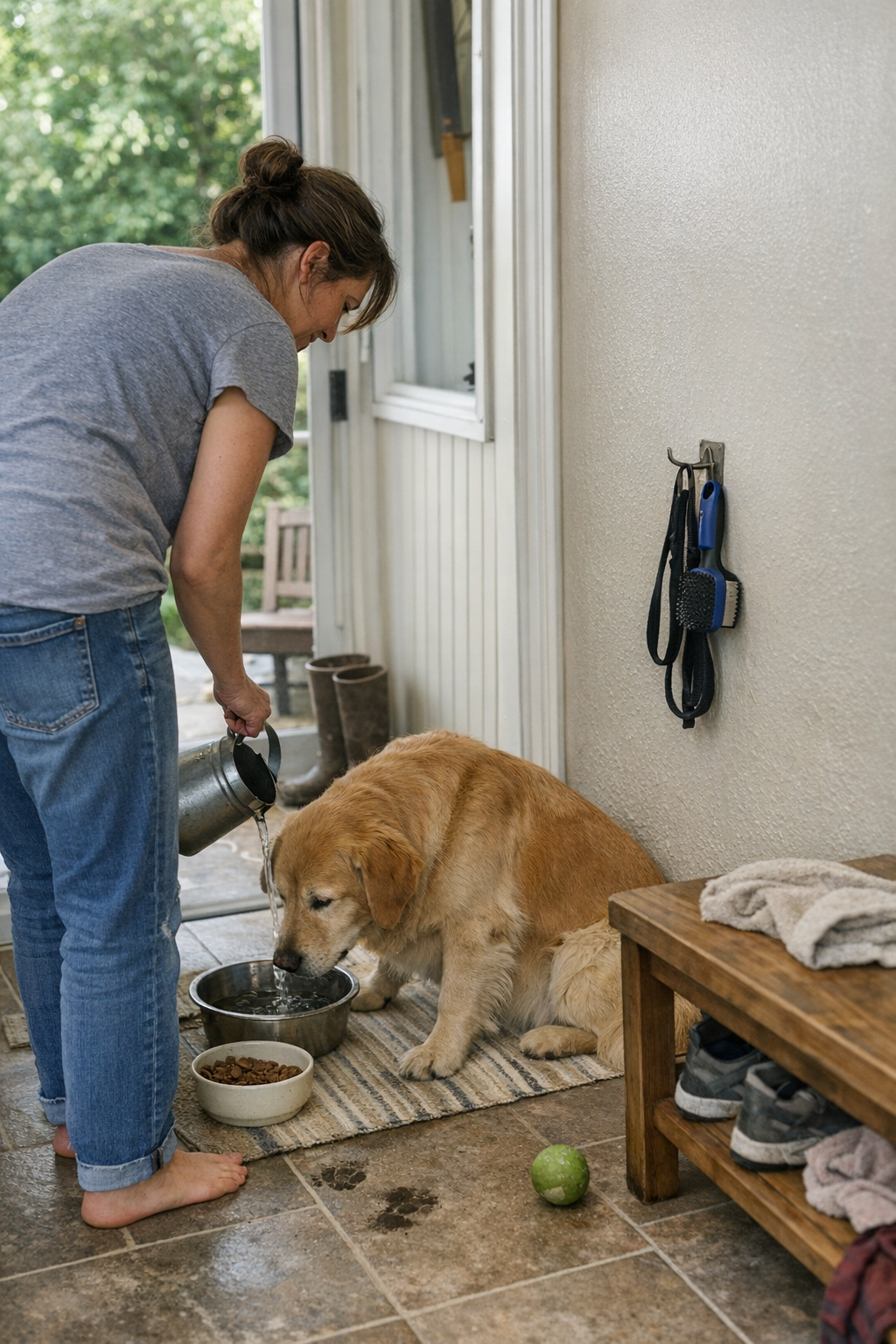
Why Grooming Tools Drift—and How It Impacts Your Daily Pet Care
Most pet owners know this scene: you reach for the brush mid-routine, and it’s missing again—tucked under yesterday’s mail, mixed in with chewed toys, or left sitting on the hallway bench from last night’s after-walk cleanup. Tools that seemed “right there” in the morning now block fast feeding, slow down the next cleanup, and force you to retrace your steps just to handle the basics. This isn’t just random clutter; it’s the point where daily grooming starts to drag. One lost comb means one skipped brush. One misplaced towel means tracked water from a rushed refill. CalmPetSupply is about setups that actually work when routines repeat—and about stopping the drift before it multiplies into daily friction.
At first, leaving the brush on a chair seems harmless—a product of a busy night or an interrupted morning. But as the habit repeats, every forgotten tool builds into a pattern: more detours, more reshuffling, and eventually a routine that feels twice as long as it should. That low-level “where is it this time?” grind breaks the flow of even the simplest care tasks.
How Convenience Turns Into Clutter
Cutting corners in a rush feels smart in the moment—dropping the brush where you last used it, cracking open a wipe and setting it down “just for now.” But with each shortcut, pet items bleed into general home clutter. The next time you go to refill the water bowl or settle your dog after a walk, routine stalls: a grooming tool buried under toys, a cleaning cloth wedged between surfaces. What felt efficient on one day becomes an obstacle course by the end of the week.
Picture grooming the dog on the living room rug, then leaving the brush on the coffee table, thinking you’ll put it away later. Tomorrow, you’re halfway through a feeding sprint before realizing the brush has vanished—now under paperwork. A chain reaction begins: every task stretches just a bit further from smooth.
Real-World Scenes of Pet-Care Delay
Consider a weekday morning routine: you scoop food, notice fur on the cat’s blanket, reach for the brush—and it’s missing. Suddenly, the simple order of “brush, feed, wipe” breaks down. The dog is pawing at the door, the cat is impatient, and you’re circling three rooms instead of making a single handoff. Each piece out of place splits up the flow, forcing interruptions where there should be none.
Or you spot a water spill by the food station after breakfast—a minor mess that now takes double the time to clean because the towel is lost behind yesterday’s scattered brush and a toy left from playtime. Instead of grabbing and wiping, you’re sorting and searching, and water tracks right into high-traffic space.
The Impact on Shared Spaces
This drift rarely stops at pet zones. Brushes turn up in hallway piles, combs land on kitchen chairs, and the visual mess quietly blends with shoes, chargers, or kids’ art projects. It’s not always obvious, but the repeated need to move pet stuff “out of the way” disrupts both pet care and everyday household flow—as if every shared surface doubles as a staging area for routine resets you didn’t plan for.
Shared areas become friction points—entryways crammed with stray fur, kitchen counters blocked by a brush in the path of the food scoop, hallway benches cluttered with cleaning rags that never made it back. Each time you go to grab one thing, you move another, stacking interruptions into what should be low-pressure, autopilot routines. Over time, every reset takes longer: not because the tools are missing entirely, but because they’re always a step away from where they need to be.
Why Organization Alone Doesn’t Always Help
Decluttering or adding bins helps—until you need to put something away in the middle of a lived-in moment, and the real storage is never where you actually use the item. If the stash spot isn’t close to the finish line of the routine, tools slide back to the nearest surface. The root problem is not disorder, but mismatch: storage steps that make sense on paper, but get skipped when the day gets busy.
Even when a space looks “organized,” a buried brush or distant bin means that, sooner or later, you’ll revert to dropping things in reach instead of putting them back properly. With every rushed morning or late-night check-in, the same invisible drag creeps back. The setup looks managed—but feels harder to use every time routines speed up.
The Tidy-Looking Setup vs. the Smooth-Flowing Routine
It’s possible for a home to look in order while every pet-care step still feels cumbersome. Brushes stowed in a bin across the room, towels stacked behind a closed door, supplies hidden in baskets—all clear the surface briefly, but add extra steps that slow down the action. The deeper issue is the disconnect between where tools rest and where they’re actually needed, especially as routines get repeated.
The turning point isn’t sweeping organization, but a storage detail that lines up with reality: a simple hook above the food station, a bin by the grooming corner, a rack at the porch exit. Suddenly, returning the brush or wipe-down towel becomes automatic—not because you’re extra tidy, but because the setup works for the exact spot you use, not a theoretical clean-up at the end of the day. Steps run faster, routines chain together, and cleanup becomes a reflex instead of a chore.
Making Small Adjustments That Stick
When grooming tools or cleanup supplies are technically “in the house” but never where your hand needs them, friction sneaks in with every repeat. The fix is rarely a system overhaul—it’s a specific anchor: a single hook, a mounted bin, a reachable basket right where habits drive your routine. This isn’t about perfect order, but about making it easier to do the right thing without extra steps.
Storage that follows your daily pattern means you handle less reshuffling and more autopilot. Tools stay in place, resets become rare, and your pet’s routine doesn’t get split by backtracking or frustration. The change is immediate: less hunt, less delay, more flow—one less weak spot for friction to return.
Keeping Pet Care Practical at Home
The daily difference is visible not in the state of your closet, but in the spot where you put the brush after every use. When your setup matches the real handoff points—after feeding, after a walk, mid-cleanup—the routine feels lighter, not just neater. Fixing one repeated reset pays off across every part of pet care: fewer detours, faster check-ins, and more time for the comfort that counts. For more ideas and practical solutions, visit calmpetsupply.myshopify.com.